
Because it directly absorbs strong lateral reactive forces, protects the main crusher frame from abrasive wear, and maintains chamber geometry, side plate strength is essential in hard rock jaw crushing. High-strength side plate parts keep the frame from cracking catastrophically, keep rocks from breaking under heavy pressure all the time, avoid unplanned downtime, and ensure maximum throughput during hard aggregate and mineral reduction operations.
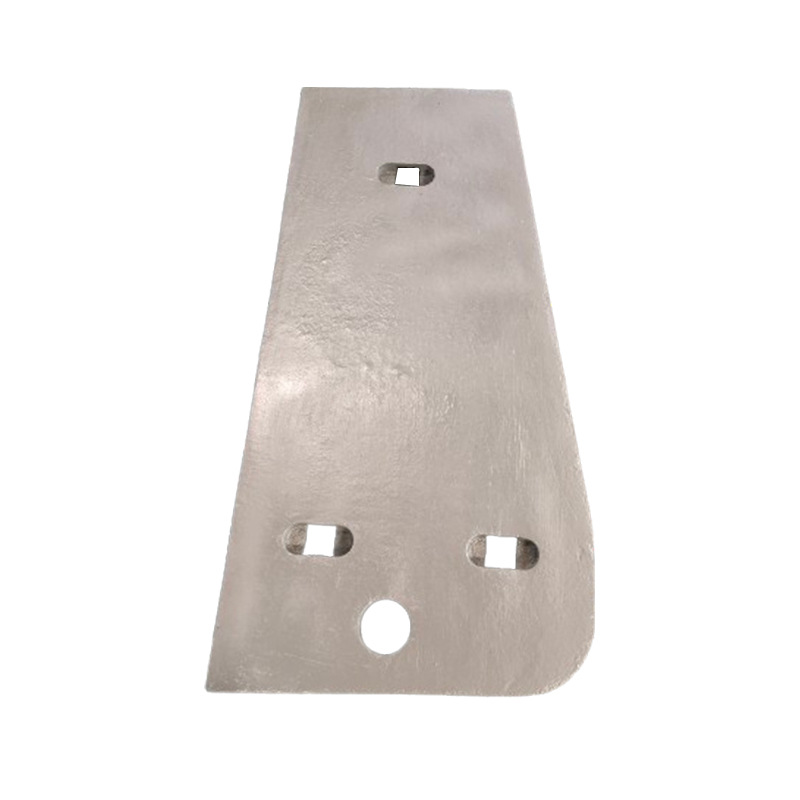
Mitigating Severe Lateral Reaction Forces and Frame Deformation
Resisting Dynamic Crushing Reactive Forces in the Chamber
When primary reduction is done quickly and forcefully, rock breaking causes huge side shocks to hit the walls of the crusher. A side plate that has been strengthened is very strong and stiff, so it can handle the reactionary force of fragmentation well. The side plate protects the structural sidewalls from distortion by absorbing continuous multidirectional stress. This keeps the chamber in the exact position and stops severe mechanical fatigue during high-volume hard-rock processing.
Preserving Machine Geometry Alongside Forged Shaft Assemblies
Precision-forged eccentric shafts allow jaw crushers to go through repeated crushing strokes without the structure bowing. A strong side plate keeps the crushing cavity from expanding laterally. This keeps the internal spaces stable around the moving parts and high manganese steel toggle plates. This structural balance keeps the side plate’s gap tolerances consistent, which keeps bearings and heavy drive elements from being stressed in different ways.
Dampening Sudden Impact Spikes and Vibration Transfer
When very hard basalt or tramp metal that can’t be broken enters the chamber, strong shock waves travel through the equipment. A strong side plate is an important mechanical buffer that stops localized impact spikes from damaging the main frame. The right level of stiffness in the side plate works well with carbon steel or spring steel buffer springs to reduce strong shocks and protect the machine’s core grounding.
Metallurgical Excellence for Hard Rock Abrasion and Impact Durability
Utilizing High Manganese Steel and High Carbon Steel Formulations
The key to wear protection is exceptional steel. High manganese steel and high carbon steel are used to cast premium side plate components. These steels are strong enough to withstand impact and last longer. Under extreme pressure, this casting mixture quickly becomes hard, making the side plate resistant to wear while keeping the core strong against brittle fractures.
Handling Extreme Rock Hardness and Resisting Environmental Corrosion
Working with thick granite, quartzite, and iron ore causes a lot of surface friction, and the wet conditions in the mine make things even more difficult. A side plate of metallurgical grade can be used on harder rocks and is resistant to corrosion, so the surface doesn’t oxidize or get micro-pits. This specific alloy steel makeup keeps the structure strong, which means that the side plate will have consistent wear patterns during long yearly extraction campaigns.
Preventing Premature Gouging and Micro-Cracking Under Severe Friction
The rough mineral feed keeps sliding down, which causes severe gouging inside the chamber. When a side plate is properly heated, it stops rough cutting and stops micro-cracks from spreading across the plate surface. Increasing the side plate’s wear resistance also protects nearby parts like high manganese steel dust rings and alloy steel rackbar elements, making sure the whole crushing assembly works well and doesn’t break down too soon.
Manufacturing Accuracy, Custom Engineering, and Sourcing Advantages
Tight Machining Tolerances and Bolted Joint Stability
For a proper installation, the bolt holes must be perfectly lined up and the seating faces must be flat across the structural backing. A specially made side plate gets rid of localized tightening gaps, which stops repeated crushing harmonics from loosening fasteners. When the side plate is securely attached, it spreads the operational tension evenly across the frame. This stops stress from building up in one place and ensures safe, stable operation in harsh, continuous-duty quarry environments.
Custom Drawing Verification for Non-Standard Machinery Upgrades
Every repair and aggregate plant has to deal with different equipment needs. Before casting, careful verification of the drawings and non-destructive testing are needed to make sure that each side plate is made to order. This careful engineering makes sure that the new side plate fits perfectly with the existing mounting patterns, whether it’s being used to fix old mining equipment or to make custom structure parts for original equipment makers around the world.
Evaluating Total Cost of Ownership and Project Lead Times
Smart buying managers look at the total working lifetime of wear parts instead of just the original purchase price. Customized casting and precision machining need flexible lead times to make sure the quality is checked thoroughly. However, investing in a durable side plate cuts down on unplanned downtime, lowers the cost of replacing workers, and guaranties reliable long-term productivity for tough mining and infrastructure projects.
Conclusion
For the jaw crusher to remain structurally sound, to absorb harsh shock loads, and to operate at peak efficiency in hard rock applications, side plate strength is crucial. If you choose a side plate made of high manganese steel or high carbon steel, it will be very rigid, resist corrosion well, and last a long time. Investing in well-designed wear parts saves crusher frames and cuts running costs in the long run.
FAQ
The side plates of a jaw crusher are made of high manganese steel. Why is that?
When high manganese steel is hit hard, it work-hardens. This makes the side plate tough and resistant to wear, while the inner core keeps receiving impact.
What makes a side plate fail before it should?
Wear or cracking that happens too soon is usually caused by casting metal that isn’t up to par, mounting bolts that aren’t tight enough, or processing feed that has too much uncrushable tramp material.
Can side plates be changed to fit older or non-standard crushers?
Yes. Manufacturers with a lot of experience make side plate liners that are exactly what the client wants them to be, down to the bolt spacing, thickness, and metal makeup.
How do the side plates keep the main frame of the crusher safe?
A side plate takes in direct lateral rock friction and fragmentation reactive forces. This keeps the structural frame walls from wearing away or cracking mechanically.
What is the usual lead time for side plates that are cast to order?
Production schedules are still subject to change based on confirmation of the drawing, preparation of the mold, the difficulty of the casting, and thorough quality checks.
Partner with Us for Custom Crusher Parts
Want wear parts for your big mining equipment that are solid and custom-made? Xian Huan-Tai Technology and Development Co., Ltd. has been in business for 30 years and can meet a wide range of client needs. Our professional production team is in charge of quality control from start to finish, and our technical team makes sure that every custom part meets strict performance and mechanical tolerances. When you work with us, you’ll get great service and reliable cast and made parts. To get a personalized quote, please email our engineering team at inquiry@huan-tai.org right now.
References
- P. K. Mallick, Materials and Design for Heavy Mineral Processing Equipment, Mining Engineering Journal, 2020.
- G. R. Powell and M. A. Davies, Structural Stress Analysis of Jaw Crusher Frames Under Cyclic Impact, International Journal of Rock Mechanics and Mining Sciences, 2019.
- D. J. Wills and J. A. Finch, Wills’ Mineral Processing Technology: An Introduction to the Practical Aspects of Ore Treatment and Mineral Recovery, Butterworth-Heinemann, 2016.
- H. C. Lindqvist, Wear Mechanisms and Alloy Selection for Crushing Liners in Hard Rock Quarries, Wear and Tribology in Mining, 2021.
- R. N. Kumar and S. K. Bhattacharya, Performance Optimization of Manganese Steel Castings in Primary Crushing Units, Materials Science and Engineering for Heavy Industry, 2018.
