
The heavy cast body that holds the swing jaw plate, rides on the eccentric shaft, and sends crushing force into the rock is called the jaw stock. It is the moving heart of a jaw crusher. How is a jaw stock made? What materials make it strong and last a long time? Where does it work best in mining, quarrying, and recycling equipment?
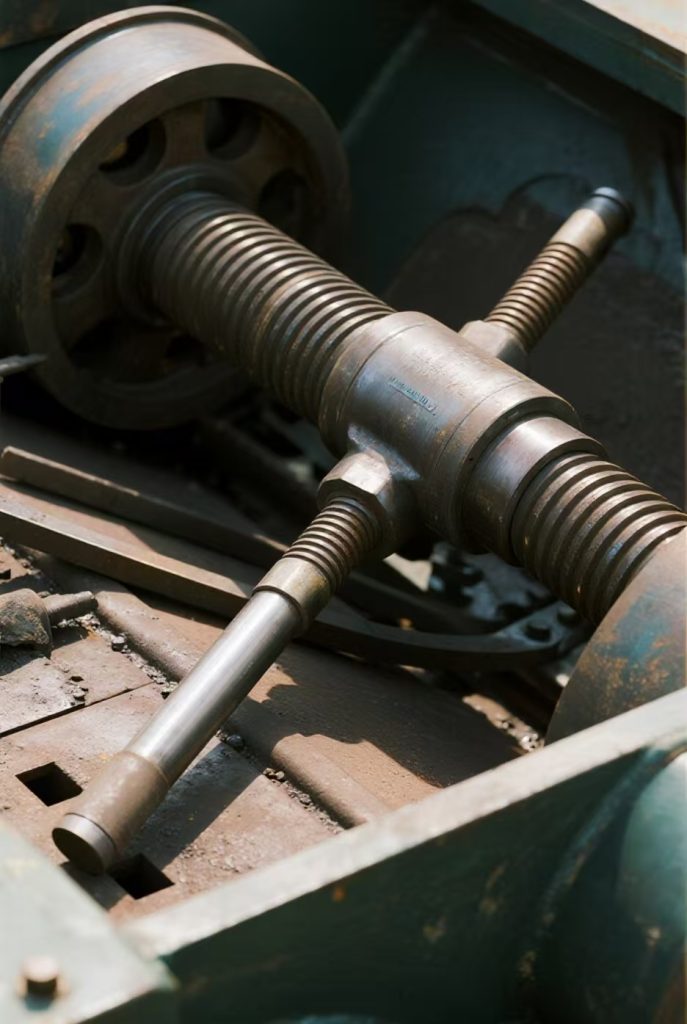
How a Jaw Stock Is Structured Inside a Jaw Crusher
The Main Body and Bearing Housings
There is only one cast body in a jaw stock. It has thick side walls, ribs inside, and two machined bearing seats on top. For fatigue strength, the eccentric main shaft is forged instead of cast. It goes through these seats and drives the whole assembly. The high rigidity of the casting stops the casting from bending, which would shorten the life of the bearings, because the jaw stock takes the full reactive force of fragmentation on every stroke.
The Jaw Plate Seat and Wedge System
The front face of the jaw stock is flattened and has a wedge or bolt system that holds the swing jaw plate in place. If there is a space here, the plate can rock, which hits the seat hard and cracks it. A well-finished jaw stock face that is held flat keeps the manganese liner in place and makes it easy for maintenance crews to replace plates in the field.
The Toggle Seat and Tension Rod Connection
The toggle seat is at the lower back of the jaw stock. The toggle plate, which is usually made of high manganese steel, rests on this seat and slides against the body. After each stroke, a tension rod and spring made of spring steel or high-strength steel wire pulls the jaw stock back. Because it will be under steady compression load for the whole life of the breaker, the toggle seat area is strengthened when it is made.
Materials That Give a Jaw Stock Strength and Long Life
Cast Steel Grades Used for the Body
A lot of jaw stock bodies are made from high-quality cast steel. High carbon steel and high manganese steel are two common types. High manganese steel hardens when it is hit, so the surface gets tougher as the jaw stock runs longer, but the core stays flexible and doesn’t crack. High carbon steel is very rigid, so it’s often used for mid-sized crushers in quarry and construction work.
Heat Treatment and Mechanical Properties
A jaw stock is not finished just by casting it. Manganese steel is water-toughened, and carbon steel is normalized and tempered. This is what sets the end balance between hardness and impact resistance. If you treat your jaw stock the right way, harder rocks like granite and basalt will not break it when they hit it. The right chemistry is also needed for good rust protection, which is important in wet mine pits and seaside gravel plants.
Why Material Consistency Matters for Buyers
Even if two jaw stock castings look the same, they may act in very different ways if the chemistry or pouring temperature changes. For every jaw stock that is given, purchasing managers should ask for a spectrographic analysis, an ultrasound test, and a hardness report. Because the material is the same from batch to batch, a repair shop can figure out when to do maintenance, and an OEM can promise that hundreds of crushers in the field will all work the same.
Industrial Uses and Buying Considerations for a Jaw Stock
Mining and Hard Rock Primary Crushing
When iron ore, copper ore, or gold-bearing quartz are being processed in mines, the jaw stock is subjected to the roughest and most impact-filled conditions of any crusher part. High manganese jaw stock casts are used here because they can handle being hit over and over by big, hard feed. There is usually a spare jaw stock on site for miners because when the primary crusher breaks down, the whole plant stops.
Quarrying, Construction, and Recycling Equipment
Aggregate mines, road builders, and people who salvage old buildings use jaw crushers on asphalt, limestone, and concrete waste. The jaw stock in these machines doesn’t deal with the hardest rocks, but it works hard for long hours and often has to deal with concrete that is full of rebar. A rigid cast steel jaw stock with a precisely machined plate seat keeps the size of the product uniform and cuts down on unplanned stops that cut into contractors’ profits.
Choosing a Custom Jaw Stock Supplier
A lot of older crushers don’t have OEM parts, so to get a new jaw stock, you have to use drawings or a worn sample to figure out how to make it. Lead time includes making the pattern, making sure the drawing is correct, casting, heat treating, and machining. It can get longer if the design needs to be changed more than once. That risk is lower and your delivery schedule is protected if you work with a foundry that has been making non-standard mining and engineering castings for decades.
Conclusion
To stand up to the reactive force of fragmentation every day, a jaw stock needs to be very strong, rigid, and tough on impacts. It can handle harder rocks and doesn’t rust in tough sites because it’s made from high manganese steel or high carbon steel and has been heat treated correctly. Just as important as picking the right grade is picking a partner you can trust.
FAQ
What is a jaw stock?
The eccentric shaft moves the cast moving body of a jaw crusher, which holds the swing jaw plate.
What kind of wood is best for a jaw stock?
For rock that is hard and abrasive, high manganese steel is best. For medium-duty quarry and construction crushers, high carbon cast steel is better.
Is the jaw stock made of cast metal or formed metal?
The main tube that goes through the jaw stock is made, while the jaw stock itself is cast.
How long does it take to make a jaw stock?
It changes based on drawing confirmation, pattern work, and heat treatment, so parts that are not standard at all will take longer to make.
Can you make a jaw stock for a crusher that is no longer being made?
Yes, from specs, a worn sample, or measures taken on-site.
Ready to Source a Dependable Jaw Stock?
Since the mid-1990s, Xian Huan-Tai Technology and Development Co., Ltd. has made custom, non-standard mechanical parts. This gives us 30 years of experience with mining and engineering castings. Our production team is in charge of quality at every step, and our expert team meets performance goals by working straight from your plans or samples. Send your jaw stock specification, crusher model, or even a photo of the worn part to inquiry@huan-tai.org, and we will reply with a practical proposal and quotation.
References
- Wills, B. A., & Finch, J. A. Wills’ Mineral Processing Technology, 8th ed., Butterworth-Heinemann, 2016.
- Gupta, A., & Yan, D. S. Mineral Processing Design and Operations: An Introduction, 2nd ed., Elsevier, 2016.
- Davis, J. R. (ed.). ASM Specialty Handbook: Carbon and Alloy Steels, ASM International, 1996.
- Campbell, J. Complete Casting Handbook: Metal Casting Processes, Metallurgy, Techniques and Design, 2nd ed., Butterworth-Heinemann, 2015.
- Lindqvist, M., & Evertsson, C. M. “Liner Wear in Jaw Crushers,” Minerals Engineering, Vol. 16, No. 1, 2003.
