
A crusher’s rotor takes the drive energy and hits the object over and over again. How stable the rotor is to use and how much power it can make can depend on its balance, geometry, material, and fit. When it comes to the crusher’s designed working range, good rotors help keep the impact conditions stable and the flow reliable. This is not the right choice if you only look at size or price. You should also look at the machine, feed, service history, and OEM needs.
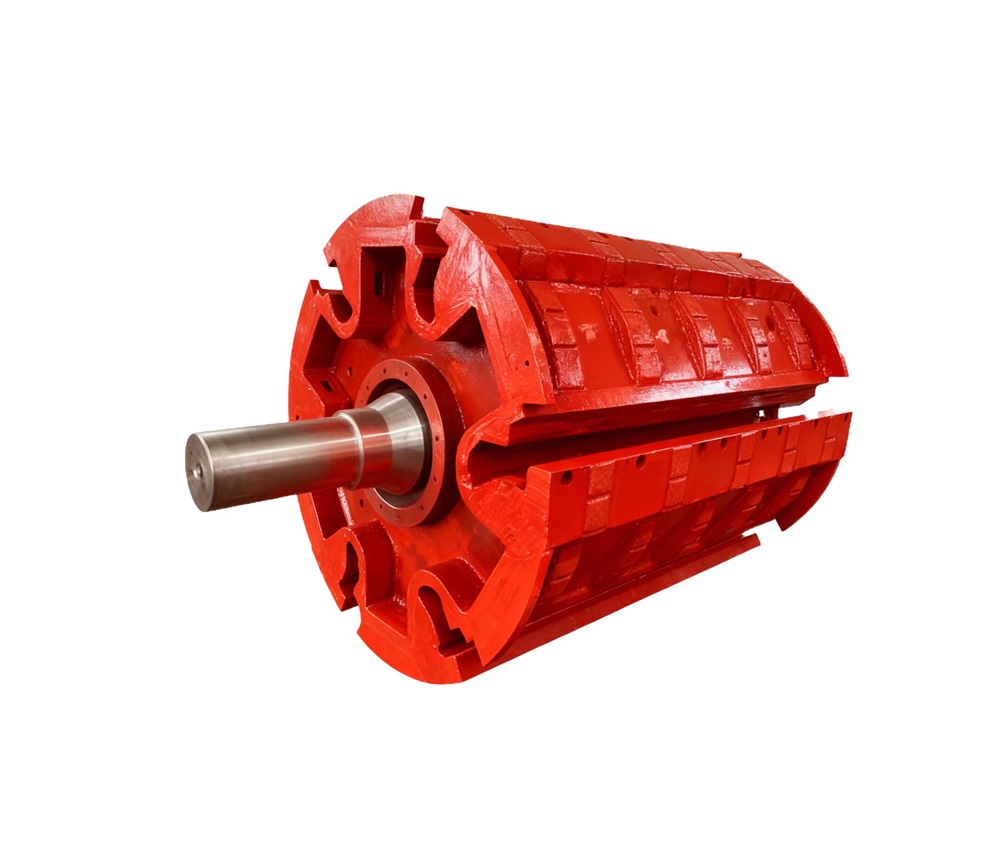
How Rotors Improve Crushing Stability
Balanced mass supports smoother running
It’s not balanced, so forces move unevenly through the shaft, joints, and frame. Do it right, and your rotors will have dynamic balancing, controlled mass distribution, and a sound assembly that works with the machine’s speed. Everything about the rotor works together to keep it from shaking, keep the crushing chamber running regularly, and make regular inspections easier when it is set up and used as directed by the manufacturer.
Accurate geometry supports consistent operation
The sizes, fixing places, and working areas of the rotor must all match how the breaker is made. To keep parts lined up and the rotor, feed, and crushing chamber in the right place, you need accurate rotors. You can get accurate measurements by making with resin sand, the V-process, or lost-wax. During final inspection and machining, important parts should be compared to the approved drawing before the item is shipped.
Material choice suits impact duty
It’s important that the material and construction are right for the impact, feed, and service conditions when high loads are being crushed. If the plan calls for cast rotors, they can be made of alloy steel, high-manganese steel, high-chromium cast iron, or a mix of these. Each of these choices has a different mix of resistance to impact and crack. Don’t think that one standard will work in every situation. Instead, an engineering study should make sure that the grade and process are right for the job of the machine.
How Rotors Support Output Capacity
Energy transfer stays within the design envelope
The output is affected by more than just the motor’s power. The working width, speed, feed size, material hardness, and discharge settings all play a part. The impact energy delivered by properly sized rotors is tailored to the crusher’s design and the final product. Keep the speed and settings within the limits set by the equipment’s maker. Increasing speed by itself is not a surefire way to get more work done.
Stable feeding supports productive cycles
Feeding that is steady lets rotors make the most of their working space and cuts down on interruptions caused by surges or uneven loading. Make sure that the feed hole and upstream conveyor rate are right for the crusher’s capacity, taking into account the size and moisture of the material. When the feed pattern stays the same, operators can get a better idea of the output and tell the difference between rotor wear and changes in the plant’s conditions.
Wear-part planning sustains throughput
On the rotors of impact crushers, blow bars are attached to hit the material over and over again. Their shape, size, and state should all meet the crusher’s requirements. At regular times, check the state of the wear parts, how the rotors are seated, and how they are locked in place. These checks help teams find service needs early and schedule replacement work with planned shutdowns. This helps ensure reliable output and steady production throughout normal operating cycles.
How to Specify and Verify Replacement Rotors
Start with machine data, not a generic catalog
If you want a price, you need to include the make, model, serial number, rotor drawing or sample, part number, working speed, and feed details. Include important measurements, information on how to mount it, the number of items, and a history of wear or failure. This helps the engineering team figure out if the new rotors will work with the current machine or if the drawings need to be cleaned up before they can be made and production plans made.
Review manufacturing and inspection records
Find out how rotors are made and which sizes go through final testing and grinding. Depending on the need for shape, size, and tolerance, lost-wax, resin-sand, and V-process casting can be used. For the main shaft of a crusher, ask for forging instead of casting, and ask for records of the material used and inspections. It’s easier to make sure that quality expectations are met before the order is approved when the process is described component by component.
Select a supplier for predictable supply
Don’t just look at unit price when comparing quotes; use the same version of the model, material, inspection scope, packing, and location. Find out about batch recognition, change control, and how to handle drawing queries. For custom rotors, you might need more time for design approval or planning the process, so once you know what you need, ask for a schedule based on milestones. Huan-Tai has 30 years of experience making customized, non-standard parts. He also has experience with engineering, production, inspection, and managing schedules.
Conclusion
Through the use of the right balance, geometry, material, and fit, well-matched rotors support stable crushing, and consistent feeding and maintenance help keep output high. Their contribution is based on the whole crushing system, not just one part of it. Make sure you have the machine data, manufacturing route, inspection criteria, and schedule milestones before you place your order. A partner expert with a lot of knowledge can help repair teams and OEM buyers be more sure of where to get new parts.
FAQs
What information do I need to get a quote on a rotor?
Send the type of the crusher, the part number, a plan or example, key measurements, feed conditions, amount, and where the crusher is going to make sure it fits before you quote.
How do I pick the material for the rotor?
Use the right material for the crusher based on its form, impact load, feed, and past wear. Alloy steel, high-manganese steel, high-chromium cast iron, or a suitable composite material can be used for casting.
What kinds of casting options are there?
Different shapes work best with lost-wax, resin-sand, and V-process casting. Check the route and compare the critical dimensions to the approved drawing after the work has been done.
Are the main shafts of crushers made with the rotors?
No. If the design calls for it, specify a forged main shaft and look over its material and inspection separately from the cast rotor parts.
Will the volume go up automatically if a new rotor is added?
Not all the time. The intended performance is supported by a proper fit, but the plant’s output is also affected by the consistency of the feed, its operating settings, and its downstream capacity.
Discuss Your Rotor Requirements with Huan-Tai
Need rotors made just for your mining or industrial gear? Tell Xian Huan-Tai Technology and Development Co., Ltd. about your crusher model, plans, or samples, as well as the amount you need, the conditions of the feed, and the best time for delivery. We have been in China since the mid-1990s and have 30 years of experience making custom, non-standard mechanical parts. Our technical team looks over the performance and quality standards, and our production and inspection teams make sure that quality is maintained throughout the whole process. Please email us at inquiry@huan-tai.org for great service, quick help, and a useful quote.
References
- Barry A. Wills and James A. Finch, Wills’ Mineral Processing Technology: An Introduction to the Practical Aspects of Ore Treatment and Mineral Recovery, 8th ed., Elsevier, 2016.
- John Campbell, Complete Casting Handbook: Metal Casting Processes, Metallurgy, Techniques and Design, 2nd ed., Elsevier, 2015.
- Richard G. Budynas and J. Keith Nisbett, Shigley’s Mechanical Engineering Design, 11th ed., McGraw-Hill Education, 2020.
- Robert L. Norton, Machine Design: An Integrated Approach, 5th ed., Pearson, 2013.
- Ernest Rabinowicz, Friction and Wear of Materials, 2nd ed., Wiley, 1995.
