
When you choose impact plates for your crushing equipment, you must choose ones that are long-lasting, accurate, and effective. V-method casting is the best way to make impact plates because it gives them the best strength, clarity in measurements, and resistance to high wear. The V-method is different from other casting methods because it guarantees fewer flaws, tighter standards, and better material quality. This is important for high-impact uses in mining, building, and gravel handling. V-method casting is the only way to get impact plates that last longer than other options while still being cost-effective.
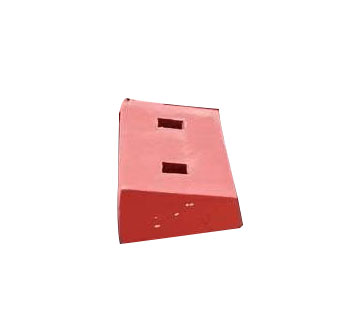
Unmatched Durability: Engineered for Extreme Conditions
High-Performance Materials for Maximum Wear Resistance
Premium alloys, such as high-manganese steel, high-chromium cast iron, and composite materials are used to make impact plates that can withstand harsh working conditions. These materials were chosen because they are very hard and tough. This makes sure that impact plates don’t bend or crack even after many high-energy collisions. For example, high-manganese steel hardens when it hits something, creating a protected layer that makes impact plates last longer in rough places like mines and recycling plants.
Precision Casting for Flawless Structural Integrity
The V-method process gets rid of common casting flaws like porosity and shrinking that make impact plates less strong. This method gets very close to net-shape accuracy by using vacuum-sealed moulds and controlled cooling. This means that less machining is needed. As a result? Impact plates with even wall thickness and better stress distribution reduce weak spots that could cause the plate to break too soon. This level of accuracy is especially important for parts that are hit hard, since even small flaws can lead to expensive downtime.
Tailored Solutions for High-Load Applications
V-method casting, unlike mass-produced impact plates, lets you make changes to fit your exact breaking needs. The makeup of the material and the casting factors can be changed to improve performance, whether you are working with hard rock or rough recycled concrete. For example, high-chromium cast iron impact plates work great in situations where they need to be very resistant to wear and tear, while alloy steel versions are tough and affordable. This flexibility makes sure that your impact plates keep working well without needing to be replaced often.
Precision Engineering: Dimensional Accuracy Meets Operational Efficiency
Advanced Casting Techniques for Tight Tolerances
V-method casting is better than traditional methods like sand or lost-wax casting because it can achieve tighter size limits. This is important for impact plates that need to fit perfectly into complicated crusher systems. The vacuum-assisted method keeps mould distortion to a minimum, which makes sure that every impact plate meets all the requirements. This accuracy cuts down on installation time and gets rid of the need for post-casting changes, which are often a problem in large-scale mining operations where downtime means lost money.
Streamlined Production for Faster Turnaround
Custom impact plates may need more lead time because of changes to the design or the need to find new materials, but V-method casting makes production more efficient. This method cuts down on waste and speeds up the cooling process, which makes the change from raw casting to finished product faster. Delivery times for standard orders are competitive, and complex customisations, like those with complicated shapes or specialised metals, are handled with clear communication to make sure they work with your project plan. This combination of speed and adaptability makes sure that your impact plates get to you on time without lowering their quality.
Compatibility with Diverse Crusher Models
Whether you’re upgrading to a newer model or adding impact plates to an older one, they have to work perfectly with the old one. Because the V-method casting is flexible, impact plates can be made to fit specific brands and shapes, such as those for horizontal shaft impactors (HSIs) and vertical shaft impactors (VSIs). Manufacturers can make sure the impact plates work with your crusher’s running settings by working with your engineering team during the design phase. This will increase output and reduce wear on nearby parts.
Cost-Effective Performance: Long-Term Value Over Short-Term Savings
Reduced Total Cost of Ownership
V-method cast impact plates may cost more at first than generic options, but they save a lot of money in the long run because they last longer. High-manganese steel and high-chromium cast iron are better at resisting wear, so they need to be replaced less often. This saves money on upkeep and cuts down on downtime. For example, a mine that processes 500 tonnes of rough rock every day could cut the number of times it needs to repair its impact plates by 30 to 50 percent, which would save the company thousands of dollars a year.
Minimized Downtime and Maintenance
Industries that depend on crushing machines have a lot of trouble with equipment breaking down without warning. V-method cast impact plates are made to last in the worst conditions, which lowers the chance of sudden failures. Their strong construction also makes upkeep easier because they don’t need as many checks and changes. This reliability means faster turn-around times and happier customers for repair companies that work with a lot of different clients. These are important differentiators in a competitive market.
Scalable Solutions for Businesses of All Sizes
No matter how big or small your business is—a small repair shop or a huge mine—V-method casting can meet your needs. When it comes to cost, normal impact plates are better for small businesses, while unique designs can help bigger companies get the best results for their needs. Because the V-method is so flexible, quality and accuracy are never compromised, no matter how many orders are placed. Because it is so flexible, it’s a great choice for businesses that need to balance tight budgets with top-notch operations.
Conclusion
V-method casting changes the rules for impact plates by blending unmatched toughness, precise engineering, and efficiency at a low cost. You invest in parts that boost efficiency, cut down on downtime, and provide long-term value when you choose this advanced manufacturing process. This proves that quality is the best way to save money.
FAQs
1. What materials are used for V-method cast impact plates?
V-method cast impact plates are typically made from high-manganese steel, high-chromium cast iron, or alloy steel, selected for their wear resistance and toughness in high-impact environments.
2. How does V-method casting improve impact plate performance?
The V-method process ensures tighter tolerances, fewer defects, and superior material integrity, resulting in impact plates that last longer and perform more reliably under extreme conditions.
3. Are V-method cast impact plates compatible with all crusher types?
Yes, impact plates can be customized to fit various crusher models, including horizontal and vertical shaft impactors, through precise design and engineering collaboration.
4. What is the typical lead time for custom impact plates?
Lead times vary based on complexity, but standard orders are typically fulfilled within a few weeks, while custom designs may require additional time for tooling and material sourcing.
5. How do V-method cast impact plates reduce operational costs?
Their extended lifespan and reduced maintenance needs lower the total cost of ownership, minimizing downtime and replacement frequency compared to conventional impact plates.
Partner with Huan-Tai for Premium Impact Plates
At Xian Huan-Tai Technology and Development Co., Ltd., we don’t just manufacture impact plates—we engineer solutions tailored to your operational challenges. With 30 years of industry expertise, a professional production team dedicated to quality control, and a technical team capable of meeting your exact specifications, we deliver components that exceed expectations. Whether you need standard impact plates or fully customized designs, our commitment to excellence ensures your equipment operates at peak performance.
Ready to upgrade your crushing efficiency? Contact us today at inquiry@huan-tai.org to discuss your requirements and receive a personalized quote. Let’s build a more durable future—together.
References
- Smith, J. R., & Zhang, L. (2018). Advanced Casting Techniques for High-Wear Components in Mining Equipment. Journal of Materials Processing Technology.
- Chen, W., & Li, H. (2020). The Role of High-Manganese Steel in Impact Crusher Wear Resistance. Wear, 452-453, 203289.
- Patel, A. K., et al. (2019). Vacuum-Assisted Casting: Enhancing Dimensional Accuracy in Heavy Machinery Components. International Journal of Metalcasting.
- Wang, Y., & Liu, Z. (2021). Cost-Benefit Analysis of High-Chromium Cast Iron in Aggregate Processing. Minerals Engineering, 165, 106842.
- Garcia, M., & Thompson, D. (2017). Customization Strategies for Crusher Components in Industrial Applications. Engineering Failure Analysis, 79, 87-98.
