
Choosing the right blow bars comes down to matching material hardness, impact toughness and feed conditions. High-manganese steel, alloy steel, high-chromium cast iron and composite blow bars each excel in different crushing tasks — this guide explains how to match them correctly.
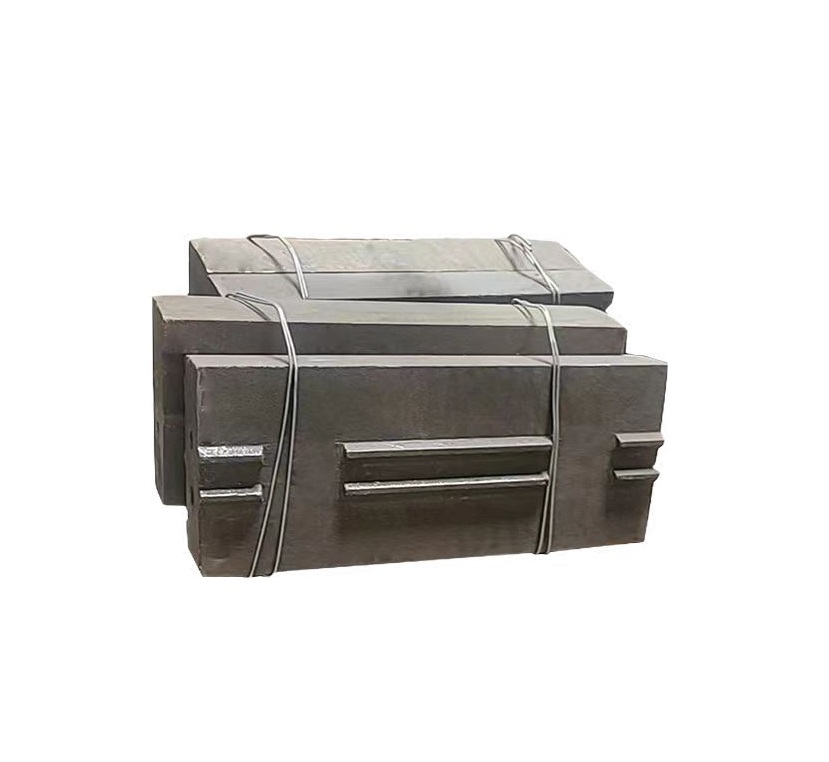
Understanding How Blow Bar Materials Behave in Real Crushing Conditions
High-Manganese Steel for High-Impact, Shock-Heavy Feeds
High-manganese steel blow bars remain the workhorse choice for impact crushers handling river gravel, recycled concrete and blocky, unpredictable feed. The material work-hardens under repeated hammering, forming a tough surface layer while the core stays ductile. That combination means blow bars absorb violent shocks without cracking. For quarries that occasionally feed oversized or tramp material, this forgiving behaviour prevents costly unplanned downtime.
High-Chromium Cast Iron for Abrasive, Medium-Impact Work
When abrasion rather than shock dominates, high-chromium cast iron blow bars deliver far longer service life. The hard carbides embedded in the matrix resist scouring from limestone, dolomite and other abrasive stone, keeping the crushing profile sharp for longer. Operators typically report significantly extended change-out intervals. These blow bars perform best with well-screened, consistent feed where large tramp metal is unlikely to enter the chamber.
Alloy Steel and Composite Blow Bars for Balanced Duty
Alloy steel offers a middle path: better wear resistance than plain carbon grades, with sound toughness for mixed-duty plants. For demanding sites, composite blow bars combine a manganese or alloy steel body with ceramic or high-chromium inserts at the working edge. This hybrid design gives blow bars both a shock-absorbing backbone and a highly wear-resistant face, an effective answer when feed varies daily across recycling and aggregate applications.
Matching Blow Bars to Your Crushing Task and Machine
Primary Impact Crushing of Coarse, Blocky Feed
In primary impact crushing, energy levels are high and feed size varies widely. Here, blow bars must survive repeated heavy strikes rather than simply resist scratching. High-manganese steel or a tough alloy steel grade is usually the safer specification. Selecting an overly hard material at this stage risks edge chipping. Discussing feed size, rotor speed and material hardness with our engineers helps narrow the correct grade quickly.
Secondary and Tertiary Crushing for Shaped Product
Secondary and tertiary stages work with pre-crushed, more uniform material, so wear becomes the leading cost driver. High-chromium cast iron blow bars hold their profile, protecting product shape and gradation consistency. Because impact loads are lower, the reduced toughness of harder grades is rarely a problem. Many customers run manganese blow bars up front and chrome-based blow bars downstream to balance total operating cost.
Recycling, Slag and Mixed Demolition Streams
Demolition concrete, asphalt and slag combine abrasive fines with unpredictable rebar and tramp steel. Composite or reinforced alloy steel blow bars handle this contradiction best, resisting gouging while tolerating occasional metal strikes. It is worth remembering that blow bars belong to impact crushers, while hammer heads serve hammer crushers — the two components suit different machine designs and should be specified separately for each crusher type.
How Huan-Tai Manufactures Reliable Blow Bars
Casting Processes That Protect Dimensional Accuracy
Our blow bars are produced by lost-wax investment casting, resin sand casting and the V-process, selected according to size, tolerance and surface finish requirements. These methods control shrinkage and keep mounting dimensions accurate, so bars seat correctly in the rotor and stay balanced at speed. Accurate seating reduces vibration, protects bearings and helps the full set of blow bars wear evenly through their service life.
Metallurgical Control and Inspection
Consistency starts in the melt shop. Chemical composition is verified by spectrometer, heat treatment cycles are recorded, and hardness testing confirms that each batch of blow bars meets the specified profile. Dimensional checks, visual inspection and, where required, non-destructive testing follow. This documented approach gives buyers repeatable performance from order to order — the predictability that machinery manufacturers and repair workshops depend on.
Customization, Drawings and Lead Times
We manufacture to your drawings, samples or worn parts, and can reverse-engineer discontinued profiles. Alongside blow bars, we supply crusher wear and structural parts such as high-manganese steel toggle plates and dust seal rings, alloy steel rack bars, forged main shafts, and spring steel or high-strength wire crusher springs. Lead times vary with drawing confirmation, tooling and process complexity; custom items naturally take longer, and we keep you updated throughout.
Conclusion
Correct blow bars selection balances impact toughness against abrasion resistance for your specific feed. Manganese, chrome, alloy and composite grades each have a place — and Huan-Tai’s casting expertise turns that choice into dependable, long-running crusher performance.
FAQ
Q1: Which blow bars last longest?
High-chromium cast iron generally lasts longest in abrasive, low-impact duty; manganese survives better under heavy shock.
Q2: Can you produce blow bars from our drawings?
Yes. We manufacture from drawings, samples or worn parts, including reverse engineering.
Q3: What casting processes do you use?
Lost-wax, resin sand and V-process casting, chosen to suit size and tolerance requirements.
Q4: Are hammer heads and blow bars interchangeable?
No. Blow bars fit impact crushers; hammer heads fit hammer crushers. They are separate components.
Q5: How are lead times determined?
By drawing confirmation, tooling, casting process and quantity. Custom items require longer schedules.
Work With Huan-Tai
Since the mid-1990s, Xian Huan-Tai Technology and Development Co., Ltd. has customized non-standard mechanical parts for mining, engineering and equipment manufacturers worldwide. With 30 years of experience, a production team that controls quality at every stage, and engineers who translate performance requirements into workable castings, we make sourcing simple. Send us your drawings, samples or crusher details and let’s specify the right blow bars together. Contact us at inquiry@huan-tai.org.
References
- Gupta, A. & Yan, D. S., Mineral Processing Design and Operations: An Introduction.
- Wills, B. A. & Finch, J. A., Wills’ Mineral Processing Technology.
- Davis, J. R., Alloying: Understanding the Basics.
- Tabrett, C. P., Sare, I. R. & Ghomashchi, M. R., “Microstructure–Property Relationships in High Chromium White Iron Alloys.”
- Bhadeshia, H. K. D. H. & Honeycombe, R. W. K., Steels: Microstructure and Properties.
