
A lot of crusher hammer heads are made from alloy steel because it has a unique mix of hardness, toughness, and resistance to impact. Because of this balance, hammer heads can handle repeated high-force impacts in hammer breakers without cracking, deforming, or wearing out too quickly. This makes it a popular choice for demanding industrial uses.
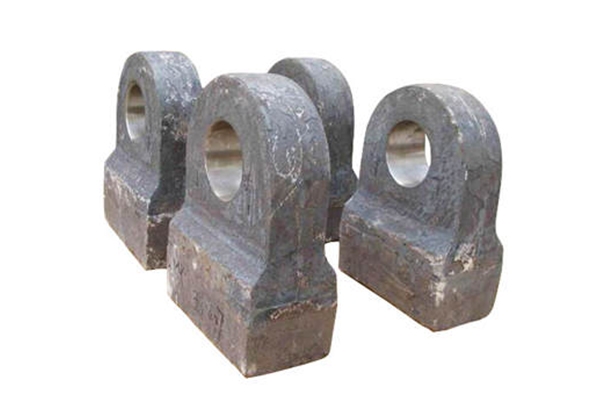
The Metallurgical Reasons Behind Alloy Steel Selection
Balancing Hardness and Toughness
Alloy steel, on the other hand, has a controlled balance between how hard the surface is and how tough the inside is. This is very important for a Crusher Hammer Head because it needs to be able to keep its striking face from wearing down from abrasions while still being flexible enough on the inside to handle repeated impact shocks without breaking during long production cycles.
Other High-Performance Material Choices
In addition to alloy steel, hammer heads can also be made from high-manganese steel, high-chromium cast iron, or a mix of these materials. Each choice works best in a different set of circumstances, and the company that makes Crusher Hammer Heads usually suggests the material grade based on the feed’s hardness, the amount of moisture in it, and how often it will be hit in the crushing chamber. This way, the part is made to fit real-world needs instead of general assumptions.
Resistance to Fracture Under Repeated Loading
Continuous, high-intensity contact cycles are made by hammer crushers. Over time, material wear is a real risk. The alloy steels used in a crusher hammer head are designed to be very resistant to breaking and impact force. This makes them reliable in high-load, high-strength situations where a quick failure could stop a whole production line and cost a lot of money in lost time.
How Manufacturing Processes Reinforce Alloy Steel Performance
Precision Casting Methods for Dimensional Accuracy
Casting method is very important for making an effective Crusher Hammer Head. Many times, methods like lost-wax casting, resin sand casting, and V-method casting are used to make sure that the dimensions are correct and that the structure inside is consistent. This lowers the chance of having any hidden holes or flaws that could affect the part’s long-term performance once it is installed and running continuously.
Customization Based on Equipment Drawings
Hammer crusher types change from one maker to the next, so a Crusher Hammer Head is usually made from plans and specs provided by the customer. This method of customization makes sure that the parts fit correctly inside the rotor assembly. This helps operators avoid installation issues and keep the rotor rotating evenly during continuous crushing operations. This is especially important for machines that are used 24 hours a day in mining or aggregate processing settings.
Quality Control Throughout Production Stages
For reliable alloy steel hammer heads, they need to be inspected at every step, from making sure the raw materials are correct to casting and finishing the work. Before a crusher hammer head gets to the customer’s crushing equipment, it goes through a structured quality control process that checks its hardness, dimensions, and surface integrity. This gives purchasing and production managers confidence that the quality will be the same from batch to batch.
Why Alloy Steel Suits Demanding Mining and Engineering Applications
Performance in High-Impact Mining Environments
Hammer crushers are used in mines to process large amounts of material all the time, and the material that goes through them is often dense or rough. Alloy steel Crusher Hammer Head parts are made to last in this harsh environment. They keep their structural integrity over long production cycles instead of needing to be replaced often. This makes it easier for operations to plan for long-term maintenance and budget for equipment.
Compatibility With Broader Crusher Component Systems
A Crusher Hammer Head doesn’t work by itself; it works with other engineered parts in the hammer crusher assembly. Alloy steel construction helps keep parts that are close to it compatible, which supports stable operation and cuts down on uneven wear patterns that could affect the general efficiency of the machine, the balance of the rotor, and the stability of the end product particle size across a production run.
Supporting Long-Term Operational Reliability
Reliability directly means less downtime for both companies that make machines and companies that fix them. When properly cast and heat-treated, alloy steel Crusher Hammer Head parts have longer service intervals. This means that maintenance teams can plan replacements around scheduled maintenance rather than having to fix broken equipment right away. This is especially helpful for smaller repair companies that have smaller spare parts inventories and shorter maintenance windows.
Conclusion
Alloy steel is still the best material for making Crusher Hammer Heads because it has a good mix of strength, resistance to breaking, and industrial accuracy. This means that it can be used in a wide range of challenging hammer crusher uses around the world.
FAQ
Q1: What kinds of materials are used to make Crusher Hammer Heads?
Alloy steel, high-manganese steel, high-chromium cast iron, and composite materials are all common choices. Each is chosen based on the conditions of use.
Q2: How does the way the hammer head is cast affect its quality?
Lost-wax and resin sand casting are two methods that make sure the parts are the right size and have the same internal structure so they work well.
Q3: Can hammer heads be changed to fit certain types of crushers?
For proper equipment fit and rotor balance, yes, they can be made from drawings provided by the client.
Q4: Can alloy steel be used in mining?
Yes, it works consistently in situations of constant high-impact, high-load mining and gravel handling.
Q5: How long does it usually take to make a unique hammer head?
Lead times change for each order based on the difficulty of the casting, the choice of material, and the approval of the drawing.
Get in Touch With Us
We at Xian Huan-Tai Technology and Development Co., Ltd. have been making custom, non-standard mechanical parts for 30 years. These include long-lasting alloy steel Crusher Hammer Head parts made for tough mining and engineering settings. Our professional production and expert teams make sure of quality at every step, from choosing the raw materials to the final review, to make sure that the parts meet all of your performance needs. Our experienced team is ready to help you whether you need standard replacements or parts that are made just for you based on your own drawings. Email us at inquiry@huan-tai.org right now to talk about your crusher part needs and find out how our technical knowledge can help the long-term stability of your business.
References
- Whitmore, D. — Alloy Steel Applications in Impact-Resistant Machinery Components
- Zhao, Y. — Casting Techniques for High-Wear Mining Equipment Parts
- Fernandez, C. — Fracture Resistance in Hammer Crusher Component Design
- Osei, K. — Material Selection for High-Impact Crushing Applications
- Bergstrom, A. — Maintenance Strategies for Heavy-Duty Crushing Equipment
