
Crusher Impact Plates are among the most critical wear components in any impact crushing system. They absorb the repeated shock of high-velocity material, redirect the flow, and define how efficiently rock or ore is broken down. When impact plates are properly engineered — in terms of material selection, dimensional accuracy, and structural integrity — the entire crushing circuit becomes more productive, more consistent, and easier to maintain. This single component has an outsized effect on overall machine output.
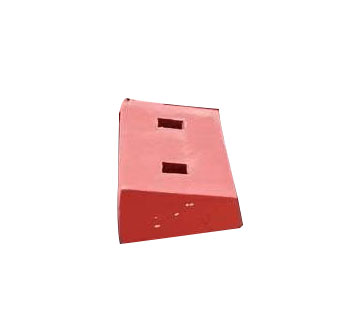
How Impact Plates Are Engineered for Crushing Demands
Material Selection That Matches the Job
The foundation of a reliable impact plate starts with the right alloy. Impact Plates used in heavy-duty crushing applications are typically manufactured from high-manganese steel, alloy steel, or high-chromium cast iron, each chosen based on the abrasiveness of the feed material and the intensity of impact. High-manganese steel work-hardens under repeated blows, making it especially well-suited for high-load environments. These are exactly the grades Huan-Tai supplies as core impact crusher parts for engineering and mining machinery.
Casting Processes That Ensure Dimensional Accuracy
Precision matters in impact crusher parts because even slight dimensional deviations affect how material flows across the chamber and how uniformly wear is distributed. Impact Plates are produced through casting methods including lost-wax (investment casting), resin sand casting, and V-process casting. These techniques ensure tight dimensional tolerances, smooth surface profiles, and consistent density throughout the plate — all of which directly affect how long the part lasts and how predictably it performs between maintenance cycles.
Fracture Resistance Under Real Operating Conditions
A well-cast impact plate must resist not just abrasion but sudden impact forces. Impact Plates engineered from composite materials or high-chromium cast iron offer excellent resistance to both fracture and deformation, making them suitable for high-strength, high-load environments typical in quarry, mining, and bulk material processing. It is worth noting that the main shaft of an impact crusher — unlike the plates — is produced using a forging process, which provides the shaft with superior fatigue resistance and structural toughness under continuous rotational stress.
Why Impact Plate Design Directly Affects Crusher Output
Blow Bar and Plate Interaction in Impact Crushers
In an impact crusher, the blow bars mounted on the rotor strike the feed material at high speed, and the impact plates provide the secondary and tertiary crushing surfaces. The geometry and hardness of the impact plates determine how material rebounds, how many times it is struck before exiting, and what particle shape is achieved. Impact Plates made from alloy steel or high-manganese steel maintain their profile longer, keeping the crusher’s output gradation stable across extended production runs — a key factor for customers supplying aggregates to specification.
Reducing Downtime Through Wear-Optimized Parts
One of the most useful benefits of impact crusher parts that are properly defined is that they cut down on unnecessary downtime. When Impact Plates are made from wear-resistant metals and cast to tight standards, they keep their shape for longer. This means that the crusher can keep working within its design limits without needing to be adjusted often. This dependability is just as important as the cost of the part itself for repair shops or machine workers who have to stick to tight production plans. Customized impact plates have different lead times based on the approval of the plan and the process needs. It is best to start working with the provider early on.
Supporting Consistent Product Quality in Mining and Quarrying
In mining and quarrying operations, output consistency is tied directly to downstream processing efficiency. If the impact plates wear unevenly or lose their profile prematurely, the crusher begins producing oversized or irregularly shaped material, burdening the secondary screening stages. High-quality Impact Plates — particularly those cast from high-chromium cast iron or composite materials — maintain their working surfaces more uniformly, supporting stable output gradation. This is especially relevant for larger machinery manufacturers and mine operators where quality control is a non-negotiable standard.
Selecting the Right Impact Plates for Your Application
Matching Hardness to Feed Material
Not every alloy suits every application. For highly abrasive ores or hard rock, high-chromium cast iron impact plates offer the best wear life. For applications with mixed feed and significant impact loading — common in construction waste recycling or secondary crushing — high-manganese steel Impact Plates are often preferred for their toughness. Understanding your feed material’s hardness and abrasiveness is the starting point for selecting the right impact crusher parts.
Evaluating Supplier Capabilities Beyond Price
Price is naturally a consideration, particularly for smaller operations. However, the total cost of ownership for impact crusher parts includes not just the purchase price but also wear life, dimensional consistency, and supplier reliability. A supplier with proven casting capabilities, rigorous inspection procedures, and documented material certifications adds measurable value — especially when the parts go into equipment running in remote or high-production environments.
Customization for Non-Standard Crusher Configurations
Many crushing installations — particularly in specialized engineering or mining applications — use non-standard or legacy equipment where off-the-shelf parts simply don’t fit. In these cases, the ability to work from customer drawings or reverse-engineered measurements is essential. Customized Impact Plates require close coordination between the customer’s engineering team and the manufacturer to confirm dimensions, material specs, and tolerances before production begins. Delivery timelines for such parts should be planned accordingly, as the drawing review and process confirmation phase can extend the overall cycle.
Conclusion
Impact Plates are not a commodity purchase — they are precision-engineered components that directly influence crusher efficiency, output quality, and maintenance frequency. Choosing the right material, ensuring accurate casting, and working with a supplier that understands heavy-industry demands are the three pillars of a sound procurement decision. When all three align, the performance benefits across the full crushing circuit are clear and measurable.
FAQ
Q1: What materials are Impact Plates typically made from?
Impact Plates are commonly manufactured from high-manganese steel, alloy steel, high-chromium cast iron, or composite materials. The choice depends on the application’s abrasiveness, impact intensity, and required wear life.
Q2: What casting methods are used to produce Impact Plates?
Common methods include lost-wax (investment) casting, resin sand casting, and V-process casting. These processes ensure dimensional accuracy and structural consistency.
Q3: How often should Impact Plates be replaced?
Replacement intervals depend on feed material hardness, operating hours, and the alloy specified. Regular profile inspection is recommended to avoid secondary damage to the crusher frame.
Q4: Can Impact Plates be customized for non-standard crushers?
Yes. Manufacturers with casting and machining capabilities can produce Impact Plates to customer drawings or reverse-engineered dimensions for legacy or specialized equipment.
Q5: What is the difference between blow bars and Impact Plates?
Blow bars are rotor-mounted and deliver the primary strike, while Impact Plates are stationary anvil surfaces that provide secondary and tertiary crushing. Both are key impact crusher parts but serve different mechanical roles.
Work With a Manufacturer That Gets It Right
At Xian Huan-Tai Technology and Development Co., Ltd., we have spent 30 years engineering customized non-standard mechanical parts for mining, construction, and heavy equipment industries. Our professional production and inspection teams manage quality at every stage — from material certification to final dimensional check — so your Impact Plates and other impact crusher parts arrive ready to perform. Tell us your application, share your drawings, and let’s build something that lasts. Contact us at inquiry@huan-tai.org to know more information.
References
- Gupta, A., & Yan, D. S. (2006). Mineral Processing Design and Operations: An Introduction. Elsevier. Chapter 6: Size Reduction and Energy Requirements in Crushing.
- Wills, B. A., & Finch, J. A. (2016). Wills’ Mineral Processing Technology (8th ed.). Butterworth-Heinemann. Chapter 5: Comminution — Crushing.
- King, R. P. (2001). Modeling and Simulation of Mineral Processing Systems. Butterworth-Heinemann. Section on impact crusher modeling and wear prediction.
- Lynch, A. J., & Rowland, C. A. (2005). The History of Grinding. Society for Mining, Metallurgy, and Exploration (SME). Chapter on crusher metallurgy and liner materials.
- Metso Outotec Engineering Team (Ed.) (2020). Crushing and Screening Handbook (6th ed.). Metso Corporation. Section 4: Impact Crusher Components and Wear Part Selection.
