
A failing Eccentric shaft rarely announces itself all at once. More often, the warning signs build gradually — unusual vibration, inconsistent output, abnormal noise from the crusher’s lower assembly — until the problem becomes impossible to ignore. In jaw crushers and cone crushers used in mining and engineering applications, the eccentric shaft is the component that drives the entire crushing motion. When it begins to fail, the effects ripple through every connected crusher part. Knowing what to look for early can be the difference between a planned repair and a costly emergency shutdown.
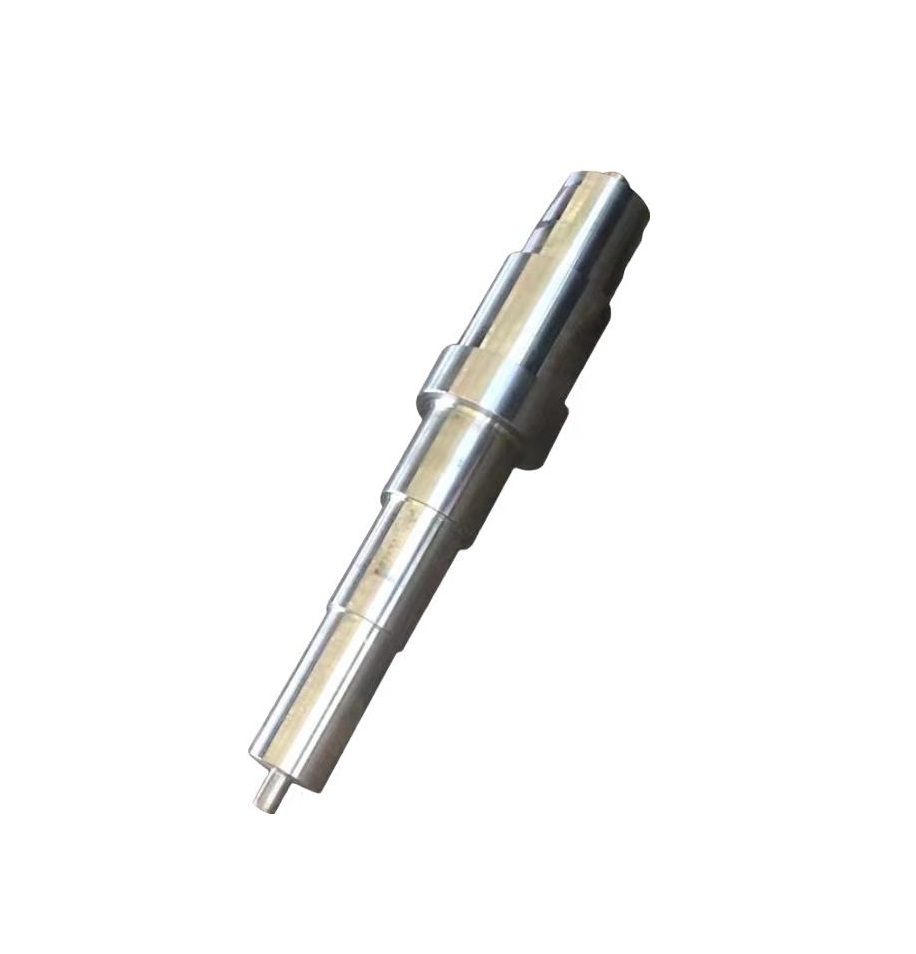
Physical and Operational Signs of a Failing Eccentric Shaft
Abnormal Vibration During Operation
A change in the crusher’s sound pattern is one of the first and most accurate signs that the eccentric shaft is wearing out. It changes the dynamic balance of the spinning unit when the shaft’s bearings wear down, its dimensions become less round, or its surface cracks. This causes the vibrations to be stronger, which can be felt through the frame of the crusher and heard as a louder rumble than usual. In mining and quarrying, if vibrations get worse for no apparent reason, the eccentric shaft and other parts of the crusher should be checked out right away.
Inconsistent Jaw or Cone Movement
The eccentric shaft‘s main job is to keep the rotating motion steady and under control in the crushing chamber. That action isn’t steady when the shaft is worn or broken. While the cone crusher is running, operators may notice that the jaw gap changes or that the product gradation isn’t as even as it usually is. Because these signs often show up before any damage can be seen, operating observation is one of the best ways for repair teams to figure out what’s wrong.
Excessive Heat Around the Bearing Housings
A worn eccentric shaft that no longer maintains its correct journal geometry causes the associated bearings to carry uneven loads. This uneven loading generates heat. If bearing housings around the eccentric shaft are running noticeably hotter than normal during operation — detectable by touch or by thermal measurement — it is a strong indicator that the shaft surface condition has degraded and is no longer providing the correct bearing support. Left unaddressed, this heat accelerates bearing wear and can lead to seizure of the crusher parts in the lower assembly.
How to Inspect the Eccentric Shaft for Damage
Visual Inspection of Journal Surfaces and Keyways
Once the crusher is safely shut down and de-energized, a hands-on inspection of the eccentric shaft should cover the journal surfaces, keyways, and any visible portion of the shaft body. Scoring, pitting, or circumferential wear grooves on the journal surfaces indicate that the lubricating oil film has broken down at some point during operation. Keyway cracking is a sign of torsional overload. An eccentric shaft manufactured from high manganese steel or high carbon steel — as Huan-Tai’s crusher parts are — resists surface damage better than standard cast alloy, but no material is immune to wear under prolonged high-load conditions.
Dimensional Measurement for Out-of-Round Wear
Visual inspection alone is not sufficient for a definitive assessment. Measuring the shaft journal diameter at multiple points around the circumference and along the length reveals whether the shaft has developed out-of-round wear, taper, or localized flat spots. Any deviation beyond the manufacturer’s specified tolerance indicates that the eccentric shaft needs replacement. For high-strength, high-rigidity eccentric shafts designed to withstand the reactive forces of hard rock crushing, dimensional integrity is what allows them to transmit force evenly and maintain correct crusher geometry.
Checking for Cracks Using Non-Destructive Testing
In high-tonnage mining operations or where the crusher has experienced a known overload event — such as tramp metal passing through — non-destructive testing (magnetic particle inspection or dye penetrant testing) of the eccentric shaft is worth the time and cost. Subsurface cracks that are not visible to the eye can propagate rapidly under operating loads. Eccentric shafts used in hard rock and corrosion-prone environments benefit from being cast from materials with good corrosion resistance and toughness, but crack detection after an impact event should still be part of the inspection protocol for any critical crusher part.
What to Do When the Eccentric Shaft Needs Replacement
Source a Replacement That Matches the Original Specification
When replacement is necessary, matching the original eccentric shaft specification is essential. The shaft must have the correct offset geometry, journal dimensions, and material grade to restore the crusher to its designed performance. Huan-Tai produces eccentric shafts to customer drawings or equipment models, with high strength and rigidity suited for demanding mining and engineering applications. Lead times for customized crusher parts depend on drawing confirmation and process requirements, so initiating the procurement process as early as possible in the maintenance planning cycle is advisable.
Evaluate the Surrounding Crusher Parts at the Same Time
An eccentric shaft that has been running in a degraded condition will almost certainly have caused wear on the surrounding components — bearings, bushings, and bearing housings. Replacing the shaft without inspecting and, where necessary, replacing these related crusher parts risks a repeat failure in a short period. A thorough assessment of the full lower assembly during the same maintenance window saves time and avoids compounding the cost of a second teardown.
Plan for Correct Installation and Run-In
A new eccentric shaft must be installed with proper alignment, correct interference fit on its bearings, and clean lubrication oil before full-load operation resumes. A structured run-in period at reduced load allows the new shaft and its bearing surfaces to seat correctly, establishing the oil film geometry that protects both the shaft and the surrounding crusher parts during normal production.
Conclusion
Identifying a bad eccentric shaft early — through vibration monitoring, operational observation, and systematic inspection — protects the entire crusher assembly and keeps repair costs manageable. Combined with the right replacement component and correct installation, a timely eccentric shaft change restores crusher performance and prevents the kind of cascading failure that turns a planned maintenance job into an extended production outage.
FAQ
Q1: What does the eccentric shaft do in a jaw or cone crusher?
It converts rotational drive motion into the oscillating or gyratory motion of the crushing chamber, generating the compression force needed to break rock and ore.
Q2: What materials are eccentric shafts made from?
High manganese steel, high carbon steel, and alloy steel are commonly used, providing the strength, toughness, and corrosion resistance required for demanding crushing environments.
Q3: How often should the eccentric shaft be inspected?
In high-production mining applications, a detailed inspection — including dimensional measurement — at every major planned maintenance interval is a sound practice.
Q4: Can eccentric shafts be customized for non-standard crushers?
Yes. Manufacturers can produce eccentric shafts to customer-supplied drawings or model specifications, though lead times vary with design complexity.
Q5: What happens if a worn eccentric shaft is not replaced promptly?
Continued operation accelerates bearing wear, increases vibration, and risks cracking or seizure of the shaft and surrounding components, significantly increasing repair costs.
Need a Reliable Eccentric Shaft for Your Crusher?
At Xian Huan-Tai Technology and Development Co., Ltd., we have delivered customized mechanical parts to mining and engineering customers worldwide for over 30 years. Our technical team works from your drawings or equipment specifications, and our production and inspection teams manage quality at every stage of manufacturing. Whether it is a standard replacement or a fully customized eccentric shaft, we are ready to help you get back to full production. Contact us at inquiry@huan-tai.org.
References
- Wills, B. A., & Finch, J. A. (2016). Wills’ Mineral Processing Technology (8th ed.). Butterworth-Heinemann. Chapter 5: Crushers — Jaw and Cone Crusher Mechanics, Eccentric Shaft Design, and Maintenance.
- Gupta, A., & Yan, D. S. (2006). Mineral Processing Design and Operations: An Introduction. Elsevier. Chapter 6: Crushing Equipment — Drive Mechanisms, Eccentric Assemblies, and Wear Part Inspection.
- Metso Outotec Engineering Team (Ed.) (2020). Crushing and Screening Handbook (6th ed.). Metso Corporation. Section 3: Jaw Crusher Components — Eccentric Shaft, Bearings, and Scheduled Maintenance.
- Bearman, R. A., & Briggs, C. A. (1996). The active use of crushers to control product requirements. Minerals Engineering, 9(8), 849–860.
- Lewis, F. M., Coburn, J. L., & Bhappu, R. B. (1976). Comminution: A Guide to Size-Reduction System Design. Society of Mining Engineers of AIME. Section on eccentric drive mechanisms and shaft failure modes in primary crushers.
