
The main thing you need to think about when picking the right cutter pick holder for your mine or roadheading machine is which material will last longer in the situations you will be using it in. Holders made of both cast steel and alloy steel are used a lot in deep mine and digging tools. Both are strong. This guide breaks down the practical differences so that maintenance teams, buying managers, and people who run tools can make a design choice based on real-world application data instead of guesswork.
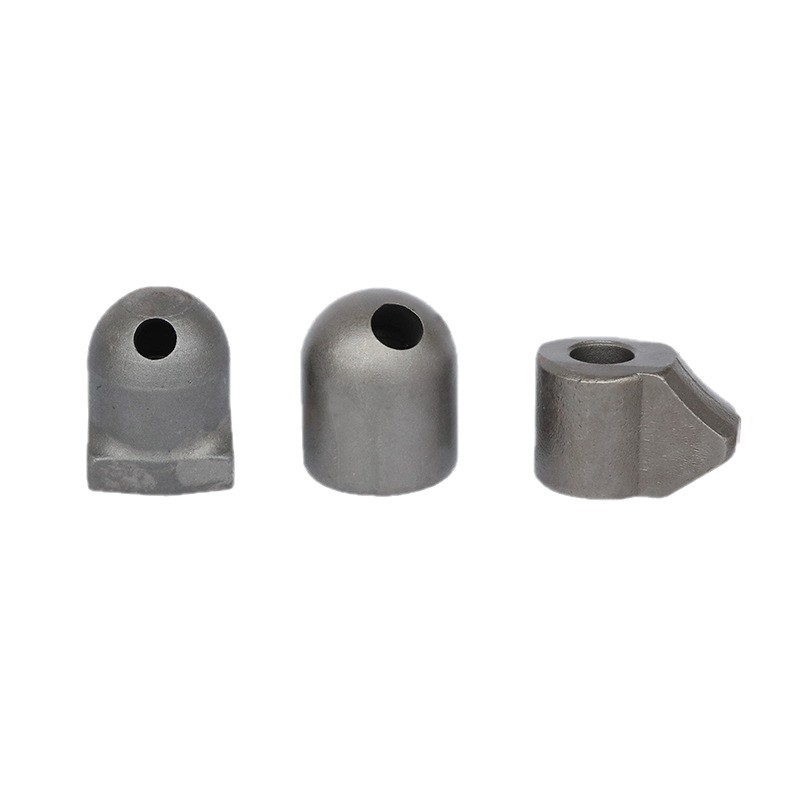
Material Properties: How Cast Steel and Alloy Steel Holders Differ
Cast Steel Holders: Toughness and Structural Consistency
Cutter pick holders manufactured from high-quality cast steel deliver excellent toughness and consistent mechanical properties throughout the component cross-section. The casting process allows complex internal geometries that distribute impact and load forces effectively across the holder body — an important advantage given the multi-directional loading these components experience during cutting. A well-designed and precisely cast steel cutter pick holder withstands the high-load operation of continuous mining equipment in harsh underground environments reliably over a full service interval.
Alloy Steel Holders: Enhanced Hardness and Wear Performance
Alloy steel cutter pick holders incorporate additional alloying elements that improve surface hardness and abrasion resistance compared to plain cast steel. In highly abrasive ground conditions — hard sandstone, abrasive coal measures, or mixed-face tunneling — the harder surface of an alloy steel holder resists the groove wear and fretting at the pick socket that shortens holder service life. The trade-off is that some alloy grades are more sensitive to impact-induced cracking than tougher cast steel grades, which is why matching the alloy profile to the ground conditions is important.
Hydraulic Integrity Under High-Pressure Conditions
In drum-cutting and roadheader applications where hydraulic systems run at continuous high pressure, the cutter pick holder must remain structurally intact and leak-free under sustained loading. High-quality cast steel and well-specified alloy steel both meet this requirement when manufactured with appropriate wall thickness, structural transitions, and dimensional accuracy. The key is a reasonable structural design combined with precise processing — a holder that maintains its geometry under load protects the hydraulic system and the surrounding drum assembly from the secondary damage that a fractured or deformed holder causes.
Performance in Underground Mining Applications
Impact Resistance in Mixed or Broken Ground
In ground conditions where the cutting face is irregular — variable hardness, large inclusions, or blocky material — the cutter pick holder experiences sudden, high-magnitude impact loads. Cast steel holders perform well in these conditions because of their toughness, which resists crack initiation even when individual impact events are severe. A cutter pick holder manufactured from high-quality cast steel maintains its structural integrity in these mixed conditions and keeps the pick seated correctly, which protects the drum body from the secondary impact damage that loose or failed holders cause.
Abrasion Resistance in Continuous Hard-Rock Cutting
For continuous cutting in consistently hard and abrasive rock, alloy steel cutter pick holders offer a surface hardness advantage that reduces pick socket wear and extends the interval between holder replacements. The reasonable structural design of a quality alloy holder — with precise processing to control socket geometry and wall thickness — ensures it withstands high-load continuous cutting without the socket enlargement and pick rattle that accelerates wear on both the holder and the pick. In this application profile, the alloy grade investment typically returns value through longer holder service life.
Ease of Replacement and Maintenance Efficiency
Both cast steel and alloy steel cutter pick holders are designed for straightforward replacement and installation, which reduces maintenance downtime in production environments where machine availability directly affects output. A holder with consistent dimensional accuracy seats correctly the first time without field modification, and a well-manufactured holder retains its pick securely throughout its service life — reducing the unplanned interventions that waste maintenance time and increase parts consumption. This operational advantage applies to both material grades when quality manufacturing is the baseline.
How to Choose and Source the Right Holder
Matching Material Grade to Ground Conditions
The practical selection framework is straightforward: in tough, variable, or mixed-face ground where impact loads are unpredictable, cast steel holders offer the toughness advantage. In consistently abrasive hard ground where surface wear is the primary failure mode, alloy steel holders deliver better wear life. For operations that span both conditions — which is common in real mining environments — discussing the specific ground profile with a technically capable supplier is the most reliable way to arrive at the right specification.
Custom Fabrication for Non-Standard Drums and Equipment
Mining equipment fleets often include older or non-standard machines where catalogue cutter pick holders don’t fit correctly. Custom fabrication from drawings or sample measurements is the practical solution. Providing accurate dimensional data and confirming the drawing before production begins keeps the process efficient. Lead times for custom holders depend on complexity — standard profiles in common alloy grades turn around faster, while non-standard socket geometries or specific alloy requirements add time for drawing confirmation and casting.
Quality as the Non-Negotiable Baseline
Regardless of which material grade is selected, manufacturing quality determines whether the cutter pick holder actually delivers the performance its specification promises. Consistent alloy composition, precise casting, and correct dimensional control are what separate a holder that performs as expected from one that fails prematurely despite being made from the right grade on paper. For underground mining equipment where component failure has real safety and productivity consequences, sourcing from a manufacturer with documented quality control across the entire production process is not optional.
Conclusion
Both cast steel and alloy steel cutter pick holders have a proven place in mining and tunneling equipment — the right choice depends on ground conditions, loading profile, and maintenance priorities. Cast steel excels in impact-heavy, variable conditions; alloy steel delivers better wear life in consistently abrasive applications. In both cases, structural design precision and manufacturing quality are what make the specification decision translate into actual field performance.
FAQ
Q1: What is the main functional difference between cast steel and alloy steel cutter pick holders?
Cast steel offers superior toughness for impact-heavy conditions; alloy steel provides better surface hardness and abrasion resistance for consistently hard or abrasive ground.
Q2: How does ground condition affect holder material choice?
Variable or mixed-face ground favors cast steel for its impact resistance. Consistently abrasive hard rock favors alloy steel for its wear performance at the pick socket.
Q3: Can cutter pick holders be custom-made for non-standard equipment?
Yes. Custom fabrication from drawings or sample measurements is standard practice for non-standard or legacy mining equipment.
Q4: How long do cutter pick holders typically last?
Service life depends heavily on ground conditions, cutting parameters, and material grade. Scheduled inspection of socket wear is the most reliable guide to replacement timing.
Q5: What should I check when sourcing replacement holders?
Confirm socket geometry, overall dimensions, material grade, and whether the design has been validated for your equipment model before placing an order.
Get the Right Cutter Pick Holder from Huan-Tai
When underground equipment performance depends on component quality, work with a manufacturer who understands the application. Xian Huan-Tai Technology and Development Co., Ltd. has over 30 years of experience producing customized non-standard mechanical parts for mining and heavy engineering equipment. Our technical team works to your exact specifications and drawings, and our production team controls quality at every stage — material, casting, and inspection. Ready to source holders that perform? Send your inquiry to inquiry@huan-tai.org.
References
- Bilgin, N., Copur, H., & Balci, C. (2014). Mechanical Excavation in Mining and Civil Industries. CRC Press, Boca Raton, FL.
- Ashby, M. F., & Jones, D. R. H. (2012). Engineering Materials 1: An Introduction to Properties, Applications and Design (4th ed.). Butterworth-Heinemann, Oxford.
- Kalpakjian, S., & Schmid, S. R. (2014). Manufacturing Engineering and Technology (7th ed.). Pearson Education, Upper Saddle River, NJ.
- Zum Gahr, K. H. (1987). Microstructure and Wear of Materials. Elsevier Science Publishers, Amsterdam.
- Shigley, J. E., Mischke, C. R., & Budynas, R. G. (2004). Mechanical Engineering Design (7th ed.). McGraw-Hill, New York.
