
Getting longer life from the blow bars on an impact crusher isn’t so much a matter of luck as it is of making the right choices about the material, how to use it, and how often to fix it. Blow bars are wear parts on impact crushers that take the full force of the material going in. Increasing their lifespan directly lowers the number of times they need to be replaced, lowers the cost of parts, and keeps the crusher in use longer between maintenance breaks.
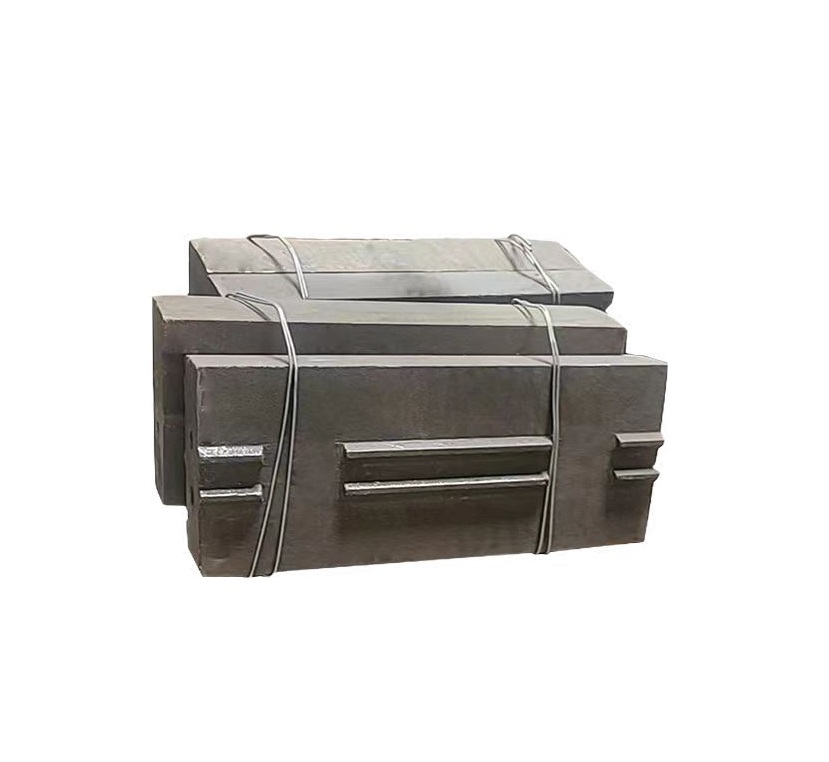
Choosing the Right Blow Bar Material for Your Application
High-Manganese Steel for High-Impact, Mixed Feed
One of the most common types of steel used for blow bars on impact breakers is high manganese steel. It work-hardens gradually when hit over and over again, which means the surface that hits something gets harder over time. Because of this, high-manganese steel blow bars work well in situations where they will be hit hard and with mixed materials, since toughness and resistance to breaking are more important than pure surface hardness. When cone crusher plates are used with impact equipment in a multi-stage cycle, it’s a good idea to talk to your source about matching material grades across wear parts.
Alloy Steel for Balanced Wear and Toughness
Alloy steel blow bars are a good compromise between being too hard or too tough when hit. It is possible to make alloy steel blow bars using the lost-wax, resin sand, or V-method methods. These bars can be made to precise measurements and work reliably with a variety of feed materials. They are a good choice for jobs where the feed is fairly rough and resistance to breakage is still important. In the same plant, cone crusher plates are often made from the same types of metal. This makes it easier for repair teams to keep track of a steady supply of materials.
High-Chromium Cast Iron for Highly Abrasive Materials
High-chromium cast iron blow bars have a harder surface and last longer when scratching is the main way they wear down, like in silica-rich rock, hard material, or similar feed. The high chromium content creates a carbide-rich material that is very good at resisting rough cutting. As a result, this grade is not as tough against impact as high-manganese steel. Because of this, it works best in situations where the feed size can be controlled and there is a low chance of big, quick impacts. When choosing inner grades for cone crushers that are used earlier in the same circuit, the same reasoning works well.
Operating Practices That Extend Blow Bar Life
Control Feed Size and Avoid Metal Contamination
One of the fastest ways to shorten blow bar service life is allowing oversized feed or tramp metal into the crusher. Oversized material concentrates impact energy on a small area of the bar, causing localized cracking or chipping rather than the gradual, even wear the bar is designed for. A functioning grizzly or pre-screen upstream of the impact crusher is the simplest protection. Tramp metal — bolts, wire, or broken machine parts in the feed — causes sudden, catastrophic impact that no blow bar material handles well, regardless of grade.
Rotate Bars at Regular Intervals
Impact crusher blow bars wear faster at the outer tips than at the inner ends, because tip speed — and therefore impact energy — is highest at the rotor’s outer diameter. Rotating bars end-for-end, or swapping positions across the rotor, evens out wear and extracts more total service life from each bar before it reaches the minimum usable thickness. Build bar rotation into your scheduled maintenance intervals and document the wear measurements each time, so you can predict replacement timing accurately rather than reacting to failure.
Match Rotor Speed to Feed Material
Running a rotor faster than the application requires accelerates blow bar wear without improving product quality proportionally. Matching rotor speed to the hardness and abrasiveness of the feed material is one of the more straightforward adjustments that reduces wear rate. For harder, more abrasive feed, a slightly lower rotor speed reduces the energy of each impact event and extends blow bar life noticeably, while still achieving the required product gradation.
Sourcing Quality Blow Bars That Last
Casting Process and Dimensional Accuracy
Blow bars manufactured through precision casting methods — lost-wax, resin sand, or V-method — achieve closer dimensional tolerances than those made through cruder processes. Accurate geometry ensures the bar seats correctly in the rotor pocket, distributes load evenly across the contact surface, and doesn’t introduce imbalance into the rotor assembly. Poorly fitted blow bars wear faster at the seat, create rotor imbalance, and generate vibration that damages bearings and the rotor structure over time.
Fracture Resistance Under High-Load Conditions
For impact crusher applications in mining and heavy engineering, blow bars must withstand high-load, high-strength working environments without brittle fracture. A supplier with proper metallurgical control over the casting process — verified through in-process inspection and material testing — produces bars with consistent mechanical properties throughout the cross-section, not just at the surface. This consistency is what separates reliable wear parts from those that fracture unpredictably in service.
Lead Times and Custom Specifications
For non-standard crusher models or specific dimensional requirements, custom blow bars are often necessary. Lead time depends on material grade, casting method, dimensional complexity, and how many rounds of drawing confirmation are needed before production can begin. Simpler geometries in standard grades move faster; complex custom profiles or unusual alloy requirements take longer. Providing accurate drawings and confirming specifications upfront is the single most effective way to keep lead times reasonable.
Conclusion
Extending blow bar service life comes down to three aligned decisions: selecting the right material grade for your feed conditions, operating the crusher within the parameters the bars are designed for, and sourcing from a manufacturer with genuine metallurgical and dimensional control. Get all three right, and blow bar performance becomes predictable — which is exactly what productive mining and quarrying operations need.
FAQ
Q1: What materials are blow bars typically made from?
High-manganese steel, alloy steel, and high-chromium cast iron are the three main options. Material choice depends on feed abrasiveness, impact intensity, and required wear life.
Q2: What casting methods are used to produce blow bars?
Lost-wax, resin sand, and V-method casting are all used, each offering different advantages in dimensional accuracy and surface finish depending on the bar geometry and alloy.
Q3: How do I know when blow bars need replacing?
Track wear at the outer tip and at the bar’s minimum usable thickness specification. Scheduled measurement at maintenance intervals is more reliable than waiting for visible performance loss.
Q4: Can blow bars be custom-made for non-standard crusher models?
Yes. Custom fabrication from drawings or sample measurements is standard practice for non-standard or legacy equipment.
Q5: Are blow bars the same as hammer heads?
No. Blow bars are components on impact crushers. Hammer heads are a separate wear part used on hammer crushers — different machines, different designs, different operating principles.
Get Long-Lasting Blow Bars from Huan-Tai
At Xian Huan-Tai Technology and Development Co., Ltd., we’ve been producing customized non-standard mechanical parts for mining and engineering equipment for over 30 years. Our technical team selects the right alloy and casting process for your specific application, and our production team maintains quality control from raw material through final inspection. If you’re sourcing blow bars or other crusher wear parts and need consistent quality you can plan around, send your drawings or inquiry to inquiry@huan-tai.org — we’re ready to help.
References
- Wills, B. A., & Finch, J. A. (2015). Wills’ Mineral Processing Technology: An Introduction to the Practical Aspects of Ore Treatment and Mineral Recovery (8th ed.). Butterworth-Heinemann, Oxford.
- Zum Gahr, K. H. (1987). Microstructure and Wear of Materials. Elsevier Science Publishers, Amsterdam.
- Metso Corporation (2011). Crushing and Screening Handbook (5th ed.). Metso Minerals, Helsinki. [Authored by Metso technical staff.]
- Ashby, M. F., & Jones, D. R. H. (2012). Engineering Materials 2: An Introduction to Microstructures and Processing (4th ed.). Butterworth-Heinemann, Oxford.
- Mular, A. L., Halbe, D. N., & Barratt, D. J. (Eds.) (2002). Mineral Processing Plant Design, Practice, and Control (Vol. 1). Society for Mining, Metallurgy and Exploration, Littleton, CO.
