
The main part of a cone crusher that wears down is the mantle, which gets hit by the material being crushed over and over again as the head turns. You can’t just hope for a longer life from a mantle; you have to use the right material for the job, keep the breaker running within its design limits, and replace the mantle before it damages other parts of the system. When done regularly, these habits lower the cost of parts and make repair plans more reliable.
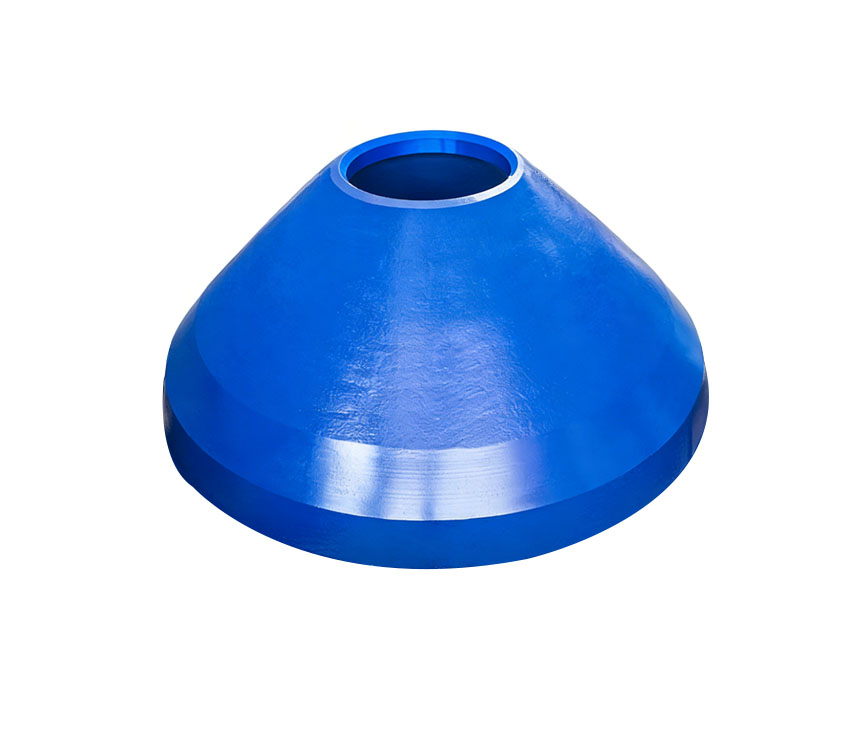
Select the Right Mantle Material for Your Feed Conditions
High-Manganese Steel for Impact-Dominant Applications
A mantle made of high-manganese steel is usually the first thing that is used in hard-rock mining and tunneling for cone crushers. This material gets harder over time when it is hit over and over again, so the wear area gets harder over time instead of softer. As a result, the mantle becomes more resistant to wear as more hours of use are added. This makes it especially useful in high-tonnage situations with changeable or mixed feed material.
Alloy Additions That Improve Performance
Mantles enhanced with additional alloy components — including manganese and other elements — during the casting process deliver improved resistance to surface sticking and packing, which is a practical problem when feed material contains clay, moisture, or fine fractions. These additions also contribute to the mantle’s overall toughness and wear life. Specifying a mantle with the right alloy profile for your specific feed conditions is one of the highest-return decisions you can make in terms of parts cost per tonne processed.
Heat Treatment for Consistent Wear Resistance
Beyond base material grade, special heat treatment processes applied after casting improve the depth and consistency of the mantle’s wear-resistant layer. A heat-treated mantle maintains its mechanical properties more uniformly across the full contact surface throughout its service life, rather than wearing unevenly in high-contact zones. For cone crushers running demanding duty cycles in mining or engineering applications, this consistency directly translates to longer service intervals and more predictable replacement scheduling.
Operating Practices That Preserve Mantle Life
Maintain Full, Consistent Feed to the Crushing Chamber
A cone crusher mantle wears most evenly — and lasts longest — when the crushing chamber is consistently and fully fed. Intermittent or partial feeding causes uneven load distribution across the mantle surface, leading to localized wear that shortens the usable life of the entire component even though much of the surface still has wear remaining. A steady, choke-fed operation is the single most effective operating practice for extending mantle service life in production mining environments.
Avoid Tramp Metal and Oversized Feed
Tramp metal, like bolts, wire, or broken machine parts in the feed stream, creates sudden impact loads that are much higher than the mantle’s design limits. Just one event can break it or do a lot of damage to a small area. The best defenses are an upstream magnet and a feed scalper or bear that is well taken care of. The same problems happen when the feed is too big. The mantle is only meant to crush things within a certain size range, and feed that is too big puts stress on the mantle and the system around it in ways that the design doesn’t allow for.
Monitor Closed-Side Setting and Adjust Proactively
The effective closed-side setting goes up as a mantle wears down. This changes the gradation of the product and can gradually overload the crusher if it is not controlled. By checking CSS on a regular basis and making changes to the setting to account for mantle wear, you can keep the quality of the output uniform and the load on the mantle, frame, and drive parts within the limits that were planned. If you wait until the product range has changed a lot before making changes, the mantle has already been running in a bad way for a while.
Sourcing a Mantle That Performs as Specified
Custom Fit for Your Crusher Model
A mantle that fits its mounting surface correctly — with the right geometry at the head contact, correct taper angle, and accurate overall profile — distributes load evenly across the crushing surface and seats securely without field modification. Customization to the specific crusher model and drawing is the most reliable way to achieve this, particularly for non-standard or older equipment where dimensional tolerances vary from current production models. A well-fitted mantle protects the head and bowl assembly and contributes to consistent product gradation from the first hour of operation.
Understanding Lead Times for Custom Mantles
Standard mantles for common cone crusher models are typically available with reasonable lead times. Custom mantles — especially where the drawing requires multiple rounds of confirmation, non-standard alloy grades are specified, or complex geometry is involved — take longer. The casting, heat treatment, and inspection stages all contribute to the timeline, and rushing any of them increases the risk of dimensional or metallurgical issues. Planning mantle procurement ahead of the scheduled replacement window, rather than ordering against an imminent shutdown, is the practical approach.
Quality Verification Before Installation
Before installing a replacement mantle, check key dimensions against the drawing and inspect the contact and mounting surfaces for casting defects. A supplier with documented in-process inspection should be able to provide basic quality records, including confirmation that heat treatment was applied. A mantle that passes incoming inspection is far less likely to produce surprises in service — and catching a dimensional issue before installation takes minutes, compared to the cost of removing a fitted mantle that doesn’t perform correctly.
Conclusion
Extending cone crusher mantle life comes down to three aligned decisions: the right material for the feed conditions, operating practices that keep load distribution even and protect the mantle from abnormal events, and sourcing from a manufacturer with genuine control over alloy composition, casting quality, and heat treatment. All three working together is what makes mantle service life predictable — and keeps maintenance costs manageable.
FAQ
Q1: What material is a cone crusher mantle typically made from?
High-manganese steel is the most common choice, often with additional alloy elements to improve wear resistance, anti-sticking performance, and overall service life under specific feed conditions.
Q2: How does heat treatment affect mantle performance?
Heat treatment after casting improves surface hardness and the depth of the wear-resistant layer, leading to more consistent wear across the full mantle surface and longer service intervals.
Q3: Can a mantle be custom-made for non-standard crusher models?
Yes. Custom fabrication from model specifications and drawings is standard practice for legacy or non-standard equipment where catalogue replacements are unavailable.
Q4: What operating practice most affects mantle service life?
Consistent, full feeding of the crushing chamber distributes load evenly and is the single most impactful operating practice for extending mantle life.
Q5: How do I know when a mantle needs replacing?
Increased closed-side setting drift, inconsistent product gradation, and visible wear approaching minimum thickness are the key indicators. Scheduled dimensional checks are more reliable than waiting for performance loss.
Source High-Performance Mantles from Huan-Tai
When mantle quality directly affects your crusher’s uptime and cost per tonne, work with a manufacturer who takes that seriously. Xian Huan-Tai Technology and Development Co., Ltd. has over 30 years of experience producing customized non-standard mechanical parts for mining and heavy engineering applications. Our technical team matches alloy grade and casting process to your specific conditions, and our production team controls quality at every stage. Send your drawings or inquiry to inquiry@huan-tai.org — let’s get your next mantle right.
References
- Wills, B. A., & Finch, J. A. (2015). Wills’ Mineral Processing Technology: An Introduction to the Practical Aspects of Ore Treatment and Mineral Recovery (8th ed.). Butterworth-Heinemann, Oxford.
- Metso Corporation (2011). Crushing and Screening Handbook (5th ed.). Metso Minerals, Helsinki. [Authored by Metso technical staff.]
- Zum Gahr, K. H. (1987). Microstructure and Wear of Materials. Elsevier Science Publishers, Amsterdam.
- Ashby, M. F., & Jones, D. R. H. (2012). Engineering Materials 2: An Introduction to Microstructures and Processing (4th ed.). Butterworth-Heinemann, Oxford.
- Mular, A. L., Halbe, D. N., & Barratt, D. J. (Eds.) (2002). Mineral Processing Plant Design, Practice, and Control (Vol. 1). Society for Mining, Metallurgy and Exploration, Littleton, CO.
