
For mining and heavy earthmoving equipment, the track link is one of the most load-critical components in the undercarriage assembly. Whether forged or cast, the right choice depends on the operating environment, load intensity, and maintenance expectations of the application. Both manufacturing routes produce track links capable of serious service — but they perform differently under the specific demands of underground mining, open-pit operations, and hard-terrain earthmoving. Understanding those differences is what leads to the right specification.
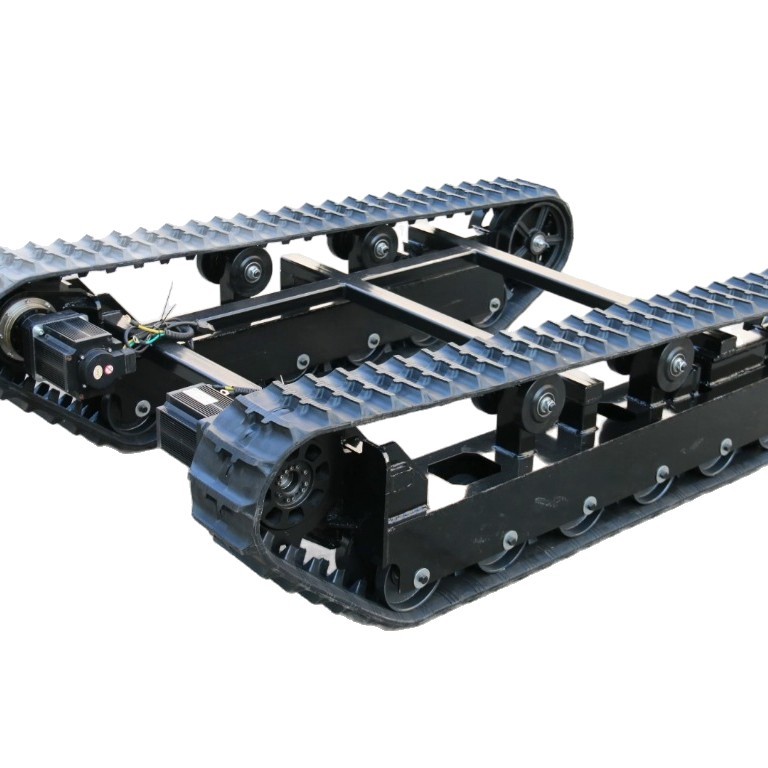
How Forging and Casting Affect Track Link Performance
Grain Structure and Fatigue Strength in Forged Links
Forging produces a track link with a refined, directional grain structure aligned to the shape of the component. This gives forged links superior fatigue strength — they resist crack initiation and propagation under the repeated, high-cycle loading that mining equipment generates during normal operation. In applications with constant heavy loads, rocky ground, or high-impact terrain, the structural advantage of forging translates directly into longer undercarriage service life and fewer stress fractures over time.
Cast Links: Toughness, Geometry, and Hydraulic Integrity
A track link manufactured from high-quality cast iron or cast steel delivers excellent toughness and dimensional flexibility. Casting allows complex cross-sectional geometries that distribute load effectively across the link body, and the process is well suited to producing components with internal features that contribute to structural integrity. Properly designed and precisely cast track links withstand the high-load operation of underground and surface mining equipment continuously — and a cast link produced from quality material with a well-engineered structure is a reliable and practical choice for a wide range of applications.
Wear Surface and Service Life Comparison
Both forged and cast track links can be heat-treated to achieve the surface hardness needed for abrasive mining environments. The wear characteristics of each depend more on the specific alloy, heat treatment process, and surface condition than on the manufacturing route alone. Cast steel track links with the right alloy composition and heat treatment deliver competitive wear life — and their relative ease of replacement and installation compared to some forged alternatives reduces maintenance downtime and total cost of ownership in practice.
Which Manufacturing Route Suits Mining Conditions Best?
Open-Pit Mining: High Load, High Abrasion
Open-pit mining subjects track links to continuous abrasive wear from hard rock, coarse aggregate, and variable terrain. Both forged and cast track links are used successfully in open-pit applications, with selection typically driven by equipment model, ground conditions, and the operator’s maintenance program. Cast steel track links manufactured with reasonable structural design and precise processing perform reliably in this environment, particularly where parts availability and replacement ease are operational priorities.
Underground Mining: Impact, Confined Space, and Reliability
Underground mining environments place a premium on component reliability and compactness. Track links must operate stably and continuously in harsh conditions with limited access for maintenance. High-quality cast iron or cast steel track links are well established in underground applications because of their toughness, consistent dimensional performance, and ability to withstand the impact loads generated in confined, uneven tunnel environments. The key is ensuring the cast link is produced from properly specified material with tight dimensional control.
Hydraulic System Integrity Under Pressure
In track systems with hydraulic tensioning, the track link assembly must remain stable under the continuous impact of hydraulic pressure forces without leakage or deformation that could compromise system performance. Cast track links designed with this load case in mind — using appropriate wall thickness, radius transitions, and material strength — maintain hydraulic system integrity reliably across extended service intervals. This is a structural design and material quality question, not simply a forged-versus-cast question, and it reinforces why correct specification matters more than manufacturing route alone.
Sourcing Quality Track Links for Mining Equipment
Material and Casting Quality Are the Real Differentiators
Regardless of whether a track link is forged or cast, the material grade and manufacturing quality determine how it performs. A cast steel track link produced from the right alloy with proper heat treatment and dimensional control will outperform a poorly specified forged link in most real-world mining conditions. Working with a manufacturer who controls material composition, casting process, and inspection rigorously is more important than debating manufacturing routes in the abstract.
Custom Fabrication for Non-Standard or Legacy Equipment
Mining fleets often include older or less common equipment models where standard catalogue track links are unavailable. Custom fabrication from drawings or sample measurements is the practical path for these applications. Providing accurate dimensional data upfront and confirming the drawing before production begins keeps the process efficient. Lead times for custom track links vary — standard geometry in common alloy grades moves faster, while complex profiles or non-standard specifications require more time for drawing confirmation, casting, and inspection.
Ease of Replacement as a Maintenance Consideration
Track links that are designed for straightforward replacement and installation reduce maintenance downtime and the skill level required for field service. This is a genuine operational advantage in high-utilization mining environments where equipment availability directly affects production output. When evaluating track link options, factoring in installation time and the complexity of the replacement procedure — alongside initial unit price and expected wear life — gives a more accurate picture of total cost of ownership.
Conclusion
Forged and cast track links both have a proven place in mining equipment, with performance determined more by material grade, design quality, and manufacturing precision than by the production route alone. For most mining applications, a well-specified cast steel track link delivers the toughness, wear resistance, and reliability needed — while offering practical advantages in replacement ease and parts availability that matter at the operational level.
FAQ
Q1: What is the main difference between forged and cast track links?
Forged links have a refined grain structure that improves fatigue strength; cast links offer greater design flexibility and can deliver equivalent toughness when properly specified and produced from quality material.
Q2: What material is a cast track link typically made from?
High-quality cast iron or cast steel, with alloy composition selected to match the load and wear requirements of the specific mining application.
Q3: Can track links be custom-made for older or non-standard equipment?
Yes. Custom fabrication from drawings or sample measurements is standard practice for legacy equipment where catalogue replacements are unavailable.
Q4: How does heat treatment affect track link service life?
Heat treatment improves surface hardness and wear resistance, directly extending the interval between replacements in abrasive mining conditions.
Q5: What should I check when sourcing replacement track links?
Confirm material grade, dimensional accuracy against the drawing, and whether heat treatment has been applied. Ease of installation is also worth considering for high-utilization fleets.
Source Reliable Track Links from Huan-Tai
When your mining equipment needs track links that hold up in demanding conditions, trust a manufacturer with the experience to get it right. Xian Huan-Tai Technology and Development Co., Ltd. has over 30 years of experience producing customized non-standard mechanical parts for mining and engineering applications. Our technical team works to your specifications, and our production team manages quality from material selection through final inspection. Send your drawings or inquiry to inquiry@huan-tai.org — let’s keep your equipment moving.
References
- Caterpillar Inc. (2010). Caterpillar Performance Handbook (40th ed.). Caterpillar Inc., Peoria, IL. [Authored by Caterpillar engineering staff.]
- Ashby, M. F., & Jones, D. R. H. (2012). Engineering Materials 1: An Introduction to Properties, Applications and Design (4th ed.). Butterworth-Heinemann, Oxford.
- Kalpakjian, S., & Schmid, S. R. (2014). Manufacturing Engineering and Technology (7th ed.). Pearson Education, Upper Saddle River, NJ.
- Mular, A. L., Halbe, D. N., & Barratt, D. J. (Eds.) (2002). Mineral Processing Plant Design, Practice, and Control (Vol. 1). Society for Mining, Metallurgy and Exploration, Littleton, CO.
- Shigley, J. E., Mischke, C. R., & Budynas, R. G. (2004). Mechanical Engineering Design (7th ed.). McGraw-Hill, New York.
