
A liner plate is a replaceable wear panel mounted inside crushing, grinding, and material-handling equipment to protect the structural body from abrasion and impact damage. Liner plates are most commonly found in jaw crushers, cone crushers, impact crushers, ball mills, and material chutes across mining, quarrying, cement, and aggregate industries. By taking on the wear load that would otherwise degrade the machine frame, a quality Liner plate is one of the most cost-effective investments in crusher service and overall equipment longevity.
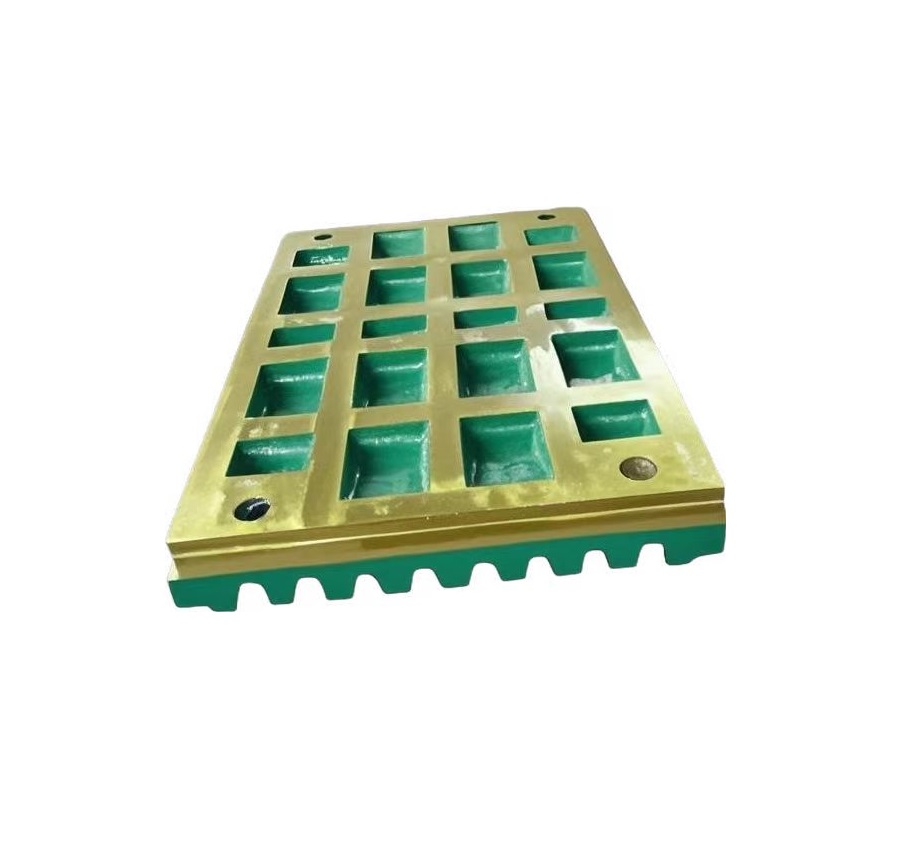
Liner Plates in Crushing Equipment
Jaw Crusher Cheek Plates and Frame Liners
In jaw crushers, Liner plates protect the side walls of the crushing chamber from the abrasive rock that passes through during every cycle. These cheek plates are cast from high manganese steel, which work-hardens at the surface under repeated impact while keeping the core tough — exactly the performance profile that jaw crusher service demands. Replacing worn Liner plates before they allow material contact with the main frame is standard preventive maintenance in any well-run crushing operation.
Cone Crusher Bowl and Mantle Liners
Cone crushers rely on a pair of liner plates — the bowl liner and the mantle — to form the crushing chamber where rock is broken by compression. Both components are cast from high manganese steel or high carbon steel to withstand the combination of compressive load and abrasive sliding that characterizes cone crusher service. Huan-Tai’s Liner plates carry high strength and rigidity, enabling them to withstand the reactive forces of fragmentation cycle after cycle without cracking or distorting.
Impact Crusher Blow Bars and Chamber Liners
Impact crushers use a different wear pattern from jaw or cone machines. The rotor blow bars strike material at high speed, and the chamber liners arrest and redirect the fractured particles. Chamber Liner plates in impact crushers are exposed to both direct impact and abrasive sliding, so the material must handle both modes well. High manganese steel or alloy steel grades are selected based on the feed material hardness and the specific crusher service conditions the operator faces.
Liner Plates in Grinding and Material Handling Applications
Ball Mill Shell Liners
Ball mills use steel grinding media that continuously impacts the mill shell during operation. Shell liner plates protect the mill body from this punishment while also lifting the charge to maintain efficient grinding action. The profile of the Liner plate — its height, angle, and spacing — directly affects mill throughput and product fineness. For crusher service and grinding applications alike, getting the liner profile right is as important as getting the material right.
Chute and Hopper Liners in Material Transfer Points
Wherever bulk material drops from one conveyor to another, or discharges from a crusher into a collection bin, the impact and sliding abrasion on the chute or hopper walls is severe. Liner plates installed at these transfer points are cast from high manganese steel or high carbon steel for their combination of impact toughness and abrasion resistance. This application is common in mining and aggregate plants, where crusher service teams often specify Liner plates for chutes and bins alongside their crusher wear parts orders.
Vibrating Screen Deck Liners
Vibrating screens separate crushed material by size, and the screen deck surfaces take continuous abrasive wear from rock particles sliding across them during classification. Rubber or polyurethane liners are common in lighter-duty applications, but for hard, coarse feed in primary crusher service environments, cast steel Liner plates provide the strength and durability that softer materials cannot match. The ability to apply Liner plates to harder rock types makes cast steel the preferred choice for primary screening stages.
Selecting and Sourcing the Right Liner Plate for Your Application
Matching Material Grade to Wear Conditions
Not all Liner plate applications are the same. A jaw crusher processing granite in primary crushing service faces different conditions from a cone crusher producing fine aggregate from softer limestone. Huan-Tai’s technical team works with customers to match material grade — high manganese steel, high carbon steel, or alloy steel — to the specific wear mechanism and feed material, ensuring the Liner plate delivers the service life the application requires rather than a generic specification.
Customization for Non-Standard Equipment
Older crushers and machines from less common manufacturers often require Liner plate dimensions that are no longer available through OEM channels. Huan-Tai manufactures Liner plates to customer drawings or from worn samples, covering a wide range of crusher service applications. Custom profiles, non-standard thicknesses, and special mounting arrangements are all achievable. Lead times for custom orders depend on drawing confirmation and casting process requirements, so customers are encouraged to plan procurement well ahead of scheduled shutdowns.
Quality Control That Protects Your Equipment Investment
A Liner plate that fails prematurely does not just need replacing — it risks damaging the more expensive components it was installed to protect. Huan-Tai’s production team manages quality throughout the entire process, from raw material verification through casting, heat treatment, and dimensional inspection. For crusher service operations where consistent wear-part performance is critical to production scheduling, this end-to-end quality discipline is what separates a reliable supply partner from a parts commodity supplier.
Conclusion
Liner plates are used wherever crushing, grinding, or bulk material handling generates abrasion and impact against equipment surfaces — which covers most of the heavy machinery in mining, quarrying, and aggregate production. Choosing the right material, correct profile, and a manufacturer with genuine process control is the practical path to better crusher service outcomes and lower total maintenance cost.
FAQ
Q1: What materials are liner plates made from?
High manganese steel and high carbon steel are the most common choices. The selection depends on whether impact or abrasion is the dominant wear mechanism in the specific application.
Q2: How do I know when a liner plate needs replacing?
Measure remaining thickness against the minimum specification and inspect for cracking. Allowing liner plates to wear through exposes the machine body to direct contact with feed material.
Q3: Can liner plates be customized for older or non-standard crushers?
Yes. Huan-Tai manufactures liner plates to customer drawings or from worn originals, covering both current and legacy crusher models across a wide range of crusher service applications.
Q4: Do liner plate profiles affect crusher output?
In cone and jaw crushers, yes. The liner profile determines chamber geometry, which directly affects particle reduction ratio and product size distribution.
Q5: Are liner plates only used in crushers?
No. Liner plates are also used in ball mills, vibrating screens, chutes, hoppers, and other material-handling equipment wherever abrasive or impact wear needs to be managed.
Work With a Supplier Who Understands Crusher Service From the Ground Up
Xian Huan-Tai Technology and Development Co., Ltd. has spent over 30 years manufacturing Liner plates and wear components for mining, engineering, and aggregate customers worldwide. Our technical team matches material and profile to your application, our production team controls quality at every stage, and our experience means we can handle standard orders and custom requirements equally well. If you’re ready to discuss your next Liner plate order, get in touch: inquiry@huan-tai.org.
References
- Wills, B. A., & Finch, J. A. (2015). Wills’ Mineral Processing Technology: An Introduction to the Practical Aspects of Ore Treatment and Mineral Recovery (8th ed.). Butterworth-Heinemann / Elsevier.
- Lindqvist, M., & Evertsson, C. M. (2006). Liner wear in jaw crushers. Minerals Engineering, 16(1), 1–12.
- Gupta, A., & Yan, D. S. (2006). Mineral Processing Design and Operations: An Introduction. Elsevier Science.
- Bearman, R. A., & Briggs, C. A. (1998). The active use of crushers to control product requirements. Minerals Engineering, 11(9), 849–859.
- Cleary, P. W., & Morrison, R. D. (2011). Understanding fine ore breakage in a laboratory jaw crusher using DEM simulation. Minerals Engineering, 24(3–4), 352–366.
