
A broken gearbox housing is one of the most annoying problems that can happen in heavy machinery because it puts the whole engine at risk and usually means that the machine has to be shut down without warning. Maintenance teams and purchase managers can react better and make better decisions about whether to repair or replace gearbox housing cracks when they know why they happen and what to do when they do. What to do depends on where the crack is, how bad it is, and what caused it in the first place.
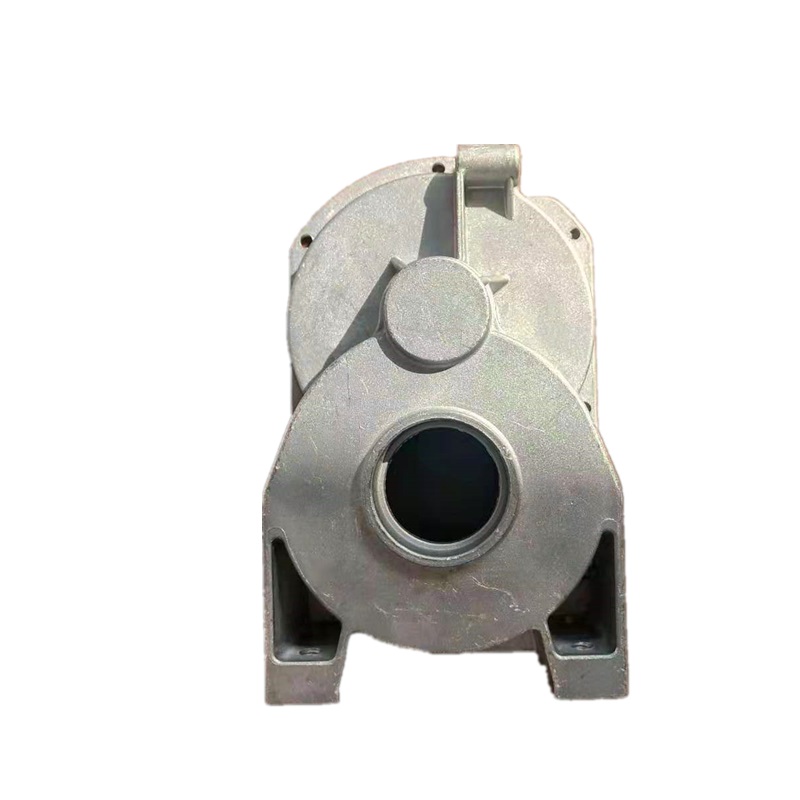
What Causes Gearbox Housing Cracks?
Impact Loads Beyond Design Limits
One of the most common reasons a gearbox housing cracks is exposure to impact loads that exceed what the housing was designed to handle. In mining, construction, and heavy engineering equipment, sudden shock loads — from material jams, dropped loads, or drivetrain engagement events — transmit force directly into the housing structure. Cast iron housings, which are widely used for their vibration-damping properties and machinability, are brittle under tension and can crack at stress concentration points such as bolt bosses, mounting flanges, and internal rib junctions when these loads occur.
Fatigue from Sustained Vibration
Even without a single overload event, a gearbox housing can develop fatigue cracks over time if it is subjected to continuous vibration at frequencies that drive cyclic stress at weak points in the casting. This is particularly common in equipment running at high RPM or with imbalanced rotating components. Fatigue cracks typically initiate at surface defects, sharp internal corners, or thin wall sections and propagate gradually — often going unnoticed until the crack has extended far enough to allow lubricant leakage or structural distortion of the gear bore alignment.
Inadequate Wall Thickness or Casting Defects
A gearbox housing that cracks repeatedly despite operating within its rated load range may have an underlying material or manufacturing issue. Porosity, shrinkage cavities, or cold shuts in the original casting reduce the effective cross-section of the housing wall and create internal stress concentration points that are not visible during external inspection. Substandard casting process control — insufficient pouring temperature, inadequate degassing, or improper solidification management — produces housings that are structurally weaker than their nominal dimensions suggest.
How to Assess Gearbox Housing Crack Severity
Surface Cracks Versus Through-Cracks
Not all cracks carry the same risk. A surface crack that has not penetrated the full wall thickness may allow continued short-term operation under close monitoring, while a through-crack — one that communicates with the oil cavity — demands immediate action to prevent lubricant loss and contamination ingress. Dye penetrant testing or magnetic particle inspection can establish crack depth and extent before deciding on a course of action. For a gearbox housing in critical machinery, erring on the side of replacement rather than repair is generally the more cost-effective long-term decision.
Location Relative to Load Paths and Bore Alignment
Where the crack sits on the gearbox housing determines how structurally significant it is. A crack running through a main bearing bore or across a mounting face that affects gear alignment is far more serious than one in a non-load-bearing wall section. Any crack that has allowed gear bore distortion — detectable through precision bore measurement — means the housing can no longer maintain correct gear mesh geometry, and continued operation will accelerate gear and bearing wear regardless of whether the crack itself is repaired.
When Repair Is Viable and When Replacement Is the Answer
Welding repairs to cast iron gearbox housings are technically feasible but require skilled execution — pre-heating, controlled inter-pass temperatures, and post-weld stress relief — to avoid introducing new cracking around the heat-affected zone. For housings with accessible, well-defined cracks in non-critical areas, a properly executed weld repair can extend service life at lower cost than replacement. However, for a gearbox housing with multiple cracks, cracks near bearing bores, or any evidence of bore distortion, replacement with a correctly specified new or remanufactured housing is the more reliable path.
Sourcing a Replacement Gearbox Housing: What to Consider
Material Selection for the Application
Replacement gearbox housings are produced in cast iron or cast steel depending on the application’s load and impact requirements. Cast iron remains the standard for most industrial gearboxes due to its damping properties and cost-effectiveness. Where higher impact resistance is needed — as in mining and heavy construction equipment — cast steel housings offer greater toughness. Specifying the correct material grade for the operating environment ensures the replacement gearbox housing delivers the service life the application demands.
Custom Production from Drawings or Samples
Many gearbox housings — particularly for older, discontinued, or specialist equipment — are not available as off-the-shelf replacement parts. In these cases, a replacement can be produced from the original engineering drawing or from a dimensional survey of the cracked housing. The manufacturing review process, which covers wall thickness, draft angles, core geometry, and machining datums, is critical to getting a casting that fits correctly and machines to print. Lead times for custom gearbox housing castings vary depending on complexity and how smoothly the drawing confirmation process proceeds — buyers with firm maintenance windows should communicate their schedule requirements at the inquiry stage.
Inspection Before Installation
A replacement gearbox housing should be inspected before installation to confirm dimensional accuracy at all critical features — bearing bore diameters, face flatness, and mounting hole positions. For cast components, a review for surface defects and, where specified, non-destructive testing of critical sections, provides additional confidence before the housing enters service. Establishing these inspection requirements at the order stage, rather than on receipt, ensures the supplier is prepared to provide the necessary documentation.
Conclusion
Gearbox housing cracks are a serious maintenance issue, but understanding the causes — overload, fatigue, or casting quality — points directly toward the right response. When replacement is needed, material selection, dimensional accuracy, and thorough pre-installation inspection are the factors that determine whether the new housing delivers reliable long-term performance. Sourcing from a manufacturer with strong casting and machining capability reduces the risk of repeating the failure.
FAQ
Q1: Can a cracked gearbox housing be welded?
Welding is feasible for accessible, non-critical cracks in cast iron housings, but requires skilled execution with pre-heating and stress relief. Cracks near bearing bores generally warrant replacement rather than repair.
Q2: What material is a gearbox housing typically made from?
Most industrial gearbox housings use cast iron. Cast steel is specified where higher impact resistance is needed, such as in mining and heavy construction equipment.
Q3: How do I know if a crack has distorted the gear bores?
Precision bore measurement before and after crack identification will reveal any deviation from nominal diameter or roundness caused by structural distortion of the gearbox housing.
Q4: Can custom replacement housings be made from samples?
Yes. A dimensional survey of the original housing can serve as the basis for producing a custom replacement, though supplying the original drawing is preferable for accuracy.
Q5: How long does it take to source a custom gearbox housing casting?
Lead times depend on casting complexity and drawing confirmation requirements. Buyers should communicate their maintenance schedule early to allow realistic production planning.
Replace Your Gearbox Housing with Confidence — Contact Huan-Tai
At Xian Huan-Tai Technology and Development Co., Ltd., we have over 30 years of experience producing customized cast and machined mechanical components for engineering, mining, and heavy equipment applications worldwide. Our technical team can work from your drawings or samples to deliver a replacement gearbox housing that meets your dimensional and material requirements, backed by rigorous in-process quality control. Tell us what you need — we are ready to help. Contact us: inquiry@huan-tai.org.
References
- Shigley, J. E., Mischke, C. R., & Budynas, R. G. (2004). Mechanical Engineering Design (7th ed.). McGraw-Hill.
- Mott, R. L. (2014). Machine Elements in Mechanical Design (5th ed.). Pearson Education.
- Hatch, J. E. (Ed.). (1984). Aluminum: Properties and Physical Metallurgy. ASM International.
- Metals Handbook Editorial Committee. (1988). ASM Handbook, Volume 15: Casting. ASM International.
- Bloch, H. P., & Geitner, F. K. (1994). Machinery Failure Analysis and Troubleshooting (3rd ed.). Gulf Professional Publishing.
