
Choosing the right eccentric shaft material requires careful consideration of mechanical properties, operating conditions, and application requirements. The material selection directly impacts performance, durability, and cost-effectiveness of your machinery. Critical factors include tensile strength, fatigue resistance, corrosion protection, and thermal stability. Understanding these parameters ensures optimal shaft performance while minimizing maintenance costs and preventing premature failures in industrial applications.
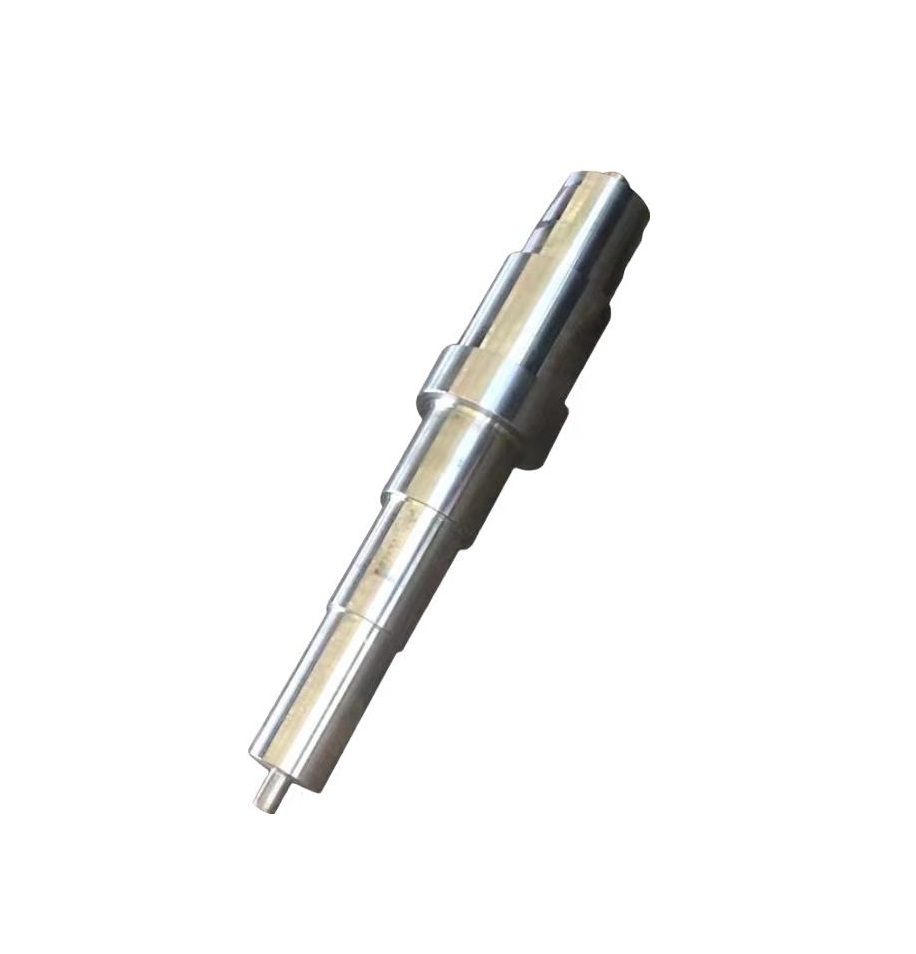
Understanding the Importance of Eccentric Shaft Material Selection
Eccentric shaft material selection stands as a cornerstone decision that influences the entire lifecycle of industrial machinery. These rotating components convert circular motion into reciprocating movement, making them essential in engines, compressors, and various manufacturing equipment. The material choice determines how well the shaft withstands repeated stress cycles, environmental challenges, and operational demands.
Poor material selection leads to catastrophic consequences. Research indicates that approximately 40% of mechanical failures stem from improper material choices, resulting in unexpected downtime and costly repairs. The eccentric nature of these shafts creates uneven stress distribution, requiring materials that can handle complex loading patterns without developing fatigue cracks or dimensional instabilities.
Modern industrial applications demand higher performance standards than ever before. Operating temperatures may exceed 200°C, while rotational speeds reach thousands of RPM. These extreme conditions necessitate materials engineered specifically for such environments. Material properties like yield strength, impact resistance, and thermal expansion coefficients become critical performance indicators that directly affect machinery reliability and operational efficiency.
Key Criteria for Selecting Eccentric Shaft Materials
Material selection criteria encompass multiple technical and economic factors that influence long-term performance. Understanding these parameters helps procurement managers make informed decisions that balance cost with operational requirements.
Here are the fundamental criteria for material evaluation:
- Mechanical strength properties: Tensile strength typically ranges from 400-1500 MPa depending on application severity. Yield strength determines the maximum stress before permanent deformation occurs. Hardness values between 30-60 HRC provide optimal wear resistance for most applications.
- Fatigue resistance characteristics: High-cycle fatigue strength becomes crucial for shafts experiencing millions of stress reversals. Materials must maintain structural integrity under alternating loads without developing micro-cracks that propagate over time.
- Environmental compatibility: Corrosion resistance protects against chemical degradation from lubricants, coolants, and atmospheric exposure. Materials must resist pitting, galvanic corrosion, and stress corrosion cracking in specific operating environments.
- Thermal stability performance: Dimensional stability across temperature ranges prevents binding, clearance loss, and thermal stress development. Thermal conductivity affects heat dissipation capabilities during high-speed operations.
These criteria work synergistically to determine overall shaft performance. Material selection requires balancing competing requirements while maintaining cost-effectiveness for mass production scenarios.
Comparative Analysis of Popular Eccentric Shaft Materials
Eccentric shaft material options vary significantly in properties, cost, and application suitability. Understanding these differences enables engineers to select optimal materials for specific operating conditions and performance requirements.
Carbon steel represents the most economical choice for standard applications. SAE 1045 carbon steel provides adequate strength for moderate-duty operations with tensile strength around 570 MPa. However, limited corrosion resistance and moderate fatigue life restrict its use in demanding environments. Heat treatment improves hardness but may introduce brittleness concerns.
Alloy steels offer superior performance through strategic alloying additions. AISI 4140 chromium-molybdenum steel delivers excellent strength-to-weight ratio with improved hardenability. Nickel-chromium alloys like AISI 4340 provide exceptional toughness and fatigue resistance for critical applications. These materials cost approximately 20-30% more than carbon steel but offer significantly extended service life.
Stainless steel variants excel in corrosive environments. Martensitic grades like 17-4 PH combine corrosion resistance with high strength through precipitation hardening. Austenitic stainless steels offer excellent chemical resistance but lower strength levels. Material costs increase substantially, making economic justification essential for specific applications.
Advanced materials including tool steels and superalloys serve specialized high-performance applications. These materials command premium pricing but deliver unmatched performance in extreme operating conditions. Selection depends on specific application requirements and economic considerations.
Matching Material Selection to Application Requirements
Application-specific requirements drive material selection decisions across diverse industrial sectors. Understanding operational demands ensures optimal material matching for enhanced performance and reliability.
Automotive and engine applications subject eccentric shafts to severe operating conditions. Crankshafts experience peak pressures exceeding 15 MPa while rotating at speeds up to 7000 RPM. Temperature cycling between ambient and 150°C creates thermal stress challenges. Forged steel alloys with specific heat treatment provide the necessary combination of strength, fatigue resistance, and dimensional stability. Surface treatments like nitriding enhance wear resistance in high-friction environments.
Industrial machinery applications encompass diverse operating scenarios. Heavy equipment operates continuously under high loads with minimal maintenance windows. Material selection focuses on wear resistance and extended service intervals. Mining equipment requires materials resistant to abrasive contamination and impact loading. Chemical processing demands corrosion-resistant materials that maintain integrity in aggressive environments.
Precision manufacturing equipment emphasizes dimensional accuracy and vibration control. Materials must maintain tight tolerances while minimizing dynamic imbalance. Thermal stability becomes critical for maintaining precision over extended operating periods. Advanced alloys with controlled thermal expansion coefficients ensure consistent performance in temperature-varying environments.
Custom applications may require specialized material solutions. Aerospace applications demand lightweight materials with exceptional strength-to-weight ratios. Food processing equipment requires materials meeting sanitary standards with easy cleaning capabilities. Each application presents unique challenges requiring tailored material solutions.
Best Practices for Procuring High-Quality Eccentric Shafts
Procurement success depends on thorough supplier evaluation and clear specification communication. Establishing robust quality standards and verification procedures ensures consistent material performance across production batches.
Supplier qualification begins with certifications and quality management systems. ISO 9001 certification indicates established quality procedures, while AS9100 demonstrates aerospace-grade quality control. Material certifications including mill test certificates verify chemical composition and mechanical properties. Dimensional inspection reports confirm geometric accuracy and surface finish requirements.
Material traceability provides accountability throughout the supply chain. Heat numbers enable tracking from raw material to finished components. Documentation should include material origin, processing history, and quality test results. This traceability becomes essential for failure analysis and continuous improvement initiatives.
Quality verification procedures protect against substandard materials. Incoming inspection should verify dimensions, hardness, and surface condition. Random sampling for chemical analysis confirms material composition. Mechanical testing validates strength properties for critical applications. These procedures prevent costly failures from defective materials.
Conclusion
Selecting the appropriate eccentric shaft material requires balancing multiple technical and economic factors to achieve optimal performance. Material properties including strength, fatigue resistance, and environmental compatibility must align with specific application requirements. Understanding these relationships enables informed decisions that maximize equipment reliability while controlling lifecycle costs. Partnering with experienced manufacturers ensures access to quality materials and technical expertise necessary for successful implementation.
Frequently Asked Questions
Q1: What material properties are most critical for eccentric shaft performance?
A: The most critical properties include fatigue strength, yield strength, and hardness. Fatigue strength determines resistance to cyclic loading, which is essential since eccentric shafts experience repeated stress reversals. Yield strength indicates the maximum stress before permanent deformation, while hardness affects wear resistance and surface durability under sliding contact conditions.
Q2: How do operating temperatures affect eccentric shaft material selection?
A: Operating temperatures significantly impact material performance through thermal expansion, strength reduction, and microstructural changes. At elevated temperatures above 150°C, material strength typically decreases while thermal expansion may cause clearance issues. Materials must maintain dimensional stability and mechanical properties across the expected temperature range to ensure reliable operation.
Q3: What is the typical cost difference between standard and premium eccentric shaft materials?
A: Premium alloy materials typically cost 20-50% more than standard carbon steels, but this investment often pays back through extended service life and reduced maintenance costs. Stainless steels may cost 2-3 times more than carbon steel, while specialized superalloys can cost 5-10 times more. The total cost of ownership, including maintenance and downtime costs, should be considered when evaluating material options.
Partner with HUAN-TAI for Premium Eccentric Shaft Solutions
HUAN-TAI Technology and Development brings three decades of expertise in manufacturing custom eccentric shafts that meet the most demanding industrial requirements. Our comprehensive understanding of material science and precision machining enables us to deliver solutions that exceed customer expectations across diverse applications.
Our advanced metallurgy capabilities encompass the full spectrum of eccentric shaft materials. We work with carbon steels, alloy steels, stainless grades, and specialized materials tailored to specific operating conditions. Each material undergoes rigorous testing and quality verification to ensure consistent performance characteristics. Our engineering team collaborates with customers to optimize material selection based on application requirements and cost objectives.
Quality control systems at HUAN-TAI maintain the highest industry standards. Our inspection team utilizes advanced measurement equipment to verify dimensional accuracy within tight tolerances. Material certifications accompany every shipment, providing complete traceability and performance documentation. Continuous improvement initiatives ensure our processes evolve with changing industry requirements.
Ready to optimize your eccentric shaft material selection? Contact our engineering experts who can provide detailed material recommendations based on your specific application requirements. Reach out to our team and contact us at inquiry@huan-tai.org to discuss your project needs and receive a comprehensive quotation tailored to your specifications.
References
- ASM International Handbook Committee. “Mechanical Properties and Performance of Engineering Ceramics and Composites.” ASM International Materials Handbook, Volume 4, 2019.
- Boyer, Howard E. “Atlas of Fatigue Curves.” American Society for Metals, Materials Engineering Institute, 2018.
- Davis, Joseph R. “Alloy Digest Sourcebook: Stainless Steels.” ASM International, Materials Information Society, 2020.
- Dieter, George E. “Mechanical Metallurgy.” McGraw-Hill Series in Materials Science and Engineering, 4th Edition, 2017.
- Metals Handbook Committee. “Heat Treating of Steel.” ASM International Metals Handbook, Volume 4, 9th Edition, 2019.
- Shigley, Joseph Edward. “Mechanical Engineering Design.” McGraw-Hill Series in Mechanical Engineering, 11th Edition, 2021.
