
In a jaw crusher, the main surfaces that break things are the fixed and moving jaw plates. However, you can’t switch between them. Each has a specific technical function, is stressed in different ways, and may wear down at a different rate based on the use. Knowing the difference between the two helps maintenance teams make better choices about when to check, when to replace, and what kind of material to use for hard rock processing in mining, quarrying, and building settings.
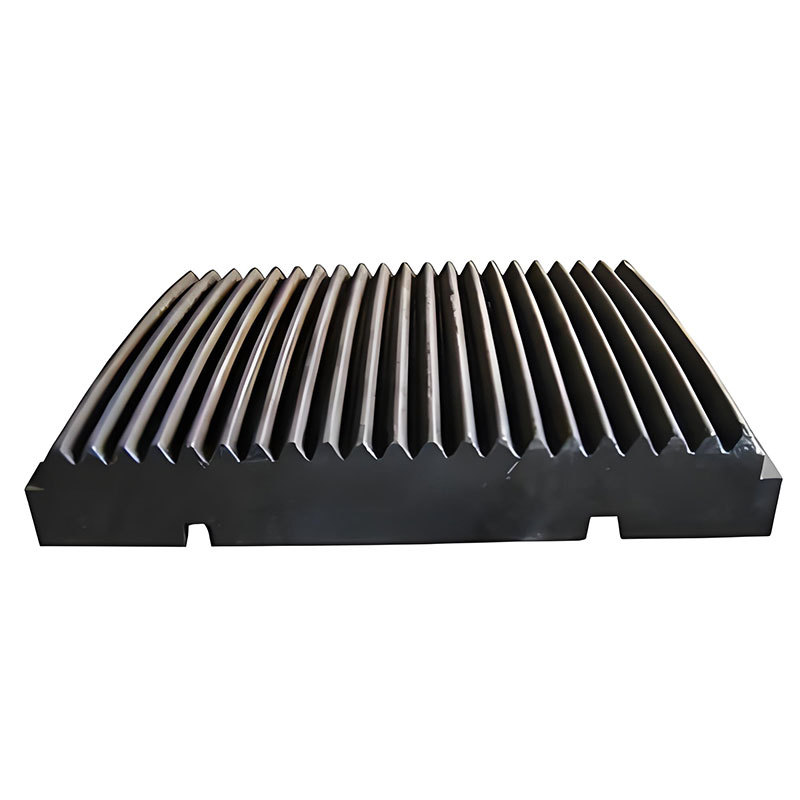
How Do Fixed and Movable Jaw Plates Differ in Function?
The Role of the Fixed Jaw Plate
The jaw plate is connected to the crusher’s stationary front frame, so it doesn’t move when the machine is running. Its job is to provide a hard, wear-resistant surface that the moving mouth can press against to crush the feed material. Since it doesn’t move, it receives reaction crushing forces evenly across its face during the whole working cycle. When the jaw plates are set in place, they need to be very strong and stiff so that they can withstand repeated crushing loads without deforming or coming free from their housing, which would affect both the performance of the crusher and the size of the particles it makes.
The Role of the Movable Jaw Plate
The movable jaw plate is attached to the swing jaw. The eccentric shaft moves the swing jaw back and forth between the fixed jaw and the movable jaw. The compressive breaking force that breaks up feed material comes from this back-and-forth action. The mobile jaw plate is under more stress than the fixed jaw plate because it moves during every cycle. This is because it has to handle both compressive loads during the forward stroke and dynamic inertia loads during the backward stroke. The mobile side of the jaw plates usually take a bigger hit each cycle, which affects the choice of material and the order of importance for tracking wear.
How Both Plates Work Together
Effective crushing depends on both jaw plates working as a matched system. The gap between them — the discharge setting — determines output particle size, and this gap changes as the plates wear. When wear is uneven between the fixed and movable jaw plates, the discharge gap becomes inconsistent across the width of the crusher, producing variable output granularity. This is why both plates should be inspected together and replaced in a planned sequence that maintains the intended crushing geometry rather than waiting for one plate to fail completely before addressing the other.
What Are the Material and Wear Differences Between the Two Plates?
Material Selection for Both Plate Types
Both fixed and movable jaw plates are typically cast from high-manganese steel or high-carbon steel — materials chosen for their combination of toughness, fracture resistance, and ability to withstand sustained impact force. High-manganese steel is the most widely used grade because it work-hardens progressively under impact loading, giving the surface increasing hardness over time. This property makes it particularly well suited for jaw plates operating against harder rock types, where surface hardness and corrosion resistance both contribute to extending the plate’s service life.
Wear Pattern Differences Between Fixed and Movable Plates
Although both plates use similar materials, their wear patterns differ. The fixed jaw plate tends to wear more evenly across its surface because the compression it experiences is more consistent in direction. The movable jaw plate, by contrast, often wears faster in the lower section near the discharge point, where material residence time is higher and the crushing action is most concentrated. Understanding these wear patterns allows maintenance teams to schedule inspections accordingly and to make informed decisions about when to flip or reverse jaw plates to extend their usable life before full replacement is needed.
Extending Service Life Through Proper Material Grade
Selecting the right material grade for the operating conditions significantly extends jaw plate service life regardless of position. For operations processing very hard or abrasive feed, higher-alloy grades provide better wear resistance at the cost of slightly reduced toughness. For operations where feed hardness varies widely, standard high-manganese steel jaw plates offer the best balance of fracture resistance and wear performance. Sourcing jaw plates from a supplier with genuine material traceability and casting quality control ensures that the specified grade is what is actually delivered and installed.
How Should Fixed and Movable Jaw Plates Be Maintained and Replaced?
Inspection Frequency and Wear Measurement
Both jaw plates should be inspected at regular maintenance intervals, with wear measured at consistent reference points — typically tooth profile height and plate thickness at the discharge zone. Jaw plates cast from high-quality steel maintain their dimensional profile for a reasonable service period, but the rate of wear accelerates once the tooth profile is significantly reduced. At that point, crushing efficiency drops and the risk of structural damage to the jaw body increases. Consistent measurement records across multiple inspection cycles give the clearest picture of each plate’s remaining service life.
Timing Replacement to Avoid Cascading Damage
Replacing jaw plates before they wear through to their backing structure is important not just for output quality but for protecting the crusher body itself. A fixed jaw plate that wears through exposes the frame to direct contact with feed material, which can cause costly damage that goes well beyond the cost of the plate itself. The same applies to the movable jaw plate — worn-through plates allow impact energy to reach the swing jaw casting. For non-standard crusher models where jaw plates are produced to custom drawings, procurement lead times may vary depending on drawing confirmation and casting process requirements, so replacement planning should account for this.
Sourcing Matched Replacement Pairs
For best results, fixed and movable jaw plates should be sourced as a matched pair from the same supplier and production batch. This ensures consistent material grade, geometry, and weight — all of which affect how evenly loads are shared across the crushing chamber. Mixing jaw plates from different suppliers or batches introduces the risk of dimensional mismatch that affects the discharge gap profile and leads to uneven wear in subsequent service. A supplier with 30 years of experience in customized mechanical parts can produce matched jaw plate sets to your exact crusher specification with the quality consistency that demanding applications require.
Conclusion
Fixed and movable jaw plates may look similar but serve distinct mechanical functions in a jaw crusher. The fixed plate provides a rigid compression surface; the movable plate delivers the dynamic crushing force. Both must be cast from quality materials, inspected regularly, and replaced in a planned sequence. Understanding their differences — and treating them as a system rather than two separate wear items — is the foundation of effective jaw crusher maintenance.
FAQ
Q1: Can fixed and movable jaw plates be swapped between positions?
In some crusher designs, jaw plates are reversible or interchangeable, but this depends on the specific model and plate geometry. Always confirm compatibility with the crusher’s design specification before swapping plates between positions.
Q2: Which jaw plate wears faster — fixed or movable?
The movable jaw plate typically wears faster, particularly near the discharge zone, due to higher impact energy per cycle and greater material contact frequency. Regular measurement helps track the rate of wear on both plates.
Q3: What material is best for jaw plates in hard rock applications?
High-manganese steel is the standard choice for hard rock applications due to its work-hardening behavior and fracture resistance. For highly abrasive feeds, higher-alloy grades may provide better surface wear resistance.
Q4: How are custom jaw plates produced?
Custom jaw plates are produced through casting processes to the buyer’s drawing specification. Lead times depend on drawing complexity, tooling requirements, and material grade — more complex or first-time orders generally require more time.
Q5: How do I know when jaw plates need to be replaced?
The primary indicators are tooth profile wear, reduced plate thickness at the discharge zone, and increasing variability in output particle size. Replace plates before they wear through to the backing structure.
Ready to Source Quality Jaw Plates for Your Crusher?
At Xian Huan-Tai Technology and Development Co., Ltd., we bring 30 years of manufacturing experience to every component we produce — including fixed and movable jaw plates built to your exact specification. Our production team manages quality throughout the entire process, and our technical team is ready to support custom drawing requirements for any crusher model. Whether you need a standard matched pair or a fully custom solution, we are here to deliver. Send your inquiry today. Contact us: inquiry@huan-tai.org.
References
- Wills, B. A., & Finch, J. A. (2015). Wills’ Mineral Processing Technology: An Introduction to the Practical Aspects of Ore Treatment and Mineral Recovery (8th ed.). Butterworth-Heinemann.
- Metso Corporation. (2018). Crushing and Screening Handbook (6th ed.). Metso Minerals.
- Gupta, A., & Yan, D. S. (2016). Mineral Processing Design and Operations: An Introduction (2nd ed.). Elsevier.
- Zum Gahr, K. H. (1987). Microstructure and Wear of Materials. Elsevier.
- Tylczak, J. H. (1992). Abrasive wear. In ASM Handbook, Volume 18: Friction, Lubrication, and Wear Technology. ASM International.
- Budynas, R. G., & Nisbett, J. K. (2011). Shigley’s Mechanical Engineering Design (9th ed.). McGraw-Hill.
