
When it comes to heavy-duty breaking tasks in mining, quarries, and building, the quality of your impact hammer directly affects how well the machine works, how safe it is to use, and how much it costs to own. A good impact hammer, which is usually made of high-chromium alloy, high-manganese steel, or a combination of the two, has better wear resistance, reliable impact absorption, and longer service life in tough conditions. This means that there is less unplanned downtime and more work gets done on site overall.
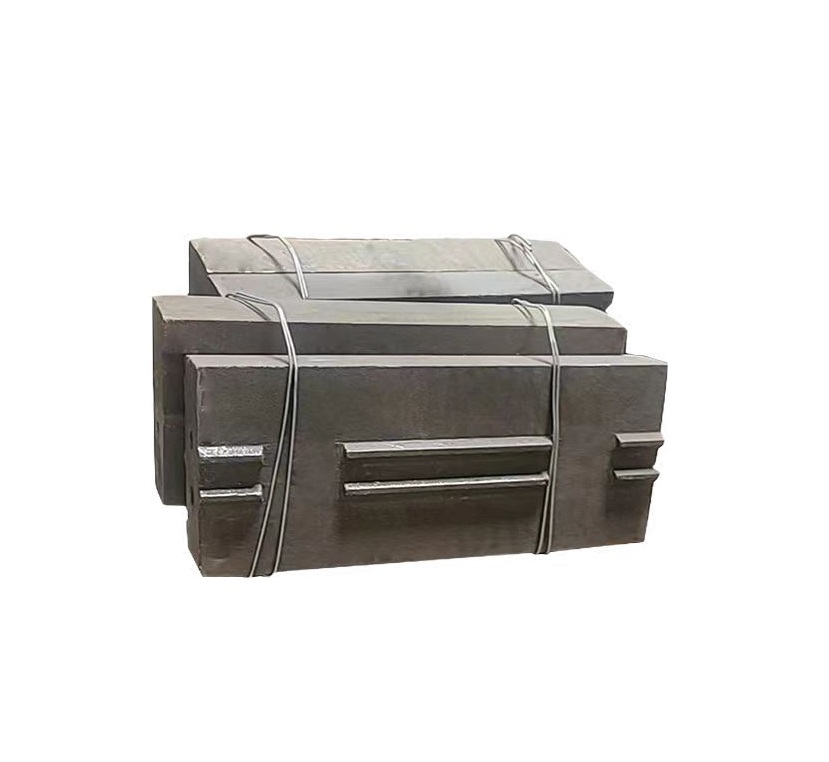
Extended Service Life and Reduced Downtime
Durable Material Composition Matters
The best thing about a high-end impact hammer is the materials it is made of. Both high-manganese steel and high-chromium metal have different levels of hardness and toughness that make them good for high-frequency impact loading. The impact hammer is the direct working part of hammer crushers. In these machines, weak materials break down too quickly, which stops production and costs a lot of money. High-quality alloy steel or cast steel versions give structures the strength they need to work continuously under heavy loads in mining and industrial settings.
Precision Casting for Dimensional Accuracy
The way a product is made is directly linked to how well it works. When impact hammers are made using the V-process, lost-wax casting, or resin sand casting, the limits on their sizes are tighter, which makes them fit better in the crusher assembly. Consistent shape means that the load is spread out evenly during every hit cycle, which immediately extends the life of the component. Parts that were not cast properly create stress clusters that lead to early-stage cracking. High-precision casting gets rid of this failure mode completely.
Fewer Replacements, Lower Operating Costs
When mining and heavy machinery workers need to change a part, it’s never just about the price of the part. They also have to pay for staff, take apart the machine, and lose production time. A well-made impact hammer with high breakage strength and impact toughness can last a lot longer before it needs to be replaced. This saves a lot of money over the life of the equipment, especially for businesses that run multiple crusher units around the clock.
Reliable Performance in High-Load Environments
Exceptional Fracture and Impact Resistance
The conditions inside a hammer crusher are some of the harshest in industrial gear. Hard, gritty material is hit over and over again at high speeds. When used in these situations, impact tools made of high-manganese steel or a hybrid metal show great resistance to both breaking and deforming. This mix of hardness and toughness is needed to keep the breaking efficiency high when working with different types of feed material, from soft limestone to stronger rock and grit.
Consistent Output Quality
The success of equipment relies on how consistent its parts are. The shape and spread of weight in a high-quality impact hammer stay the same over time. This means that the breaking ratios stay stable and the output grain is always the same. Low-quality hammers that chip or distort randomly, on the other hand, start to make particles of different sizes, which affects the quality of the product and the processing that comes after. This stability can’t be changed for tasks where material specifications are very important.
Engineered for Specific Working Conditions
Good impact tools are not made from standard parts. They can be made to fit certain crusher models and types of material by changing the metal, shape, and weight. This adaptability is very helpful for big building and mining jobs that deal with different kinds of ore or have changing production needs. Customized impact hammer specs make sure that the part fits perfectly with the machine’s design features and the operating needs of the place.
Cost Efficiency and Long-Term Value
Total Cost of Ownership vs. Unit Price
When you buy something based only on the unit price, you usually end up spending more in the long run. Even if you take into account the higher starting price, a cheap impact hammer that needs to be replaced every couple of weeks is much more expensive over time than a high-quality part that doesn’t need to be replaced as often. When purchasing managers at both machine shops and repair shops look at the quality of an impact hammer through the lens of its total cost of ownership, they always choose the better choices.
Streamlined Procurement for Custom Requirements
For non-standard machinery uses where off-the-shelf impact tools don’t meet performance or size requirements, it’s important to work with a maker who can do custom casting. Customized parts have different lead times. Simple designs can be finished in a few weeks, but complicated setups that need multiple rounds of drawing approval and careful process planning may take longer. When you work with a provider that handles engineering and quality control in an open way, you lower the risk of the purchase and the uncertainty of the schedule.
Compatibility with Broader Crusher Wear Part Systems
The impact hammer is a part of a bigger ecology of wear parts. For hammer-type crushers to work at their best, the quality of the parts that go with them is also very important. For instance, the springs in breakers are usually made from carbon steel, high-strength wire, or spring steel, depending on the type of load they will be carrying. Choosing a provider that can provide a wide range of crusher wear parts makes it easier to buy them, makes it easier for parts to work together, and helps machines run consistently.
Conclusion
When you buy good impact tools, you get measured results in terms of service life, working performance, and total cost efficiency. Every part of a well-designed impact hammer, from the better material mix to the precise casting methods, makes breaking work more reliable and productive in tough mining and industrial settings. One of the best choices a business can make is to choose quality at the component level.
FAQ
What kinds of materials are usually used to make impact hammers?
Impact tools used in crushers are usually made of high-manganese steel, high-chromium alloy, or a mix of alloy steel and cast steel. The choice of material relies on the working conditions. High-manganese types are better in areas with a lot of impacts, while high-chromium types are better in areas with very rough feed conditions.
What’s the difference between a blow bar and an impact hammer?
An impact hammer is the part of a hammer crusher that does the work. It is attached to a spinning rotor and hits the material directly. A blow bar, also known as a plate hammer, is attached to the rotor of an impact crusher. It breaks up materials by using both impact and recoil forces.
In general, how long does an impact hammer last?
Service life depends a lot on how hard the material is, how big the feed is, how fast the crusher is running, and how good the hammer is. In light-duty mining situations, premium metal impact hammers can last for months, but in very rough circumstances, they may not last as long.
Can impact tools be made to fit specific sizes?
Yes. For impact hammers that don’t fit standard crusher models or have special operating needs, they can be made to order using casting methods like lost-wax, resin sand, or V-method casting.
How should I judge a company that sells impact hammers?
Key factors include being able to track down the materials, being able to use a casting method, meeting standards for measurement checking, and having experience with similar uses. Suppliers that have their own technical and quality control departments are better able to regularly meet customer needs.
Work With a Supplier You Can Rely On
At Xian Huan-Tai Technology and Development Co., Ltd., we have spent 30 years supplying customized non-standard mechanical parts — including impact hammers — to machinery manufacturers and industrial operators worldwide. Our research and production teams are all in-house, so they make sure that quality is maintained at every step, from choosing the materials and making them to doing the final check to make sure that every part meets your performance and size needs. We accept your questions if you are looking for impact tools or other wear parts for crushers. Contact us: inquiry@huan-tai.org.
References
- Wills, B. A., & Finch, J. A. (2015). Wills’ Mineral Processing Technology: An Introduction to the Practical Aspects of Ore Treatment and Mineral Recovery (8th ed.). Butterworth-Heinemann.
- Gupta, A., & Yan, D. S. (2016). Mineral Processing Design and Operations: An Introduction (2nd ed.). Elsevier.
- Metso Corporation. (2018). Crushing and Screening Handbook (6th ed.). Metso Minerals.
- Lynch, A. J., & Rowland, C. A. (2005). The History of Grinding. Society for Mining, Metallurgy and Exploration (SME).
- Bwalya, M. M., Moys, M. H., & Finnie, G. J. (2001). The use of the discrete element method and fracture mechanics to improve comminution efficiency. Minerals Engineering, 14(6), 659–669.
- King, R. P. (2012). Modeling and Simulation of Mineral Processing Systems (2nd ed.). Butterworth-Heinemann.
