
In underground coal mining, the track link is one of the most load-critical components on a shearer. It forms the continuous chain that engages the haulage rack, transmitting traction force and enabling the machine to advance along the face. Cast from high-quality cast iron or cast steel, a well-made track link must withstand constant mechanical stress, hydraulic pressure fluctuations, and the abrasive conditions of the mining environment — all while keeping the shearer moving reliably and efficiently.
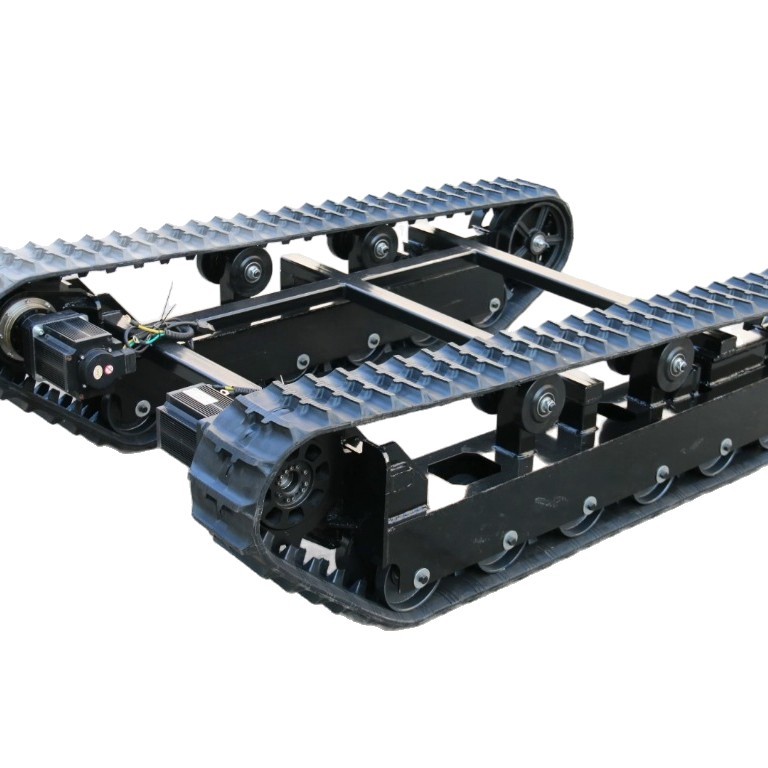
How Track Links Enable Shearer Mobility
The Foundation of Traction and Directional Control
A coal shearer moves along the armored face conveyor by engaging its drive sprockets with the track link chain. Each individual track link must maintain precise geometry under load to ensure smooth, consistent engagement. If a link deforms or wears unevenly, the sprocket engagement becomes erratic — causing jerky movement, increased mechanical stress on the drive system, and reduced positioning accuracy along the face. Mobility performance depends directly on the dimensional integrity of every track link in the chain.
Load Distribution Across the Haul Chain
The traction force generated by a shearer’s haulage motor is distributed across multiple track links at any given moment. This means each track link bears a share of the total pulling force, but peak loads — such as those encountered when cutting through hard inclusions or navigating gradient changes — can concentrate stress at individual links. High toughness and structural rigidity in each track link prevent localized deformation or fracture under these transient peak loads, keeping the haul chain functional throughout the shift.
Performance in Harsh Underground Conditions
The underground environment presents conditions that few surface components ever face — water, coal dust, rock fragments, and limited access for maintenance. A track link manufactured to tight tolerances and cast from materials with good corrosion resistance and toughness can operate continuously in these conditions without premature degradation. The reasonable structural design and precise casting of quality track links also make them easier to replace during maintenance windows, reducing the time the machine spends out of service.
How Track Links Affect Shearer Cutting Power Delivery
Connecting Drive Force to the Coal Face
A shearer’s cutting drums are powered by the machine’s motors, but the ability to hold position and advance at a controlled rate while cutting depends on the haulage system — and specifically on the track link chain’s ability to resist the reaction forces generated by drum-to-coal contact. When cutting resistance is high, the haul chain is under tension in one direction and compression in the other. Track links that lack sufficient strength will elongate or buckle, causing the machine to drift or stall rather than cutting cleanly.
Hydraulic System Integrity and Track Link Design
Modern shearers integrate hydraulic circuits that run in close proximity to the haulage system, and some track link assemblies are designed to remain stable under the continuous impact of high-pressure hydraulic oil flow without leakage or deformation. Maintaining hydraulic system integrity means the machine’s cutting height adjustment, ranging arm positioning, and other hydraulic functions continue to operate correctly even as the shearer works through challenging seam conditions. A track link that compromises hydraulic stability creates downstream problems across multiple machine systems.
Consistent Advance Rate Supports Cutting Efficiency
An even, predictable advance rate is essential for maximizing drum cutting efficiency and minimizing specific energy consumption. When track links are worn or mismatched in length — which can happen when individual links from different batches are mixed into the same chain — the advance rate becomes uneven, causing the drums to over-cut in some positions and under-cut in others. Sourcing track links from a consistent manufacturer with reliable dimensional control avoids this problem and supports stable, efficient cutting across the full face length.
Selecting and Maintaining Track Links for Long Service Life
Material Quality as the Starting Point
The service life of a track link begins with material selection. Cast steel with appropriate carbon and alloying content provides the balance of hardness and toughness needed for the haulage environment. Brittle materials fracture under shock loading; overly soft materials wear too quickly. For coal shearer applications — where the track link is subject to both abrasive wear and repetitive impact — the right material grade is a non-negotiable factor in achieving a reasonable service interval.
Installation Compatibility and Dimensional Consistency
Each track link must be compatible with the shearer’s drive sprockets and the conveyor pan profile. Dimensional variation between links — whether caused by inconsistent casting or inadequate post-cast machining — creates uneven load sharing and accelerates wear at the points of mismatch. Procurement teams sourcing replacement track links should verify that supplier casting processes deliver consistent geometry across batches. For standard models, lead times are generally predictable; for custom or non-standard configurations, timelines may extend depending on drawing confirmation and process requirements.
Planned Replacement Over Reactive Maintenance
Waiting for a track link to fail underground is a costly approach. Chain failures during a production shift require unplanned stoppages, and in some cases the broken link can cause secondary damage to sprockets or the conveyor system. Monitoring link wear during scheduled maintenance inspections and replacing the chain assembly before it reaches its failure threshold is the more cost-effective strategy. Quality track links with long service life and straightforward installation reduce both the frequency and the disruption of these replacement cycles.
Conclusion
Track links are small components with an outsized impact on coal shearer performance. From enabling reliable traction and precise advance to supporting hydraulic system stability and consistent power delivery, every link in the chain plays a real role in keeping the shearer productive. Investing in quality track links — and managing their replacement proactively — is one of the most practical decisions a mining operation can make.
FAQ
Q1: What materials are coal shearer track links typically made from?
Track links are commonly cast from high-quality cast iron or cast steel, selected for their combination of toughness, strength, and wear resistance. The specific grade depends on the operating load profile and the manufacturer’s design requirements.
Q2: How do I know when track links need to be replaced?
Key indicators include visible wear on the link body and pin holes, elongation of the chain pitch, and irregular shearer advance. Regular dimensional checks during maintenance intervals are the most reliable detection method.
Q3: Can track links be custom manufactured for non-standard shearers?
Yes. Non-standard or older shearer models often require custom-dimensioned track links. These can be produced through precision casting, with lead times varying based on drawing complexity and process requirements.
Q4: What happens if mismatched track links are used in the same chain?
Dimensional mismatches cause uneven load distribution, accelerated wear at the mismatch points, and inconsistent advance rates. Always source replacement links from a supplier with reliable batch consistency.
Q5: How does track link quality affect overall shearer operating costs?
Higher-quality track links with longer service intervals and easier installation reduce both replacement frequency and maintenance downtime, lowering total operating cost over the machine’s working life.
Partner With an Experienced Supplier for Your Track Link Requirements
At Xian Huan-Tai Technology and Development Co., Ltd., we have 30 years of experience manufacturing customized non-standard mechanical parts for mining and heavy engineering applications. Our engineering and production teams manage quality at every stage — from material selection through casting and inspection — ensuring every track link meets your performance and dimensional specifications. If you need reliable track links or other mining machine components, we are ready to support you. Contact us at inquiry@huan-tai.org to learn more about track link products.
References
- Peng, S. S. (2006). Longwall Mining (2nd ed.). Society for Mining, Metallurgy and Exploration (SME).
- Hustrulid, W., & Bullock, R. L. (Eds.). (2001). Underground Mining Methods: Engineering Fundamentals and International Case Studies. Society for Mining, Metallurgy and Exploration (SME).
- Kotwica, K. (2018). Wear of cutting picks used in coal seam cutting. Mining Machines, 36(2), 14–25.
- Dolipski, M., Remiorz, E., & Sobota, P. (2014). Dynamics of non-uniformity of loads on AFC drives. Archives of Mining Sciences, 59(1), 155–168.
- Shigley, J. E., Mischke, C. R., & Budynas, R. G. (2004). Mechanical Engineering Design (7th ed.). McGraw-Hill.
- Nienhaus, K., & Maas, J. (2012). Development trends in continuous mining technology for hard coal underground mining. Mining Report Glückauf, 148(5), 376–383.
