
CNC cutting is now the usual way to make truck parts that need to be made with exact measurements and the same high quality every time. From structural frames and axle parts to a custom front bumper, CNC-machined parts fit better, last longer under load, and need less work when they are installed than parts made with less precise methods. Fleet owners and equipment buyers looking for new or custom truck parts need to know why cutting precision means reliability in the real world in order to make better buying choices.
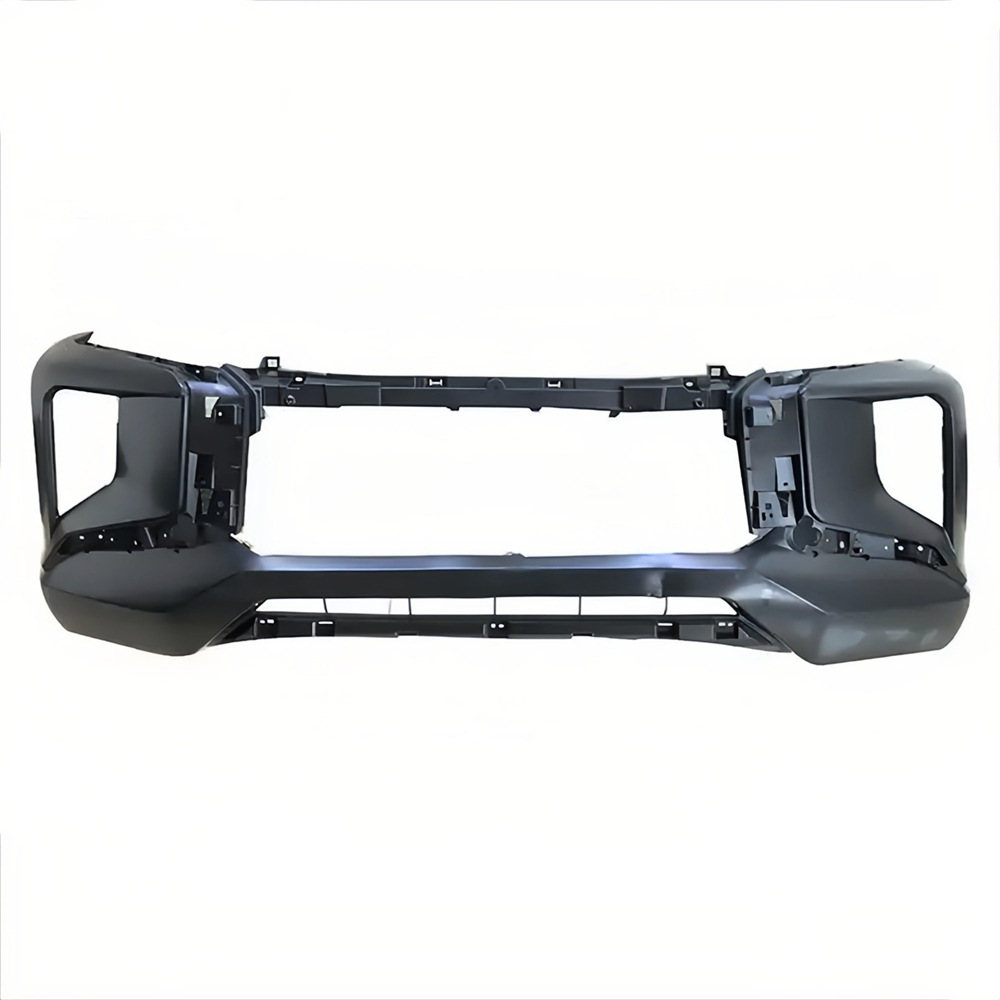
How CNC Machining Delivers Better Fitment Than Conventional Methods
Consistent Dimensions Across Every Part
CNC machining executes cutting operations from a digital programme, which means every part in a production run is produced to the same dimensional specification without the variation introduced by manual processes. For truck components where mounting interfaces, bore diameters, and bolt hole positions must align precisely — including a replacement front bumper that needs to match the factory mounting points — this consistency eliminates the trial-and-error fitting that wastes installation time and risks damaging adjacent components during assembly.
Tight Tolerances at Critical Interfaces
There are many places on truck parts that connect with other parts, and the accuracy of these links directly impacts function and safety. Tolerances that can’t be safely reached with traditional production can’t be used for bearing housings, shaft journals, and structural mounting faces. CNC machining consistently keeps these important dimensions within the allowed range of errors. This means that, for example, a machined front bumper mounting bracket lines up correctly with the chassis frame and distributes load the way the designer intended, rather than causing stress concentrations due to misalignment.
Compatibility with Complex Geometry
Modern truck parts, especially custom or non-standard parts for specialized cars, often have multiple polished faces, internal pockets, and compound angles that need to fit together perfectly. CNC multi-axis machining centers can make these features in a single setup, so there is no chance of making mistakes when moving a part from one hand process to another. Because of this, CNC cutting is the best way to make complex front bumper structures, mounting systems, and unique brackets that can’t be made correctly with easier methods.
Why Material and Process Together Determine Long-Term Durability
Alloy Steel for High-Stress Structural Parts
The material and the way it was made both affect how long a machined truck part lasts. For parts that hold weight, like frame braces, tow hooks, winch mounts, and strengthened front bumper structures, alloy steel has the right mix of tensile strength, toughness, and ease of machining. When heat treatment is done after rough machining but before finishing, it creates the hardness profile that is needed for the service environment. This could be through-hardness for a part that is under bending stress or surface wear resistance for a part that is in touch with abrasives.
Cast Steel for Complex Structural Shapes
Where a truck component requires internal geometry or cross-sectional complexity that would be prohibitively expensive to machine from solid, cast steel provides the near-net shape that makes finish machining economical. A front bumper mounting hub or multi-port hydraulic block, for example, can be cast to approximate geometry and then CNC-finish-machined at all critical faces and bores. The combination of casting for form and CNC machining for dimensional accuracy delivers both design freedom and the precision that a fabricated or purely cast part cannot match.
Surface Finish and Coating Compatibility
CNC machining produces surface finishes that are consistent and controllable — an important factor for truck parts that will receive protective coatings such as powder coat, electroplating, or thermal spray. A front bumper or structural bracket with a well-machined surface profile accepts coatings more uniformly and bonds more reliably than a part with a rough or inconsistent surface. This translates into better corrosion protection and a longer-lasting cosmetic finish, which matters particularly for commercial vehicle components exposed to road salt, moisture, and UV radiation throughout their service life.
Sourcing CNC-Machined Truck Parts: What Buyers Should Know
Providing Drawings and Specifications Upfront
The quality of a CNC-machined truck part starts with the information provided at the inquiry stage. A complete engineering drawing — covering all dimensions, tolerances, material specification, surface finish requirements, and any post-machining treatment — allows the manufacturer to programme correctly, select the right tooling, and plan inspection checkpoints accurately. For a custom front bumper assembly or non-standard bracket, a thorough drawing review before production begins prevents the misunderstandings that lead to parts requiring rework or re-production, which adds cost and time to the order.
Lead Times for Custom Machined Components
Standard machined truck parts with straightforward geometry and clear drawings can often be produced and dispatched within a reasonable timeframe once order details are confirmed. Custom components — particularly those requiring multiple machining setups, special materials, or repeated drawing revisions — take longer. Buyers with firm installation schedules should communicate their required delivery date at the inquiry stage so that production can be planned accordingly. Rushing a precision machining job to meet an unrealistic deadline is one of the most common ways that dimensional accuracy gets compromised.
Inspection and Quality Verification
For machined truck parts where dimensional accuracy is critical — bearing bores, mounting faces, and thread engagement lengths — pre-shipment inspection provides the confirmation that the part was produced correctly before it leaves the factory. Dimensional reports covering critical features, material certificates for the substrate, and surface finish measurements are standard documentation for quality-conscious procurement teams. Establishing the inspection and documentation requirements at the order stage ensures the supplier is prepared to deliver what is needed rather than being asked to backfill paperwork after the fact.
Conclusion
CNC-machined truck parts deliver better fitment and longer service life because dimensional accuracy, material specification, and surface quality are controlled consistently across every part produced. From a precision front bumper mounting assembly to custom structural brackets, the combination of correct material and tight machining tolerances results in components that install correctly, perform reliably, and hold up to the demands of commercial and heavy-duty vehicle operation over the long term.
FAQ
Q1: Can a custom front bumper be CNC-machined to match OEM mounting points?
Yes. With accurate drawings or measured dimensions from the original mounting interface, a custom front bumper structure can be machined to fit OEM mounting points precisely.
Q2: What material is typically used for a heavy-duty front bumper?
Alloy steel is the standard choice for high-strength front bumper structures, offering the impact resistance and toughness needed for commercial and off-road vehicle applications.
Q3: How does CNC machining improve front bumper fitment over fabrication alone?
CNC machining controls mounting hole positions, face flatness, and bracket geometry to tight tolerances that manual fabrication cannot consistently achieve, reducing installation issues.
Q4: Can front bumper components be cast and then CNC-machined?
Yes. Complex shapes can be cast to near-net geometry and finish-machined at critical interfaces, combining design flexibility with dimensional accuracy.
Q5: How long does a custom machined front bumper assembly take to produce?
Lead time depends on complexity and drawing confirmation requirements. Buyers with firm delivery needs should communicate their schedule at the inquiry stage.
Get Precision-Machined Truck Parts from Huan-Tai
Xian Huan-Tai Technology and Development Co., Ltd. has over 30 years of experience producing customized cast, forged, and CNC-machined mechanical components for heavy vehicle, engineering, and industrial equipment applications worldwide. Whether you need a custom front bumper assembly, structural brackets, or non-standard machined parts, our technical and production teams are equipped to deliver components built to your exact drawings and quality standards. Let us know what you need — we are ready to help. Contact us: inquiry@huan-tai.org.
References
- Kalpakjian, S., & Schmid, S. R. (2014). Manufacturing Engineering and Technology (7th ed.). Pearson Education.
- Groover, M. P. (2019). Fundamentals of Modern Manufacturing: Materials, Processes, and Systems (6th ed.). Wiley.
- Boothroyd, G., Dewhurst, P., & Knight, W. A. (2011). Product Design for Manufacture and Assembly (3rd ed.). CRC Press.
- Shigley, J. E., Mischke, C. R., & Budynas, R. G. (2004). Mechanical Engineering Design (7th ed.). McGraw-Hill.
- Todd, R. H., Allen, D. K., & Alting, L. (1994). Manufacturing Processes Reference Guide. Industrial Press.
