
When a jaw crusher needs new wear parts, the first decision most purchasing managers face is whether to go OEM or aftermarket. For a movable jaw plate specifically, this question matters — because the jaw plate is the component that contacts rock directly on every crushing cycle, and its material quality and dimensional fit determine how long the machine runs before the next shutdown. Understanding what genuinely differentiates OEM from well-made aftermarket jaw crusher components helps buyers make decisions based on value rather than habit.
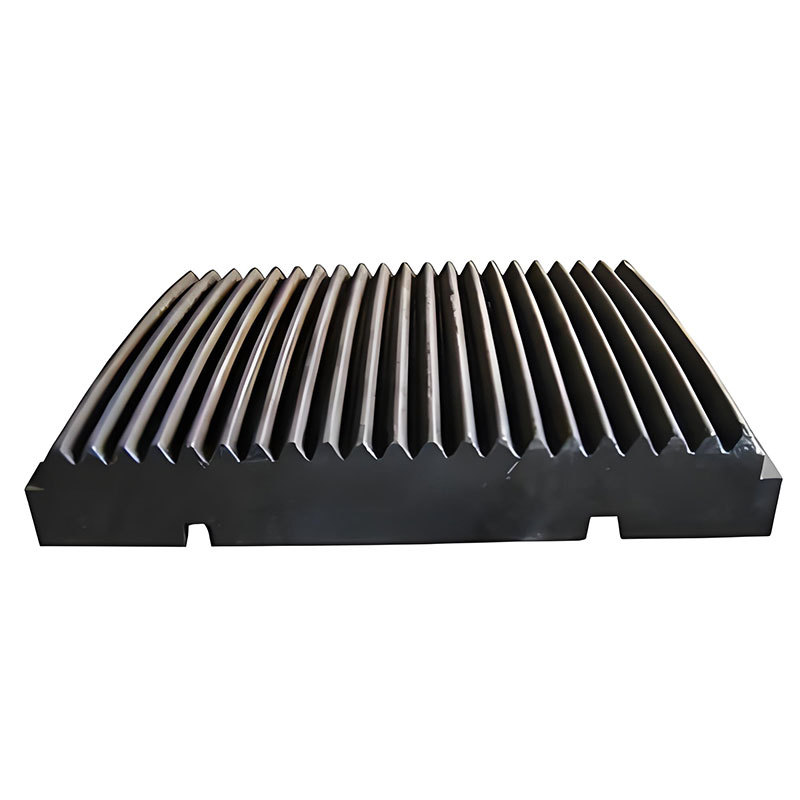
What OEM Movable Jaw Plates Offer — and Where the Limits Are
Dimensional Certainty From the Original Manufacturer
The strongest case for an OEM Movable Jaw plate is fit confidence. The original manufacturer designed the jaw crusher components to work together, so an OEM plate arrives with assured compatibility across the mounting profile, swing jaw interface, and tooth geometry. For operations with no in-house engineering capability to verify drawings, this removes uncertainty. However, dimensional conformance is entirely achievable from a disciplined aftermarket supplier working from accurate customer drawings and applying proper inspection before shipment.
Material Documentation and Specification Traceability
OEM suppliers typically provide material traceability for their jaw crusher components, which matters to larger manufacturers with strict incoming quality requirements. High manganese steel — the standard material for a movable jaw plate — must be cast and heat-treated correctly to deliver its work-hardening wear behavior in service. Huan-Tai provides material test reports on request, offering the same level of documentation that OEM channels supply, without the overhead cost that OEM branding adds to the part price.
When OEM Pricing Becomes a Procurement Problem
For large equipment operators running standardized fleets, OEM jaw crusher components can be procured at volume pricing that reduces the cost gap. For smaller repair companies or operations managing older machines, OEM pricing is often a genuine obstacle — particularly when the original manufacturer has discontinued support for legacy crusher models. In these cases, a quality aftermarket Movable Jaw plate, manufactured to the same material standard and dimensional specification, is both the practical and the economical answer.
What Makes an Aftermarket Movable Jaw Plate Worth Choosing
Strength and Rigidity Under Crushing Load
A Movable Jaw plate must have high strength and rigidity to withstand the reactive forces generated during fragmentation on every crushing cycle. Huan-Tai casts its jaw crusher components from high manganese steel or high carbon steel, both selected for their capacity to absorb impact force without cracking or deforming. The casting process is controlled from alloy composition through solidification to eliminate internal porosity that would reduce structural strength under the high-load conditions of jaw crushing.
Performance on Hard and Abrasive Feed Materials
Not every application puts the same demands on jaw crusher components. A movable jaw plate processing basalt or iron ore in a primary crushing stage faces more severe conditions than one running softer limestone. Huan-Tai’s jaw plates are designed to be applied to harder rocks and offer good corrosion resistance, making them a reliable choice for mining and quarrying operations where feed conditions are demanding and inconsistent. Material grade is matched to the application rather than defaulting to a single catalogue specification.
Heat Treatment That Delivers the Promised Wear Life
The material grade printed on a certificate only delivers its potential if the heat treatment process is executed correctly. Controlled heat treatment transforms the cast microstructure of a Movable Jaw plate into the combination of hard surface and tough core that jaw crusher component service requires. Huan-Tai validates heat treatment parameters for each alloy grade used, and final dimensional inspection confirms that every plate shipped meets the drawing specification — giving buyers confidence in what they are installing.
Making the Right Choice for Your Operation and Budget
Total Cost Is What Matters, Not Unit Price
The purchase price of a movable jaw plate is only one input to the real cost calculation. Service life, installation time, and the consequences of early failure all belong in the comparison. An aftermarket jaw crusher component that matches OEM wear life at a lower unit price delivers measurable value over a maintenance cycle. A cut-price plate that wears out prematurely — and requires additional labor and downtime — costs more in practice regardless of how the invoice reads.
Custom Plates for Non-Standard and Legacy Equipment
Older crushers and machines from less common manufacturers present a supply challenge that OEM channels frequently cannot solve. Huan-Tai’s technical team manufactures Movable Jaw plate replacements for legacy jaw crusher components, working from worn originals, hand measurements, or customer-supplied drawings. Lead times for custom orders depend on the complexity of drawing confirmation and the casting process involved, so customers with critical equipment are encouraged to plan procurement well ahead of scheduled maintenance windows.
Quality Control That Supports Repeat Purchasing Confidence
For purchasing managers evaluating a new supplier of jaw crusher components, the question is not only whether the first delivery performs — it is whether the second and third deliveries perform equally well. Huan-Tai’s end-to-end quality management, from raw material certification through casting, heat treatment, and final inspection, is designed to produce consistent results across repeat orders. This consistency is what builds the kind of supply relationship that reduces procurement risk and simplifies maintenance planning over time.
Conclusion
OEM and aftermarket movable jaw plate options both have legitimate roles depending on equipment type, budget, and supply requirements. What ultimately determines performance is material quality, dimensional accuracy, and the process discipline behind whichever source you choose. A well-qualified aftermarket manufacturer with genuine quality control and 30 years of jaw crusher component experience can deliver equal performance at a more competitive cost — a clear advantage for any purchasing team managing maintenance budgets carefully.
FAQ
Q1: What material is a Movable Jaw plate typically made from?
High manganese steel is the most common choice for its work-hardening behavior under impact. High carbon steel is used where abrasion is the dominant wear mechanism.
Q2: How do I tell when a Movable Jaw plate needs replacing?
Inspect tooth height regularly against the original profile. Reduced crushing efficiency or visible cracking are also reliable indicators that replacement is due.
Q3: Can aftermarket Movable Jaw plates match OEM service life?
Yes, when manufactured from the correct material grade, cast and heat-treated properly, and dimensionally verified before shipment.
Q4: What causes premature jaw plate wear?
Incorrect material grade for the feed type, poor casting quality with internal defects, or operating the crusher at settings outside the design parameters are the most common causes.
Q5: Can Huan-Tai supply plates for older or non-standard crushers?
Yes. Huan-Tai manufactures jaw crusher components to customer drawings or worn samples, covering legacy and non-OEM crusher models that standard channels no longer support.
Ready to Source Jaw Crusher Components You Can Count On?
At Xian Huan-Tai Technology and Development Co., Ltd., we’ve spent over 30 years delivering Movable Jaw plates and jaw crusher components to mining and engineering customers who need quality they can rely on — at a price that makes sense. Our professional technical team works through your specifications carefully, our production team controls quality from casting through final inspection, and our experience means consistent results across every order. Let’s talk about your requirement today: inquiry@huan-tai.org.
References
- Wills, B. A., & Finch, J. A. (2015). Wills’ Mineral Processing Technology: An Introduction to the Practical Aspects of Ore Treatment and Mineral Recovery (8th ed.). Butterworth-Heinemann / Elsevier.
- Lindqvist, M., & Evertsson, C. M. (2006). Liner wear in jaw crushers. Minerals Engineering, 16(1), 1–12.
- Cleary, P. W., & Morrison, R. D. (2011). Understanding fine ore breakage in a laboratory jaw crusher using DEM simulation. Minerals Engineering, 24(3–4), 352–366.
- Gupta, A., & Yan, D. S. (2006). Mineral Processing Design and Operations: An Introduction. Elsevier Science.
- Bearman, R. A., & Briggs, C. A. (1998). The active use of crushers to control product requirements. Minerals Engineering, 11(9), 849–859.
