
Matching a grille for truck applications with the right front bumper is more than a visual exercise — it affects fitment, airflow, structural compatibility, and long-term serviceability. For fleet managers and equipment operators running trucks in mining, construction, or engineering environments, getting this pairing right means fewer installation problems, better protection, and components that work together as a system. This guide walks through the key factors that determine whether a grille and bumper combination will perform as expected.
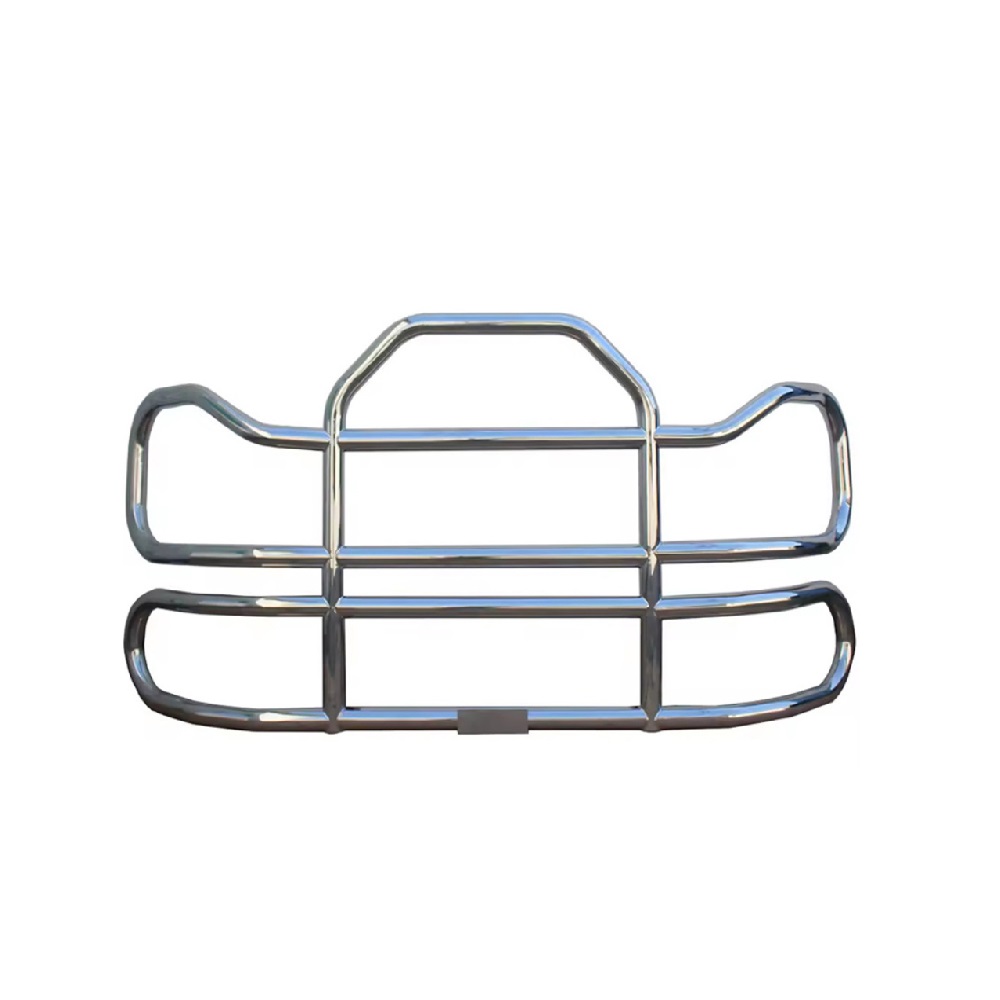
Understanding Fitment: Why the Grille and Bumper Must Work Together
Dimensional Compatibility Comes First
Before anything else, the grille for truck installation must align with the bumper in terms of mounting point location, overall width, and the clearance dimensions around the opening. A mismatch here creates gaps, misaligned edges, or interference that requires modification to fix. When both components are sourced separately — or when replacing just one of a worn pair — verifying dimensions against the truck model’s original specification is the right starting point.
Structural Interaction Between the Two Components
On heavy-duty trucks, the front bumper often carries part of the structural load in a frontal impact, while the grille for truck provides airflow and limited protection for the radiator and cooling system. These two components share the same mounting zone, which means the bumper’s mounting geometry can directly influence how the grille sits and seals. A bumper that protrudes further than the original design may push airflow around rather than through the grille, reducing cooling efficiency under load.
OEM Replacement vs. Custom Fabrication
For trucks still within standard production, OEM-matched replacements are the straightforward choice — dimensions are known and compatibility is confirmed. For older equipment, modified trucks, or machines used in specialized applications, a custom-fabricated grille for truck may be needed to match a non-standard bumper configuration. Working with a manufacturer who can reverse-engineer from samples or field measurements saves time and avoids costly trial-and-error.
Material and Construction: Matching Performance to the Operating Environment
Steel Grade for the Front Bumper
Heavy-duty front bumpers for working trucks are typically fabricated from high-strength low-alloy steel or alloy steel, chosen for their combination of toughness, weldability, and resistance to impact deformation. The material specification should reflect the actual service environment — a truck on a mine haul road faces far more severe loading than one used for light site support. Matching material grade to application is an engineering decision, not just a procurement one.
Grille Material Selection for Durability
A grille for truck use in rough conditions needs to be able to withstand shaking, hitting things, and being exposed to dust, wetness, and temperature changes. Steel grilles, which are usually made of mild steel or metal steel based on the use, last a long time and are easy to fix on the job site. The material of the grille should work with the treatment used on the bumper’s surface so that both parts age at the same rate and keep working the same way over time.
Surface Treatment Consistency
To ensure accuracy in color and texture, powder coating, hot-dip galvanizing, or industrial paint systems applied to the hood and grille for truck vehicles should ideally come from the same finishing process. More importantly, matching surface treatment makes sure that both parts have the same level of rust protection. This stops faster wear and tear at the point where the two parts meet and makes upkeep easier over the life of the equipment.
Sourcing Custom Components: Lead Time, Quality, and Getting the Specification Right
Communicating the Specification Clearly
The quality of the finished product, whether it’s a new grille for truck or a custom bumper-and-grille set, rests a lot on how well the specifications are shared up front. The maker can understand exactly what is needed with the help of drawings, detailed sketches, photos of the current parts, and notes on the working environment. It takes longer to get parts and there’s a greater chance that they won’t fit right on the first delivery when briefs aren’t clear.
Lead Time Expectations for Custom Parts
Standard replacement components are generally available faster than custom-fabricated assemblies. For a bespoke grille for truck matched to a non-standard bumper, lead time depends on design complexity, the need for drawing confirmation rounds, and material availability. Simple, well-documented designs move through production efficiently; more complex assemblies requiring specification clarification take longer. Building realistic lead time into the procurement plan avoids the pressure that leads to shortcuts.
Pre-Shipment Inspection and Fit Verification
A responsible supplier inspects custom grille and bumper components against the agreed drawings before shipment — checking critical dimensions, weld quality, surface finish, and mounting interface geometry. For a grille for truck that must align precisely with a custom bumper, verifying key dimensions at the supplier’s facility is far less disruptive than discovering a fitment issue on-site. Requesting dimensional records with each shipment also provides a reliable reference for future reorders.
Conclusion
Matching a grille for truck applications with the correct front bumper requires attention to dimensional compatibility, material selection, surface treatment consistency, and clear specification communication. When all these factors are addressed properly — and when the supplier has both the engineering capability and the quality discipline to execute — the result is a front-end assembly that fits correctly, performs reliably, and holds up over the full service life of the equipment.
FAQ
Q1: Does the grille need to be replaced at the same time as the front bumper?
Not always, but confirming that the existing grille will still fit the new bumper geometry before installation is essential, especially when the bumper is custom-fabricated.
Q2: What material is commonly used for a heavy-duty truck grille?
Mild steel or alloy steel are common choices depending on the operating environment, offering good durability and straightforward repairability in the field.
Q3: Can a custom grille for truck be made to match a non-standard bumper?
Yes. Manufacturers with reverse-engineering capability can produce a matched grille based on drawings, samples, or on-site measurements of the existing bumper configuration.
Q4: How important is surface treatment matching between the grille and bumper?
It matters both visually and functionally — matched treatment ensures consistent corrosion resistance and prevents accelerated deterioration at the interface between the two components.
Q5: How long does it take to produce a custom grille and bumper set?
Lead times vary with design complexity and specification clarity. Well-documented designs move faster; assemblies requiring multiple confirmation rounds take longer.
Let’s Build the Right Front-End Assembly for Your Truck
At Xian Huan-Tai Technology and Development Co., Ltd., we have over 30 years of experience supplying customized non-standard mechanical parts — including grille for truck and front bumper assemblies — to engineering and mining equipment companies worldwide. Our technical team works directly from your drawings or samples, and our production team manages quality at every stage from raw material to final inspection. Tell us what you need and we’ll get it right. Contact us at inquiry@huan-tai.org to start the conversation.
References
Weman, K. (2012). Welding Processes Handbook (2nd ed.). Woodhead Publishing.
Gillespie, T. D. (1992). Fundamentals of Vehicle Dynamics. Society of Automotive Engineers.
Brockenbrough, R. L., & Merritt, F. S. (2011). Structural Steel Designer’s Handbook (5th ed.). McGraw-Hill.
Ashby, M. F. (2011). Materials Selection in Mechanical Design (4th ed.). Butterworth-Heinemann.
Dieter, G. E., & Schmidt, L. C. (2009). Engineering Design (4th ed.). McGraw-Hill Higher Education.
