
To find worn jaw crusher parts, start by taking a close look at the jaw plate, which is the part that is directly stressed when the jaws are crushed. You should take action when you see that the surface of a jaw plate is getting thinner, the sides are chipped, or the tooth profile depth has decreased. Wear patterns can also be seen in other parts, such as the hinge plates, springs, and dust seals. If you notice these signs early, you can keep the whole breaker system safe and avoid unexpected downtime.
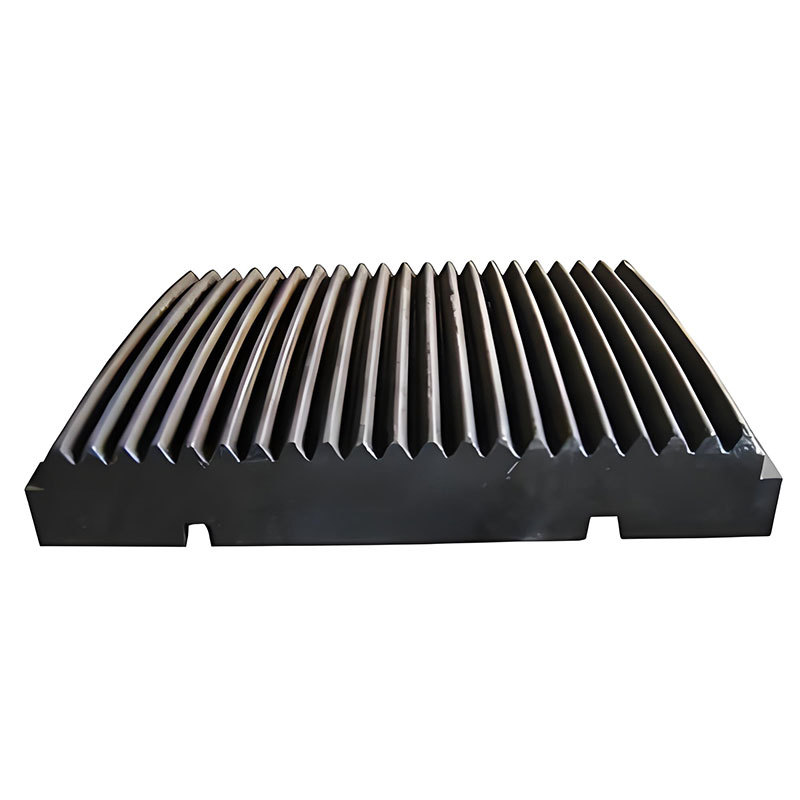
Visual and Dimensional Inspection of the Jaw Plate
Surface Profile Degradation
A clear sign of jaw crusher wear is when the curved tooth shape on the jaw plate wears away. The deep, sharp grooves on the new jaw plate make it easy to break up rock. Over time, hitting something hard over and over again wears down those lines. When the tooth height falls below a certain level of clearance, which is usually checked with a profile scale, the breaking efficiency goes down significantly. Because the jaw plate is made of high manganese steel, it can work-harden when it is hit. However, this self-hardening effect has its limits, and every planned repair cycle should include checking the profile.
Edge Chipping and Cracking
Edge chipping along the top and bottom corners of the jaw plate is often caused by feed material that is too big or uneven loading. Small cracks on the surface that show up after a lot of use are an early sign of wear and tear. If you don’t fix these cracks, they can spread inside and cause the structure to break suddenly while it’s being used. Our jaw plate is made from high-quality high manganese steel and high carbon steel, which are both strong and stiff enough to handle reactive fragmentation forces. This means that it lasts longer than lower-grade options, but it is still important to check it visually on a regular basis.
Uneven Wear Patterns
It means that the feed material distribution or CSS (closed-side setting) needs to be adjusted if the jaw plate face is worn in different places. It’s possible that the crusher is getting feed that isn’t straight on to one side of the plate. This makes the jaw crusher wear out faster and needs to be serviced more often. By taking readings of thickness at different places on the plate’s surface and comparing them, uneven wear can be found before it causes problems with the structure.
Monitoring Wear on Toggle Plates, Springs, and Dust Seals
Toggle Plate Wear and Deformation
The hinge plate at the back of the crusher sends force and serves as a safety feature. It is made of high manganese steel so that it can take the repeated compression loads without breaking. Wear can be seen in the form of scores on the contact surfaces, felt in the form of rounding off the seat areas, and heard as clicking or knocking sounds during operation. A worn toggle seat lets the jaw plate assembly move a little each cycle, which adds to the wear on other parts and finally throws off the alignment of the grinding chamber.
Spring Fatigue and Loss of Tension
Crusher springs, which are usually made of carbon steel, high-strength wire, or spring steel, keep the toggle mechanism tight and move the moving jaw back into place after each stroke. When springs get worn or tired, they can’t hold as much weight. A slow return stroke, coil compression that doesn’t fully recover, or permanent set (where the spring doesn’t return to its original free length) are all signs of this problem. When you replace the springs as soon as you notice they are worn out, you keep the jaw plate and frame from getting damaged again. Delivery lead times for spring components rely on confirming the specifications and meeting any other special needs.
Dust Seal Condition
The sharp fines that are made during grinding are kept away from the bearing units by dust seals, which are usually made of high manganese steel or high-chromium alloy steel. When the dust seal breaks down, small particles can move into the bearing shaft. This speeds up bearing wear and makes heat. When you examine the seal, look for cracks, distortion, or loss of touch pressure around the edges. If the locking system on your jaw crusher wears out, you should fix it right away, because bearing failure is one of the most expensive results of putting off maintenance.
Assessing Wear on Hammers, Blow Bars, and Related Impact Parts
Hammer Head Wear in Hammer Crushers
The main part that wears out in hammer-type crushers is the hammer head, which is attached to a spinning rotor and hits the feed material very quickly. Most hammer heads are made of high manganese steel, alloy steel, or high-chromium cast iron so they can withstand impacts and last a long time. Wear shows up as the striking face getting rounder, the head losing weight, and surface cracks. When the hitting face breaks down to less than the minimum thickness required by the equipment maker, it stops crushing as well as balancing the rotor.
Blow Bar Wear in Impact Crushers
Impact crushers, which are not the same as hammer crushers, have blow bars that do the same job as hammer crushers’ blow bars but work under different loads. Most blow bars are made of high manganese steel, alloy steel, and high-chromium cast iron, just like most hammer heads. Wear signs include a leading edge shape that is worn down, material loss that can be seen on the impact face, and any cracks that appear near the mounting surfaces. In this case, the jaw plate comparison works: high-strength cast materials make things last longer, but they still need to be checked for dimensions on a regular basis to catch wear before it stops production.
Liner and Side Plate Wear
As the rock is crushed, wear guards and side plates keep the main frame from being directly worn down. When the crushed material leaves the cylinder, the jaw crusher wears these parts down through both direct contact and rolling scratches. It’s time to change the liner if it’s getting thinner than the wear marks, if through-wear is obvious, or if you can hear metal rubbing against the frame. For mining, tunneling, or heavy building, which is where our goods are mostly used, material handled should be used to track liner life instead of just calendar time.
Conclusion
Maintenance for a jaw crusher starts with checking the jaw plate, hinge parts, springs, dust seals, and chamber plates on a regular basis. When maintenance teams know the early warning signs of jaw crusher wear, like feature loss, cracks, tiredness, and changes in size, they can plan replacements ahead of time instead of waiting for fails to happen. The first step is to use high-quality ingredients and make sure the product is made correctly. Regular inspections are what protect that investment.
FAQ
Q1: What kind of material does a jaw plate usually come from?
High manganese steel (Mn13, Mn18) is most often used to make jaw plates because it hardens when it is hit, which makes it last longer. Different kinds of high carbon steel are also used for tasks that need more strength.
Q2: How do I know when my jaw plate needs to be changed?
If the tooth height has fallen below the minimum standard set by the maker, if cracks can be seen on the surface or sides, or if flow and product gradation start to drop even though the settings are correct, the jaw plate should be replaced.
Q3: Can a jaw plate be turned over to make it last longer?
Yes. A lot of jaw pieces can be turned around. Once the bottom part is heavily worn, the plate can be turned 180° so the top part, which is less worn, takes on the main breaking load. This essentially doubles the useful life.
Q4: What causes the jaw plate to wear out too quickly?
Too much feed, loading that isn’t center, wrong closed-side settings, and feeding material that is harder than the plate’s stated capacity can all make the jaw crusher wear out faster than usual.
Q5: Can mouth plates handle rocks that are very hard?
It is easy for high manganese steel jaw plates to work well on rough, hard rock because they don’t rust and can absorb and shift impact energy. For very tough jobs, talk to your provider about the alloy’s make-up and casting requirements.
Work With a Manufacturer Who Understands Your Equipment
Since the mid-1990s, Xian Huan-Tai Technology and Development Co., Ltd. has been making special, non-standard mechanical parts, such as jaw plates and wear parts for crushers. Our professional production and expert teams make sure that quality is maintained at all stages of the process, from confirming the drawings to the final review. This way, we can be sure that every part meets your performance and dependability needs. We are ready to help you with your next job because we have worked in the mining, tunneling, and heavy machinery industries for 30 years and have helped people all over the world. Contact us today: inquiry@huan-tai.org.
References
- Gupta, A., & Yan, D. S. (2006). Mineral Processing Design and Operations: An Introduction. Elsevier Science.
- Wills, B. A., & Finch, J. A. (2015). Wills’ Mineral Processing Technology: An Introduction to the Practical Aspects of Ore Treatment and Mineral Recovery (8th ed.). Butterworth-Heinemann.
- Metso Corporation. (2018). Crushing and Screening Handbook (6th ed.). Metso Minerals.
- Lindqvist, M., & Evertsson, C. M. (2004). Liner wear in jaw crushers. Minerals Engineering, 16(12), 1077–1087.
- Dong, G., & Chen, P. (2009). A review of wear mechanisms and materials selection for jaw crusher liners. Journal of Mining Science, 45(3), 228–237.
- Bearman, R. A., & Briggs, C. A. (1998). The active use of crushers to control product requirements. Minerals Engineering, 11(9), 849–859.
