
The Main Shaft Bearing Seat is made much better with resin sand casting because it gives it better shape, surface finish, and structural stability needed for heavy-duty use in mining and industrial equipment. This method makes it possible to make complicated shapes with very tight tolerances. This makes sure that every Main Shaft Bearing Seat can handle high radial loads, shaking, and constant operating stress without losing its performance or service life.
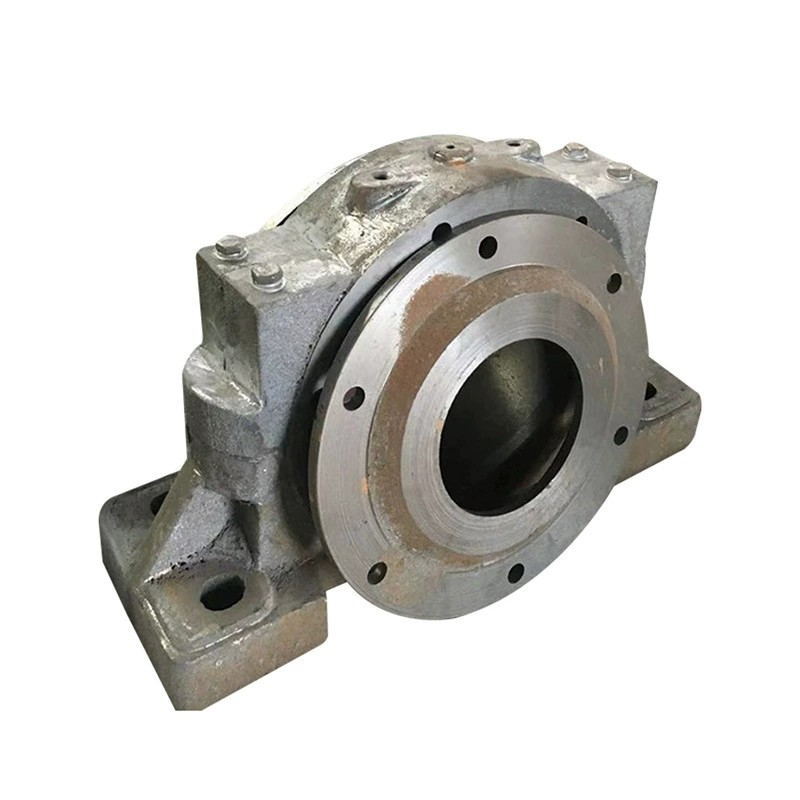
Why Resin Sand Casting Is the Preferred Process for Main Shaft Bearing Seats
Dimensional Accuracy That Mining Applications Demand
Precision in measurements is a must when making a Main Shaft Bearing Seat for mills, crushers, and other big industrial equipment. For resin sand casting, a chemically linked sand mold keeps its shape much better than green sand options. This means that tolerances are tighter and wall thickness is the same for every casting. This level of accuracy cuts down on the need for a lot of post-machining, which shortens lead times and keeps production costs low. This is especially important for custom-order parts, where drawing proof and process planning already take a long time.
Surface Quality and Structural Integrity
When compared to traditional sand methods, the resin-bonded mold surface makes the casting finish much smoother. This is important for a Main Shaft Bearing Seat because a cleaner bore and sitting surface lowers the chance of stress clusters that can start wear cracks when the part is loaded and unloaded over and over again. Resin sand casting produces parts with a dense, uniform microstructure when the process is carefully controlled during pouring and solidification. This gives the finished bearing seat the mechanical strength it needs in high-load, low-speed rotation environments that are common in mining and quarrying equipment.
Flexibility for Custom and Non-Standard Designs
A lot of machine shops and repair shops need a Main Shaft Bearing Seat that fits a non-standard design instead of one that is already made. Resin sand casting works with custom drawing design, which makes it easy to cast parts from 2D or 3D models or drawings provided by the customer. During the pattern stage, changes can be made quickly and easily to the wall thickness, flange geometry, or mounting hole patterns. Each part is then carefully inspected, including dimensional checks and, if needed, NDT, to make sure it meets the performance and quality standards of the client before it is shipped.
Material Selection and Quality Control for Enhanced Bearing Seat Performance
Choosing the Right Cast Material
The choice of material has a direct effect on how well a Main Shaft Bearing Seat works over its entire life. Cast steel or ductile iron types are often chosen based on the load profile and working environment of the product. Because cast steel is more resistant to impact and has a higher tensile strength, it can be used in crushers where shock loads happen often. Grey iron or ductile iron may be the best choice for low-demand, high-volume uses because they are easy to machine, reduce shaking, and are cost-effective. As needed by the equipment creator, alloys can also be added to the casting process to make it harder or more resistant to wear.
In-Process and Final Inspection Protocols
Quality control must be in place during the whole production process, not just during the final review, in order for the Main Shaft Bearing Seat to be effective. The strict checks start with making sure the raw materials are correct when they come in. They continue with preparing the mold and keeping an eye on the pouring temperature. Finally, the finished casting is compared to the approved plan to see if it fits correctly. Calibrated measure tools are used to check important features like the hole width, the depth of the bearing housing, and the concentricity. Ultrasonic testing or an x-ray check can be used to make sure there are no shrinking holes or inclusions in areas where wall thickness or internal health is very important.
Machining and Surface Treatment After Casting
After being cast, the Main Shaft Bearing Seat usually needs end cutting on the bearing contact areas to make sure it fits the equipment manufacturer’s final size requirements. CNC twisting and boring processes bring the width of the hole into the minimum fit class, and grinding makes sure that the mounting faces are flat. Shot blasting and other surface processes make the surface cleaner and get the casting ready for any protection covering. This combined method—casting first, then controlled machining—makes it possible to deliver non-standard bearing seats in a way that meets the expectations of machinery makers and repair shops in other countries.
How Resin Sand Casting Addresses the Real Challenges of Bearing Seat Procurement
Reducing Lead Times for Custom Components
When looking for a Main Shaft Bearing Seat for a certain type of machine, procurement teams often have to wait a long time because the design isn’t standard. In a well-run factory, design changes and casting runs can be set quickly, which shortens wait times during the production stage of resin sand casting. Still, the total shipping time for customized parts can be different. Confirmation of the drawing, process review, and preparation of the tools all add to the cycle, so customers should plan accordingly. Working with a provider that speaks clearly at every stage makes the plan more reliable, no matter how complicated the parts are.
Consistent Quality Across Repeat Orders
For companies that make machines and place regular orders, the quality of each batch is just as important as the quality of the first sample. Resin sand casting allows for batch-to-batch accuracy because the finished resin mold keeps its shape during the pour, and process factors are recorded and managed, such as the pour temperature, gate design, and cooling time. A skilled production team that keeps an eye on quality throughout the whole process can make a Main Shaft Bearing Seat to the same high standard for the tenth order as for the first. This saves the customer time and money on inspections and assembly problems at their site.
Supporting Repair and Replacement Needs
Equipment repair shops, which can be small workshops or medium-sized businesses, often need one new Main Shaft Bearing Seat to get a very important machine back up and running. With resin sand casting and custom drawing support, even a one-time or low-volume substitute part can be made cheaply without having to spend a lot of money on tools like with other methods. The customer can send an original part, a sketch, or a 3D scan, and the provider can use that information to make a mold that fits the current machine without having to change the whole system.
Conclusion
The Main Shaft Bearing Seat is better with resin sand casting because it gives you more accurate measurements, more solid material integrity, and the ability to work with unique designs. This process includes careful inspections during production and professional cutting to make sure the parts meet the high standards for quality and dependability needed in mining and engineering machinery. The parts can be used for OEM production or to fix or replace broken equipment.
FAQ
Which elements are most often used for a Main Shaft Bearing Seat?
The most common materials are cast steel and malleable iron, which are chosen based on the load and pressure conditions of the job. For very tough conditions, alloy steel or wear-resistant cast steel types can be chosen.
Can you make a Main Shaft Bearing Seat based on a picture from a customer?
Yes. It is possible to make custom drawings. For reverse engineering, customers can give 2D images, 3D models, or even a real sample. After that, the part is made and machined to make sure it fits the required size and specs.
What is the usual wait time for making a Main Shaft Bearing Seat to order?
Lead time is based on the difficulty of the design, the number of rounds of drawing approval, and the size of the order. It might only take a few weeks to make simple new parts, but it could take longer to make bigger or more complicated parts that need more time to review the drawings. Your salesperson can give you a quote that is specific to your job.
What kinds of quality checks are done on a Main Shaft Bearing Seat?
During inspections, important features like hole diameter, housing depth, and thickness are measured and checked, and the casting surface is also looked at visually. Non-destructive testing, like ultrasound or magnetic particle inspection, can be set up for situations that need more security.
Can small orders of a Main Shaft Bearing Seat be made with plastic sand casting?
Yes. Because equipment costs are lower than with die casting or investment casting, resin sand casting is a good choice for small or one-time sales. This makes it a good choice for repair shops that only need one new part.
Partner With Huan-Tai for Your Main Shaft Bearing Seat Requirements
Xian Huan-Tai Technology and Development Co., Ltd. has been making special, non-standard mechanical parts for 30 years and is trusted by machinery makers and service shops all over the world. Our professional production and technical teams make sure quality at every step, from reviewing the drawings and casting to final finishing and checking. This gives you the stability, consistency, and reliability you need. We are ready to help you with your project, whether you need a single new part or a regular supply plan. Send your drawings or inquiry today to inquiry@huan-tai.org and let us put our expertise to work for you.
References
1. Beeley, P. R. (2001). Foundry Technology (2nd ed.). Butterworth-Heinemann. Chapter 7: Resin-Bonded Sand Systems and Dimensional Control in Ferrous Castings.
2. Campbell, J. (2015). Complete Casting Handbook: Metal Casting Processes, Metallurgy, Techniques and Design (2nd ed.). Butterworth-Heinemann. Sections on mold rigidity and dimensional repeatability.
3. Stefanescu, D. M. (2008). Science and Engineering of Casting Solidification (2nd ed.). Springer. Chapter 4: Solidification and Microstructure Formation in Cast Steel Components.
4. Heine, R. W., Loper, C. R., & Rosenthal, P. C. (1967). Principles of Metal Casting (2nd ed.). McGraw-Hill. Discussion of sand binder systems and their influence on casting quality.
5. ASM International. (2008). ASM Handbook, Volume 15: Casting. ASM International. Articles on resin sand processes, inspection methods, and cast steel alloy selection for industrial machinery components.
6. Ravi, B. (2005). Metal Casting: Computer-Aided Design and Analysis. PHI Learning. Chapter 6: Process Design and Quality Control for Sand Castings in Heavy Engineering Applications.
