
A hammerhead is the swinging striker inside a hammer crusher. Many aggregate plants use this impact-driven machine to crush limestone, dolomite, and gypsum again and again. With each hammerhead stuck to a rotor and thrown out at high speed, it hits breaker plates and grate bars and breaks them into pieces. How much clean aggregate a plant makes before the next change-out depends on the type of material used, the way it is cast, and its shape.
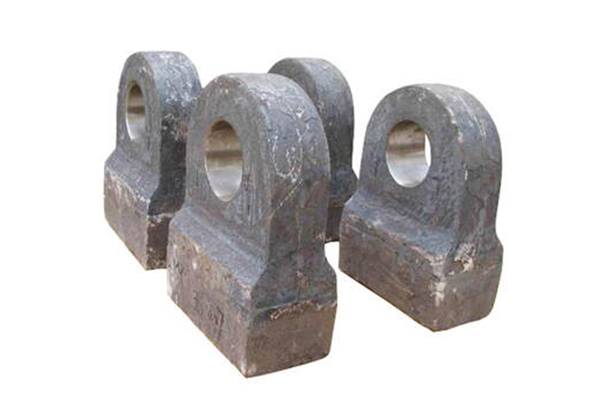
Where the Hammerhead Fits in Impact-Based Crushing Systems
Clearing Up the Terminology First
There are different types of machines that can do impact-based breaking. The hammerhead is part of the hammer breaker. Strikers hang loosely from pins on a disk unit that spins. The blow bar, which is bolted to the rotor and is used in horizontal shaft impacters, is a different wear part. The two parts are used for two different tools and can’t be switched out. If you need a hammerhead, make sure the seller knows what kind of crusher you have.
How the Hammerhead Breaks Rock
The rotor spins the hammerhead at speeds that are often faster than 30 meters per second. It is built on a forged main shaft that is strong against fatigue. On the upswing, feed coming in from above meets the hammerhead and is thrown against the breaker plate. It is then ground across the grate bars until it goes through. Since the hammerhead can turn freely, it swings back when it hits tramp iron, which keeps the rotor from getting damaged.
Aggregate Products That Depend on It
Medium-hard stone works great in hammer crushers to make well-graded, cube-shaped aggregate for concrete, asphalt, and road base. The hammerhead is also used by cement plants to break down limestone before it is milled. Many mines put a hammer crusher after a jaw crusher to finish the product and make it more marketable. This is because hitting the material makes fewer flat and long pieces than compression crushing.
Hammerhead Materials and Casting Methods for Aggregate Duty
Choosing Between Manganese, Alloy Steel, and Chromium Iron
When the feed has some hard, blocky chunks, high manganese steel is still the best material for hammerheads because the surface hardens on impact while the body stays tough. Heat treating alloy steel to a balanced hardness makes it work well with medium-abrasion limestone at a lower cost. When used with abrasive feed, high-chromium cast iron lasts the longest, but the rotor needs to be properly aligned. Some styles combine two or more metals to make one. The head is made of chrome iron, and the shaft is made of tough steel.
Casting Processes That Hold Dimensions
If the hammerhead is even slightly out of balance, it will shake the whole rotor, so it is important that the dimensions are correct. When it comes to smaller strikers, lost-wax investment casting has the tightest tolerances. Resin sand molding can handle bigger pieces and still get a good finish on the surface, and V-method vacuum casting makes sure that the weights of the whole set are the same. Sets of hammerheads should all be the same weight before they are sent out, and a good manufacturer will stamp the figure on each one.
Resistance to Fracture Under Heavy Load
Aggregate plants have long shifts, and a broken hammerhead can quickly destroy grate bars and breaker plates. When the filling temperature is controlled, the riser is set up correctly, and the casting is fully heated, it forms a thick mass that is very hard to break or hit. Ultrasonic testing of the pin-hole area, which is where most of the stress is, finds hidden pores. With these steps, the hammerhead can be used in places with a lot of weight and power without breaking down unexpectedly.
Getting More Aggregate Output From Every Hammerhead Set
Matching Hardness to the Feed
As the feed gets softer, a manganese hammerhead doesn’t get fully hard, so an area with pure limestone may get more use out of alloy steel or chromium iron. Higher chromium content or a composite hammerhead are the best options for feed that has flint or quartz embedded in it. Tell your supplier the Mohs hardness, the moisture level, the top size, and the daily tonnage. Those four numbers will help them choose the right grade more than any table in a catalog.
Rotation, Inspection, and Replacement Rhythm
Most hammerhead designs can be worn either way. When the leading edge wears down, flipping each striker over shows a new face and makes them last about twice as long. Check both the pins and the holes in them at the same time. An oval hole changes the path of the swing and speeds up wear on one side. By keeping track of how much weight is lost each shift, a production manager can plan change-outs to avoid losing a night’s production due to emergency repairs.
Sourcing Custom Hammerhead Castings
A lot of the hammer crushers in aggregate yards are old models that the company that made them no longer supports. A new hammerhead can be made from the original drawing, a worn sample, or accurate measurements of the distance between the rotor and pins. Pattern making, drawing confirmation, the casting method chosen, and heat treatment all affect lead time. This means that complex composite pieces take longer than a standard manganese striker. Early contact helps keep things on track.
Conclusion
In hammer crushers used in quarries and cement plants, the hammerhead turns the rotor’s energy into cubical rock that can be sold. It can be made from high manganese steel, alloy steel, high chrome cast iron, or a hybrid form, and it can be cast using the lost-wax, resin sand, or V-method. It is very accurate in size and doesn’t break easily. If you choose the right grade and rotate at the right time, each set will go further.
FAQ
What’s the difference between a hammerhead and a blow bar?
Not at all. A hammer crusher’s hammerhead can move around freely. An impact crusher’s blow bar is a separate part that is fixed to the rotor.
What kind of hammerhead material lasts the longest on limestone?
Most of the time, a composite hammerhead or high-chromium cast iron gives the most tons on rough, medium-hard limestone.
Just why does a hammerhead set need to be weight-matched?
Unbalanced rotors are caused by different weights, which damage bearings and cause vibrations.
Is it possible to flip a worn hammerhead?
Yes, patterns that can be worn both ways show a new, striking edge.
Do you sell hammerheads for crushers that are no longer being made?
Yes, from drawings, a worn sample, or the size of the rotor.
Ready to Upgrade Your Hammerhead Supply?
Since the mid-1990s, Xian Huan-Tai Technology and Development Co., Ltd. has been making special, non-standard mechanical parts for mining and industrial gear users all over the world. Our production team is in charge of quality from the chemistry of the melt to casting, heat treatment, and weight matching. Our technical team, on the other hand, chooses the best alloy and casting method for your feed. Send a model, drawing, or picture of your worn-out hammerhead crusher to inquiry@huan-tai.org, and we’ll get back to you with a clear proposal and a competitive quote.
References
- Wills, B. A., & Finch, J. A. Wills’ Mineral Processing Technology, 8th ed., Butterworth-Heinemann, 2016.
- Lowrison, G. C. Crushing and Grinding: The Size Reduction of Solid Materials, Butterworths, 1974.
- Tabrett, C. P., Sare, I. R., & Ghomashchi, M. R. “Microstructure-Property Relationships in High Chromium White Iron Alloys,” International Materials Reviews, Vol. 41, No. 2, 1996.
- Subramanyam, D. K., Swansiger, A. E., & Avery, H. S. “Austenitic Manganese Steels,” ASM Handbook, Vol. 1: Properties and Selection, ASM International, 1990.
- Zum Gahr, K. H. Microstructure and Wear of Materials, Elsevier, 1987.
