
Yes, and in a way that many businesses don’t understand. A liner plate defines the crushing chamber geometry, absorbs the reactive forces of fragmentation, and determines how consistently material flows through the machine. If the quality of the liner plates is bad, the chamber profile breaks down faster, output goes down, and energy use goes up before the repair time comes around. When crushers are used a lot in mining and quarries, the choice of liner plate has a real effect on both daily output and cost per tonne.
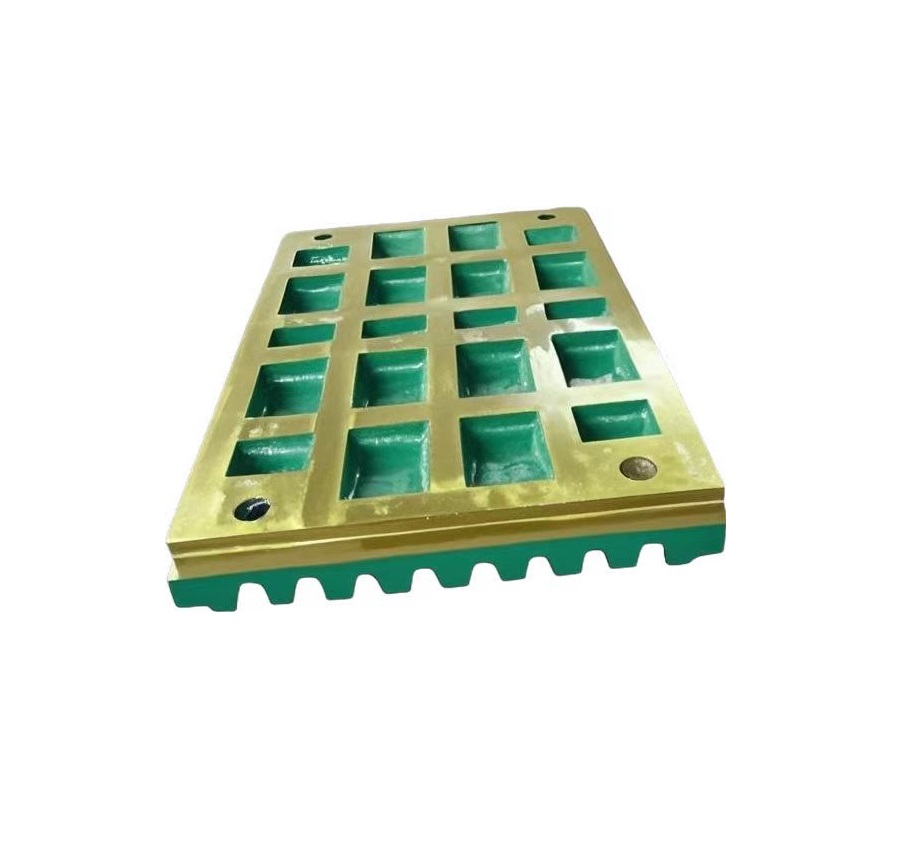
How Liner Plate Quality Shapes Crusher Throughput and Efficiency
Chamber Geometry and Material Flow
How rock goes through the breaking chamber from feed to exit is controlled by the shape of a liner plate. The intended flow path is kept going by a well-cast liner plate with exact shape. This makes sure that feed rates stay the same and product grading is reliable. When the profile wears unevenly, which happens faster with lower-quality liners, the material starts to separate, bridging happens more often, and the effective flow goes down. For a longer service window, the chamber will keep working as planned thanks to high-quality liner plates that keep their shape longer.
Impact Resistance and Structural Rigidity
The liner plate is hit by high-energy rock pieces over and over again during each crushing cycle. It is possible for a liner plate made of high manganese steel or high carbon steel to take these forces without breaking or deforming because they are both hard and tough. The liner plate‘s high strength and stiffness allow it to survive the reaction force of fragmentation while keeping its shape. This means that the crushing gap stays the same and capacity isn’t lost to random wear between replacements.
Performance on Hard and Abrasive Rock
Not every kind of rock liner plates the same way. When working with granite, basalt, iron ore, or other similarly hard materials, liner plate strength and rust protection are much more important than when working with softer limestone. A liner plate made for hard rock uses needs to have a good surface roughness and be resistant to both chemical and friction attack. This helps keep the capacity up for a longer time. If you choose a liner plate that doesn’t work well with hard materials, you’ll have to slow down more often, change it less often, and pay more per tonne of crushed output.
Why Liner Plate Material and Manufacturing Process Determine Long-Term Capacity
High Manganese Steel for Work-Hardening Performance
High manganese steel remains the most widely used material for liner plate production in impact-intensive crushing applications. Its work-hardening behaviour means the surface becomes progressively harder as it is struck, building a tough wear layer that resists further material removal. For a liner plate facing continuous impact from hard rock feed, this property translates directly into a longer usable profile life and fewer capacity-reducing replacement shutdowns over the operating season — which matters significantly to high-volume mining operations.
Casting Quality and Internal Soundness
A liner plate with internal casting defects — porosity, shrinkage cavities, or cold shuts — will crack or break unevenly under load well before the surface wear profile is exhausted. This not only wastes the remaining material but forces an unplanned shutdown that disrupts production scheduling. Rigorous casting process control and post-casting inspection ensure each liner plate has the internal soundness needed to perform through its full intended service life, giving operations the replacement interval predictability they need to plan maintenance effectively.
Dimensional Accuracy and Correct Fit
A liner plate that does not fit correctly creates problems beyond the obvious assembly difficulty. Incorrect seating leads to uneven load distribution across the liner surface, accelerating localised wear and reducing effective crusher capacity faster than a correctly fitted component. Precise casting and machining, verified through dimensional inspection before shipment, ensure the liner plate installs cleanly and carries load as the design intended. This is particularly important for non-standard or custom liner plate specifications where no catalogue fit reference exists.
What to Look for When Sourcing Crusher Liner Plates for High-Capacity Operations
Material Specification Matched to Feed Material
Purchasing managers sourcing liner plate components should ensure the material specification reflects the actual feed — rock type, hardness, and abrasiveness. High manganese steel suits high-impact applications with moderate abrasion. High carbon steel offers greater rigidity for applications where structural strength under compressive load is the primary requirement. A supplier with engineering experience in crushing equipment can advise on the right grade for the specific application rather than defaulting to a generic specification that may under-deliver in service.
Custom Profiles and Drawing-Based Production
Older crushers, modified equipment, and regional machine variants often require liner plates that do not match any current catalogue listing. A manufacturer capable of producing a liner plate from customer drawings — including custom profile geometries, non-standard fixing arrangements, or modified thickness specifications — gives maintenance and procurement teams a reliable path to exact replacements. Huan-Tai supports custom drawing-based production with a pre-production technical review to confirm specifications before casting begins, reducing the risk of a misfit component on delivery.
Lead Times and Procurement Planning for Replacement Cycles
Standard liner plate variants with confirmed drawings can move through production and dispatch within a reasonable timeframe. Custom or non-standard profiles requiring multiple drawing confirmation rounds, special material sourcing, or complex casting geometry will take longer — particularly when heat treatment and dimensional verification are factored in. Operations planning scheduled liner plate replacements should confirm lead times with their supplier well ahead of the maintenance window, especially for non-catalogue items where no ready stock exists.
Conclusion
Liner plate quality directly affects crusher capacity through its influence on chamber geometry, wear rate, and replacement interval predictability. High manganese steel and high carbon steel, properly cast and inspected, deliver the impact resistance, rigidity, and corrosion resistance needed for demanding hard-rock applications. For operations where uptime and throughput matter, sourcing liner plates from a manufacturer who controls material quality and dimensional accuracy throughout production is the most cost-effective approach over the full replacement cycle.
FAQ
Q1: What material is best for a crusher liner plate in hard rock applications?
High manganese steel is the most common choice due to its work-hardening behaviour under impact. High carbon steel is preferred where structural rigidity under compressive load is the priority. The best material depends on the specific rock type and crushing mechanism.
Q2: How does liner plate wear affect crusher capacity?
As a liner plate wears unevenly, the chamber profile deviates from its designed geometry. This increases material bridging, reduces feed consistency, and lowers effective throughput. Maintaining the correct profile through quality liner plates directly sustains rated crusher capacity.
Q3: Can liner plates be produced to custom drawings?
Yes. Manufacturers with casting and machining capability can produce a liner plate from customer-supplied drawings. A pre-production review confirms material grade, dimensional tolerances, and process suitability before production begins.
Q4: What is the typical lead time for custom liner plates?
Standard profiles can often be completed within a few weeks. Custom or complex liner plate designs involving drawing revisions, special alloys, or tight tolerances will take longer. Always confirm lead times at the quoting stage when planning scheduled maintenance.
Q5: Does liner plate quality affect energy consumption in crushing?
Yes. A worn or poorly fitting liner plate forces the crusher to work harder to achieve the same output, increasing energy consumption per tonne. A quality liner plate that maintains its profile longer keeps specific energy consumption closer to the machine’s design baseline throughout the replacement interval.
Ready to Improve Your Crusher Performance With Quality Liner Plates?
Huan-Tai has manufactured customized non-standard mechanical parts for mining and engineering machinery since the mid-1990s. Our production team manages quality at every stage — from material selection and casting through heat treatment and final inspection — and our technical team works with customers to meet exact fit and performance requirements. Whether you need standard replacements or fully custom liner plate profiles, 30 years of industry experience backs every order we fulfil. Send your drawings or specifications to: inquiry@huan-tai.org.
References
1. Wills, B. A., & Finch, J. A. (2015). Wills’ Mineral Processing Technology: An Introduction to the Practical Aspects of Ore Treatment and Mineral Recovery (8th ed.). Butterworth-Heinemann.
2. Gupta, A., & Yan, D. S. (2006). Mineral Processing Design and Operations: An Introduction. Elsevier.
3. Ashby, M. F., & Jones, D. R. H. (2012). Engineering Materials 1: An Introduction to Properties, Applications and Design (4th ed.). Butterworth-Heinemann.
4. Campbell, J. (2015). Complete Casting Handbook: Metal Casting Processes, Metallurgy, Techniques and Design (2nd ed.). Butterworth-Heinemann.
5. Hosford, W. F. (2012). Iron and Steel. Cambridge University Press.
6. Napier-Munn, T. J., Morrell, S., Morrison, R. D., & Kojovic, T. (1996). Mineral Comminution Circuits: Their Operation and Optimisation. Julius Kruttschnitt Mineral Research Centre.
