
In most cone crushers the mantle wears faster than the bowl liner, simply because it carries a smaller surface area, sees tighter closed-side setting pressures and takes the direct impact of incoming feed. The bowl liner wears too, of course, but usually more slowly and more evenly. Understanding why that gap exists helps you plan replacements, budget consumables and avoid the surprise of a chamber that suddenly stops crushing efficiently.
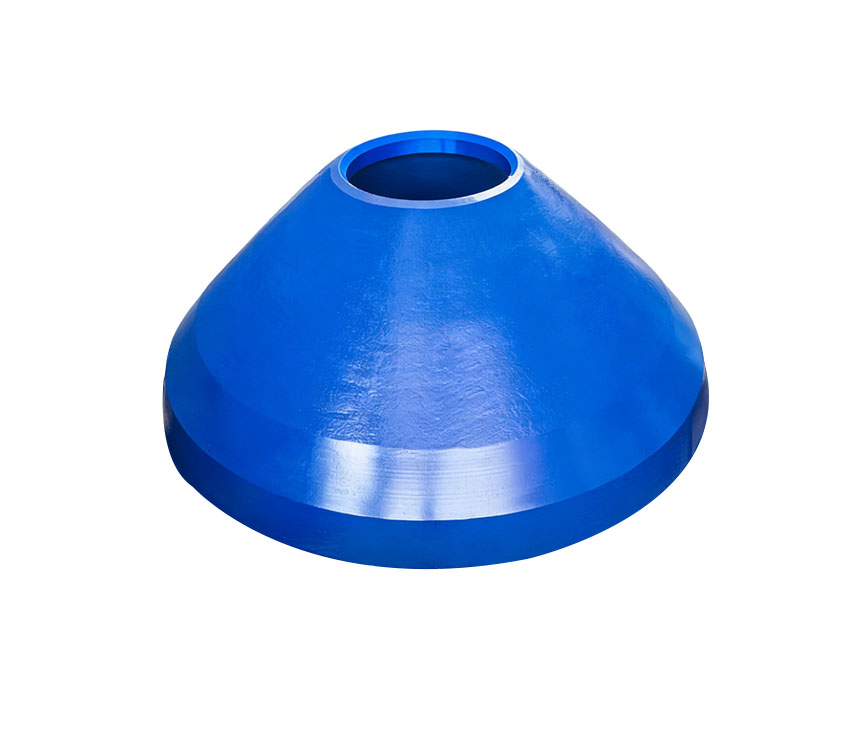
Why the Mantle Usually Wears Faster Than the Bowl Liner
The imbalance is built into the machine rather than caused by poor quality parts. During each cycle the moving cone swings across a short arc, so the same band of surface absorbs repeated compression while the stationary side has more material to share the load with. Add abrasive rock and continuous operation, and the mantle reaches its wear limit well before the bowl liner does.
Crushing Chamber Geometry and Surface Area
The moving cone presents a smaller working face than the stationary bowl, so the same tonnage passes over less metal. That concentrated contact accelerates material loss on the mantle, especially near the discharge zone where the closed-side setting is tightest and the rock has already been reduced to its final size.
Pressure and Sliding Action at the Wear Zone
Wear is not only compression; it is also sliding. As the eccentric turns, rock grinds across the crushing surfaces before it fractures, and the moving side experiences that rubbing more intensely. A mantle therefore loses thickness through a combination of impact fatigue and abrasion, which is why its profile changes visibly long before the bowl liner shows comparable loss.
Feed Distribution and Cavity Fill Effects
A chamber fed off-centre or run only partly full puts extra work on one side of the moving cone. That localised loading can double the wear rate on a section of the mantle while the opposite face still looks serviceable. Keeping the cavity properly filled and the feed centred remains one of the cheapest ways to extend wear life.
How Material Choice and Heat Treatment Shift Wear Rates
Even a well-designed chamber only performs as well as the metal inside it. Two suppliers can pour from the same drawing and deliver castings with noticeably different service lives, because chemistry control and heat-treatment discipline vary far more between foundries than most buyers expect. This is where purchasing decisions pay off or cost money later.
Manganese and Potassium Additions in Cast Wear Parts
The bushing and other castings are enhanced by adding components such as manganese and potassium, which effectively improves the anti-sand sticking and sand clamping performance of the bushing and extends its service life. The same alloying discipline benefits a mantle, keeping its surface cleaner in sticky, damp feed and reducing the build-up that distorts the crushing profile.
Heat Treatment and Wear Resistance of the Mantle
The key components undergo special heat treatment processes, which improves the wear resistance of the castings. Ask for the actual curve — soak temperature, holding time and cooling method — rather than a line on a datasheet. A properly treated mantle resists gouging and work-hardens predictably, while a poorly treated one can spall or crack under the same load.
Customization to Your Crusher Model and Drawing
Customization can be done according to the model and the drawing, enabling a better fit with the equipment. Send the serial number, the original drawing and photographs of the seating surfaces. A mantle machined to your actual machine seats correctly on the cone, which keeps the crushing profile true and prevents the uneven loading that shortens life.
How to Read Wear Patterns and Decide What to Replace
Replacement decisions are easier when they follow measurements rather than impressions. A crew that tracks wear properly can order both parts on one schedule and avoid the awkward situation where a fresh bowl liner is paired with a worn-out cone, which wastes capacity and produces inconsistent product grading for weeks.
Measuring Wear on the Mantle and Bowl Liner
Record thickness at several fixed points on both surfaces each time the chamber is opened, and note the date. Comparing those numbers over months shows the true wear ratio for your rock. When the mantle approaches its limit, you have a documented basis for ordering rather than a guess made under production pressure.
Related Parts: Dust Ring, Toggle Plate and Crusher Springs
Wear parts do not fail alone. Dust rings perform best in high manganese steel or high chrome alloy steel; toggle plates should be high manganese steel, never carbon steel; crusher springs should be spring steel, high-strength wire or carbon steel. Each of these supports the mantle by protecting alignment, sealing and load distribution in the assembly.
Lead Times and Ordering Both Parts Together
Standard patterns often ship within a few weeks, while customized mantle orders take longer when drawings cycle back and forth for confirmation or heat-treatment slots must be scheduled. Ordering the moving and stationary wear parts together, against the same drawing revision, keeps the chamber matched and avoids a second shipping cycle later.
Conclusion
The mantle wears faster in nearly every cone crusher, so treat it as the pace-setter for your wear-part plan. Verify alloy chemistry and heat treatment, buy to your own drawing, and measure wear honestly. Get those right and replacement stops being an emergency.
FAQs
Which wears out first, the mantle or the bowl liner?
The mantle, in almost all cases — it has less working surface and takes more sliding contact per tonne.
Can you cast a mantle to our drawing?
Yes. We work from your model, drawing and photos of the seating surfaces for an accurate fit.
How long is delivery?
Standard patterns ship within a few weeks; customized mantles take longer when drawings need repeated confirmation.
Do you supply electronic components?
No. We focus on engineering, mining and construction machinery parts.
What materials do you use for dust rings and toggle plates?
Dust rings: high manganese steel or high chrome alloy steel. Toggle plates: high manganese steel.
Stop Changing Liners Sooner Than You Should
Planning a chamber change and unsure whether the mantle or the bowl liner should ship first? Send your crusher model, drawing revision and a few wear measurements to inquiry@huan-tai.org. Our engineers will suggest a material grade, an inspection plan and a realistic delivery window. Thirty years of customized non-standard manufacturing, production teams that own quality end to end, and technical staff who answer before you order — that is what we offer. Ask us anything; we respond fast.
References
- Napier-Munn, T. (2018). Mineral Comminution Circuits: Their Operation and Optimisation. Julius Kruttschnitt Mineral Research Centre.
- Gupta, A., & Yan, D. S. (2016). Mineral Processing Design and Operations. Elsevier.
- Wills, B. A., & Finch, J. A. (2016). Wills’ Mineral Processing Technology. Butterworth-Heinemann.
- Zhang, W., & Liu, H. (2021). Heat Treatment Effects on Wear Resistance of High Manganese Steel Castings. Journal of Mining Machinery Materials, 38(4), 112–121.
- Smith, J. R. (2019). Cone Crusher Maintenance and Wear Part Selection. Mining Equipment Engineering Press.
