
Neither material wins universally: high chrome blow bars generally last longer in high-impact crushing with mixed material hardness, while ceramic composite options often outperform in abrasion-heavy, lower-impact applications. The right choice depends entirely on your specific operating conditions and feed material.
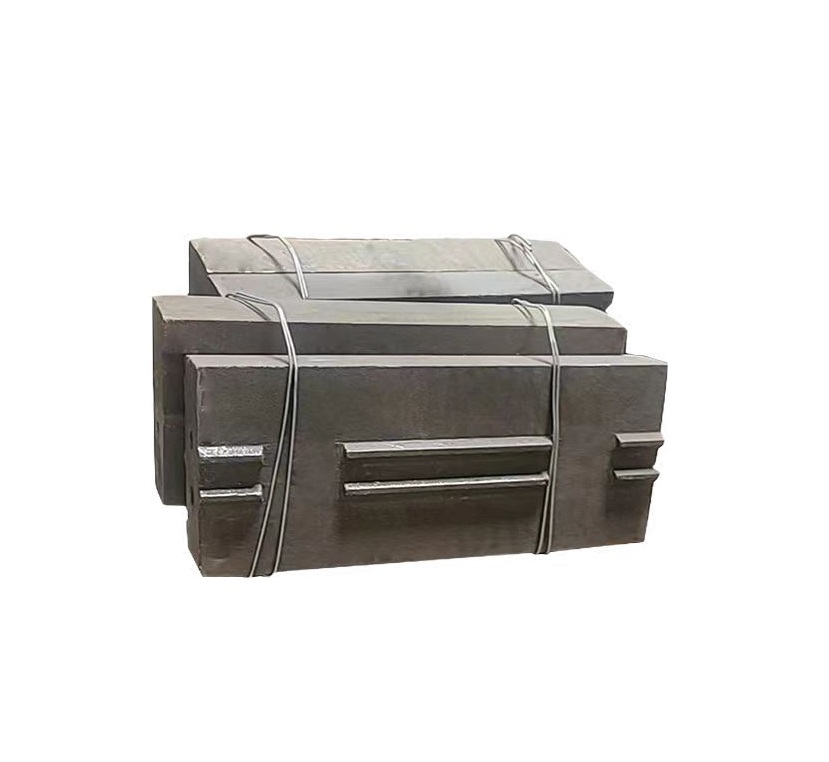
What Determines Blow Bars Wear Resistance and Longevity
Material Composition and Hardness
The service life of Blow bars starts with material composition, since options like alloy steel, high-manganese steel, high-chromium cast iron, and composite materials each offer distinct hardness and toughness characteristics. Harder materials generally resist abrasive wear better, while tougher materials absorb impact without cracking. Understanding this tradeoff is essential before comparing specific material types, since no single property determines longevity on its own.
Casting Precision and Dimensional Accuracy
Manufacturing precision directly affects how Blow bars perform under sustained operation. Casting methods such as lost-wax casting, resin sand casting, and V-method casting ensure dimensional accuracy that keeps components properly seated within the crusher rotor. Poor dimensional control can create uneven wear patterns or vibration that shortens service life regardless of how strong the underlying material itself may be.
Impact Resistance Under High-Load Conditions
Beyond raw hardness, Blow bars operating in high-load environments need genuine resistance to fracture and sudden impact force. Materials that excel at resisting abrasive wear sometimes sacrifice this fracture resistance, making them prone to chipping or breaking under heavy shock loading. Evaluating both wear resistance and impact toughness together gives a more complete picture of expected component longevity than either factor alone.
Comparing High Chrome and Ceramic Composite Blow Bars
High Chrome Cast Iron Performance Characteristics
High-chromium cast iron Blow bars are valued for their strong balance between hardness and impact toughness, making them well suited to demanding, high-load crushing environments. This material resists fracture reliably even when processing feed material with variable hardness or occasional oversized pieces. Operations crushing tougher, more inconsistent material often find this balance delivers more predictable performance over time than harder but more brittle alternatives.
Ceramic Composite Performance Characteristics
Ceramic composite Blow bars incorporate extremely hard ceramic elements that significantly boost abrasion resistance in applications dominated by fine, highly abrasive material. This added hardness comes with a tradeoff, since ceramic components can be more susceptible to chipping under sudden, heavy impact compared to high-chromium alternatives. Operations with consistent, less variable feed material tend to see the strongest longevity advantage from this composite approach.
Which Material Suits Which Operating Conditions
Choosing between these materials ultimately depends on whether abrasion or impact dominates the operating environment. Blow bars processing highly abrasive but relatively uniform material often benefit from ceramic composite construction, while operations facing variable, high-impact loads generally see more consistent results from high-chromium cast iron. Matching material to actual working conditions matters far more than assuming one option universally outperforms the other.
Choosing the Right Blow Bars for Your Application
Matching Material to Feed Material Hardness
Selecting the right Blow bars starts with an honest assessment of feed material hardness, abrasiveness, and consistency. Operations crushing highly variable material with occasional tramp metal or oversized fragments typically need the impact toughness that high-chromium cast iron provides. This upfront evaluation prevents the frustration of selecting a material better suited to a different operating profile than the one actually encountered on site.
Balancing Cost With Expected Service Life
Buyers comparing Blow bars should weigh upfront cost against realistic expected service life under their specific conditions, rather than comparing prices alone. A less expensive option that wears out quickly under mismatched conditions rarely delivers genuine savings. Working through this comparison with a knowledgeable supplier helps buyers avoid the common mistake of prioritizing initial price over long-term operating value.
Working With a Manufacturer Offering Both Options
Because operating conditions vary so significantly between sites, working with a manufacturer capable of producing Blow bars in multiple material options provides genuine flexibility. This allows buyers to test and compare performance under their own actual conditions rather than relying solely on general industry guidance. A supplier familiar with both material families can also offer informed recommendations based on stated application details.
Conclusion
Neither ceramic nor high chrome Blow bars universally last longer; performance depends on whether abrasion or impact dominates your operation. Matching material to actual feed conditions delivers the most reliable long-term value.
FAQ
Which Blow bars material resists impact best?
High-chromium cast iron generally offers stronger fracture resistance under heavy impact loads.
When do ceramic composite bars perform better?
They tend to excel in abrasive, lower-impact applications with consistent feed material.
How does casting method affect performance?
Precise casting methods ensure dimensional accuracy, reducing uneven wear and vibration.
Can Blow bars be customized?
Yes, material and specifications can be tailored to your operating conditions.
How long does custom production take?
Timelines vary depending on drawing confirmation and casting complexity.
Get the Right Blow Bars for Your Crusher
At Xian Huan-Tai Technology and Development Co., Ltd., 30 years of experience in customized non-standard mechanical parts stand behind every set of Blow bars we produce. Our professional production and technical teams help match material selection to your specific operating conditions, backed by precise casting and rigorous quality inspection. Ready to compare options for your application? Send your specifications to inquiry@huan-tai.org and let our team recommend the right fit.
References
- Larsen, E. “Comparative Wear Behavior of High Chromium Cast Iron in Crushing Applications.” Journal of Materials Engineering and Performance.
- Huang, X. “Ceramic Composite Materials for Abrasion-Resistant Industrial Components.” Materials Science and Engineering Review.
- Morais, T. “Casting Precision and Its Effect on Impact Crusher Component Life.” International Journal of Metal Casting.
- Ferrante, G. “Impact Toughness Versus Hardness Tradeoffs in Wear-Resistant Alloys.” Journal of Tribology and Wear Engineering.
- Baptiste, C. “Material Selection Strategies for Mineral Processing Crusher Wear Parts.” Minerals Engineering Quarterly.
