
Material selection is the single most consequential decision in track plate manufacturing for mining and heavy engineering equipment. A track plate must endure constant ground contact, abrasive wear, impact loading, and in underground applications, exposure to moisture and hydraulic pressure — all simultaneously. Whether the application is a coal shearer, roadheader, or other tracked heavy machine, choosing the right material determines how long the plate lasts, how reliably it performs, and ultimately how much the operation spends on maintenance and replacement.
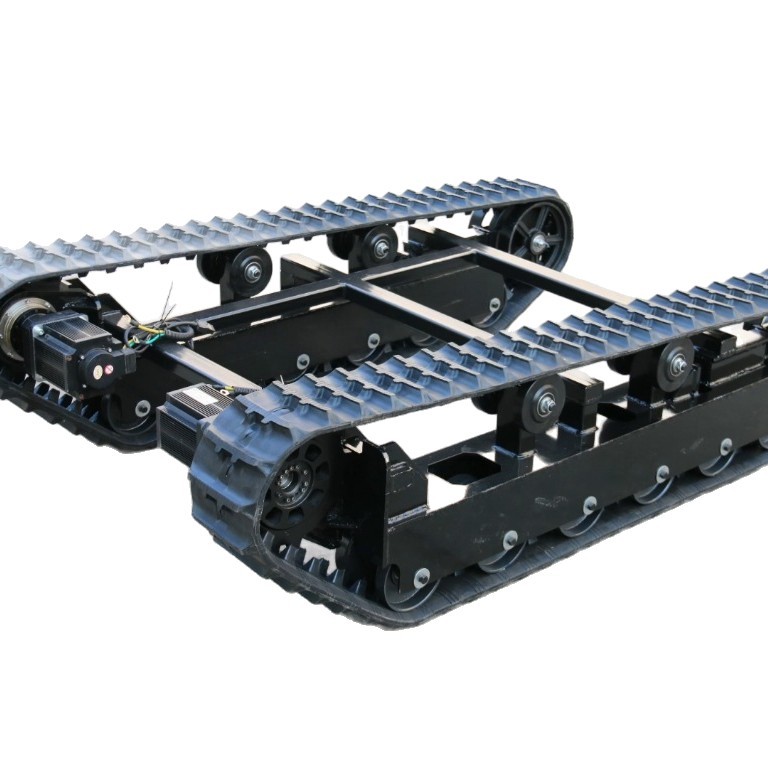
Why Does Material Choice Matter for Track Plates?
The Demands of High-Load Underground Operation
A track plate in a mining environment is subject to conditions that would destroy an ordinary casting within days. Ground reaction forces, lateral stress from cornering, and the repetitive impact of traveling over rock and debris combine to place the material under sustained fatigue loading. Cast iron or cast steel with high toughness and strength are the baseline requirements — materials that can absorb shock without brittle fracture while resisting the surface wear that erodes tooth profiles and mounting features over time.
Balancing Hardness and Toughness
The most common challenge in track plate material selection is finding the right balance between hardness and toughness. Very hard materials resist surface wear effectively but can fracture under sudden impact. Tougher materials absorb impact well but may wear faster in highly abrasive ground conditions. High-quality cast steel, with its controllable carbon and alloy content, allows manufacturers to tune this balance to the specific application — making it the preferred choice for track plates that need to perform across varying ground conditions in engineering and mining operations.
Structural Integrity Under Hydraulic Pressure
In applications where the track plate assembly operates alongside hydraulic systems — as is common in underground mining equipment — the casting must maintain its structural integrity under continuous hydraulic oil pressure without deformation or leakage pathways developing at joint interfaces. A track plate produced to precise dimensional tolerances through controlled casting processes supports reliable sealing and load transfer across the full assembly, contributing to hydraulic system stability as well as mechanical performance throughout the machine’s working life.
What Are the Best Materials for Track Plates in Mining Equipment?
High-Quality Cast Iron for Moderate-Duty Applications
High-quality cast iron is still a cheap material for track plates in situations where impact loading is modest and mechanical wear is the main cause of failure. Its natural hardness makes it resistant to surface wear, and current casting methods can get the exact sizes needed for sprocket contact and fitting fits that you can trust. Cast iron track plates are easy to make in large quantities, which makes them a good choice for businesses that need to repair worn-out parts often and need to keep costs low while still getting good service life.
Cast Steel for High-Load and Impact-Intensive Environments
When working conditions are tougher, like when the ground is harder, the machine is heavier, or the job cycle is longer, cast steel is the best material for the track plates. The toughness of cast steel is higher than that of cast iron, which means it can handle quick shock loads from hitting rock or debris without breaking. Because it is strong, it can also handle the heavy loads that big mine and drilling tools usually have to handle. When you combine the acceptable structural design that can be done with cast steel with accurate casting and cutting, you get a track plate that works consistently even in the toughest underground settings.
Custom Alloy Grades for Specialized Requirements
Some track plate applications demand performance characteristics that standard cast iron or cast steel grades cannot fully satisfy — extreme abrasion resistance, specific weight constraints, or compatibility with particular chemical environments. In these cases, custom alloy steel formulations allow manufacturers to engineer the material specifically for the application. This approach requires closer collaboration between the equipment operator, the procurement team, and the casting supplier, and typically involves longer lead times due to the drawing confirmation and process development involved — but for demanding applications, the extended service life justifies the investment.
How Does Manufacturing Quality Affect Track Plate Performance?
Precision Casting for Dimensional Consistency
Not only does the material of a track plate affect how well it works in service, but so does how well it was cast. How the track plate connects with the sprocket and how evenly loads are spread across the system are affected by changes in the plate width, mounting hole position, or tooth shape. Precise casting methods, including the right pattern tools, controlled filling parameters, and post-cast measurement checking, are needed to make sure that track plates are installed properly and work as expected from the first shift onward.
Surface and Internal Quality Control
Even if the track plate looks like it has the right measurements on the outside, it may not be strong enough because of flaws in the casting inside, like holes, shrinking spaces, or inclusion groups. When these flaws happen, they create stress concentration places that cause cracking when the load is cycled. This type of failure can happen quickly and is hard to predict. Suppliers with strong internal quality control, which may include non-destructive testing when needed, make track plates with more uniform mechanical properties and fewer mistakes when they are in use. This is especially important for basement parts that need to work in places that can’t be reached.
Ease of Replacement as a Design Consideration
Track plate service life matters, but so does how straightforward the plate is to replace when it reaches its wear limit. Castings with consistent dimensions and clean mounting interfaces reduce installation time significantly, which translates directly into shorter maintenance windows and faster return to production. For mining operations where face time is production time, a track plate that fits first-time every time — without on-site adjustment or rework — delivers practical value beyond its raw wear performance. This is a detail that separates well-engineered components from parts that only look good on a specification sheet.
Conclusion
Material selection for high-performance track plates is not a one-size-fits-all decision. Cast iron suits moderate-duty wear applications; cast steel serves high-load and impact-intensive environments; and custom alloy grades address the most demanding specialized requirements. Across all categories, manufacturing precision and quality control are what translate good material choices into consistent field performance. Choosing the right combination of material and supplier capability is the most reliable path to lower total maintenance cost.
FAQ
Q1: What is the most common material used for mining equipment track plates?
Cast steel is the most widely used material for heavy-duty mining track plates due to its combination of toughness, strength, and design flexibility. Cast iron is used in moderate-duty applications where abrasion resistance and cost are the primary considerations.
Q2: How long does a track plate typically last in underground mining conditions?
Service life varies significantly with ground conditions, machine weight, and operating intensity. Quality cast steel track plates in standard mining applications can achieve reasonable service intervals, but harsh conditions may require more frequent inspection and replacement.
Q3: Can track plates be manufactured to custom dimensions?
Yes. Non-standard machine configurations often require custom track plate dimensions. These can be produced through precision casting with lead times that depend on drawing confirmation complexity and casting process requirements.
Q4: What causes premature track plate failure?
The most common causes are material grade mismatch for the application, casting defects, incorrect installation, and operating the machine beyond its rated load or speed parameters.
Q5: How should track plates be inspected during maintenance?
Check tooth profile wear, mounting hole integrity, plate thickness at key wear points, and surface cracking. Any plate showing significant profile wear or visible cracking should be replaced before the next operating shift.
Looking for Track Plates That Deliver in the Field?
At Xian Huan-Tai Technology and Development Co., Ltd., we combine 30 years of manufacturing experience with a dedicated production and engineering team to deliver track plates and other mining machinery components that meet your exact performance requirements. From material selection to final inspection, quality is managed at every stage. Whether you need standard or custom-cast track plates, we are ready to support your procurement needs with professional service and reliable delivery. Contact us: inquiry@huan-tai.org.
References
- Peng, S. S. (2006). Longwall Mining (2nd ed.). Society for Mining, Metallurgy and Exploration (SME).
- Budynas, R. G., & Nisbett, J. K. (2011). Shigley’s Mechanical Engineering Design (9th ed.). McGraw-Hill.
- Zum Gahr, K. H. (1987). Microstructure and Wear of Materials. Elsevier.
- Dolipski, M., Remiorz, E., & Sobota, P. (2014). Dynamics of non-uniformity of loads on AFC drives. Archives of Mining Sciences, 59(1), 155–168.
- Tylczak, J. H. (1992). Abrasive wear. In ASM Handbook, Volume 18: Friction, Lubrication, and Wear Technology. ASM International.
- Hustrulid, W., & Bullock, R. L. (Eds.). (2001). Underground Mining Methods: Engineering Fundamentals and International Case Studies. Society for Mining, Metallurgy and Exploration (SME).
