
A bearing housing is the protective shell that carries a hammer crusher’s rotor bearings and stands between them and everything that shortens machine life: abrasive dust, shock loads and misalignment. By holding the shaft true, sealing out fines and spreading rotor forces across a solid mounting, the bearing housing converts equipment protection into steady, measurable production hours.
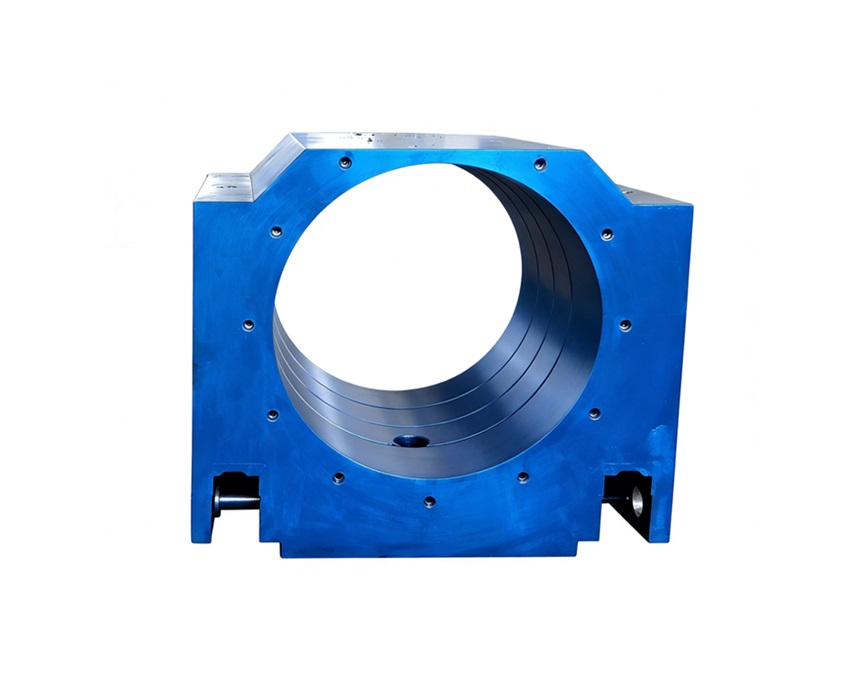
Three Threats a Bearing Housing Shields Your Crusher From
Airborne fines hunting the bearings
A hammer crusher makes dust by design, and that dust migrates toward the rotor supports the moment it escapes the chamber. Inside a bearing, abrasive fines turn lubricant into grinding paste and score the races within weeks. A sealed, well-machined bearing housing—backed by dust rings in high manganese steel or high chrome alloy steel—stops that invasion right at the doorway.
Shock loads with every strike
Each hammer blow sends a reaction force down the shaft, and the bearing housing is where those forces land. A rigid housing spreads the load over its mounting surface instead of letting it concentrate inside one bearing race. Stable internal clearances follow, so the rotor keeps spinning true even while the machine digests tramp metal and hard, unbroken slabs.
The quiet damage of misalignment
Misalignment rarely announces itself; it simply pushes bearing temperature up week after week until failure arrives on a schedule nobody chose. A precisely machined bearing housing holds both support points on one centerline, so loads stay distributed across the full race instead of one edge. Alignment built into the casting protects the bearing, the seals and the shaft they all serve.
How Bearing Housing Design Translates Into Uptime
Stiffness that keeps the rotor true
Structure decides performance. An optimized structural design gives the bearing housing the wall thickness and ribbing to resist rotor vibration without flexing, so crushing energy goes into the rock rather than into shaking the supports. Because we build housings suitable for various types of equipment, that stiffness is matched to your rotor’s mass and speed—not copied from a catalog.
Seals and lubrication as one system
A housing protects only as long as its sealing system holds. The bearing housing provides the true, machined seats that dust rings and lip seals need; on rough surfaces, even premium seals weep fines. Internal lubrication channels complete the picture, keeping grease or oil reaching both races despite chamber heat, so friction stays low and wear stays slow.
Service-friendly construction saves downtime
Bearing replacement is inevitable, but dismantling half the crusher to reach one is not. A serviceable bearing housing—split or removable where the machine allows it—lets maintenance crews change bearings and seals in a single shift instead of a multi-day teardown. Every hour saved at changeout is an hour of production, which is why fit and access belong in the design brief.
Getting a Bearing Housing Built for Your Machine
Customization to model and drawing
Housings differ across crusher brands, rotor sizes and mounting arrangements, so we customize each bearing housing to the model and the drawing: seat diameters, center distances, bolt patterns and seal seats included. Send a drawing, model number or worn sample, and our technical team confirms every dimension—meeting your performance and quality requirements instead of forcing a standard part to fit.
Quality controlled from melt to machining
Our production team manages quality across the entire process: chemistry checked at the ladle, casting soundness verified after treatment, then seat geometry and flatness confirmed at final machining. Nearly 30 years of customizing non-standard parts stands behind each bearing housing we ship, which is why larger machinery manufacturers with strict quality-control expectations keep returning to us order after order.
Honest schedules and a full parts range
Standard housings move in weeks; customized pieces take longer when drawings need another confirmation round or the process demands it—and we agree on that timing before you commit. The same supply covers bimetallic composite hammer heads with hard, wear-resistant heads and strong handles that solve easy breakage, forged main shafts, springs in spring steel or carbon steel, and high manganese steel toggle plates.
Conclusion
A hammer crusher is only as dependable as the parts that defend it. The bearing housing protects the rotor’s most vulnerable components from dust, shock and misalignment every hour the machine runs. Choose one with optimized structure, true machining and a supplier who controls quality from melt to inspection—and equipment protection becomes a plan, not a hope.
FAQs
Q1: What does a bearing housing do in a hammer crusher?
A: It supports the rotor bearings, keeps the shaft aligned under impact, and seals abrasive dust away from the races.
Q2: What materials do you use?
A: Machined cast steel and alloy steel bodies, paired with dust rings in high manganese steel or high chrome alloy steel.
Q3: Can you build to my crusher model?
A: Yes. Send the model number, drawing or a worn sample; we confirm every dimension before production starts.
Q4: How long is the lead time?
A: Standard housings ship in weeks; custom units take longer if drawings need re-confirmation. We agree the schedule before you commit.
Q5: What else do you supply for crushing plants?
A: Bimetallic composite hammer heads, forged main shafts, springs in spring steel, high-strength steel wire or carbon steel, high manganese steel toggle plates, alloy steel rackbars, and blow bars for impact crushers.
Stop Losing Shifts to Bearing Failures
Ready to protect your crusher properly? Email inquiry@huan-tai.org with your model, drawing or a photo of the worn bearing housing, and a Xian Huan-Tai engineer will reply with material advice, a clear quotation and a delivery date we intend to keep. Nearly 30 years of excellent service, a production team that manages quality through every step, and technical engineers who turn drawings into fitting parts—start the conversation today and feel what protected equipment really means.
References
- Harris, T.A. and Kotzalas, M.N. — Essential Concepts of Bearing Technology, 5th Edition, CRC Press, 2007.
- Eschmann, P., Hasbargen, L. and Weigand, K. — Ball and Roller Bearings: Theory, Design and Application, 3rd Edition, John Wiley & Sons, 1985.
- Bloch, H.P. and Geitner, F.K. — Machinery Failure Analysis and Troubleshooting, 4th Edition, Gulf Professional Publishing, 2012.
- Mobley, R.K. — Root Cause Failure Analysis, Butterworth-Heinemann, 1999.
- Neale, M.J. (Editor) — The Tribology Handbook, 2nd Edition, Butterworth-Heinemann, 1995.
