
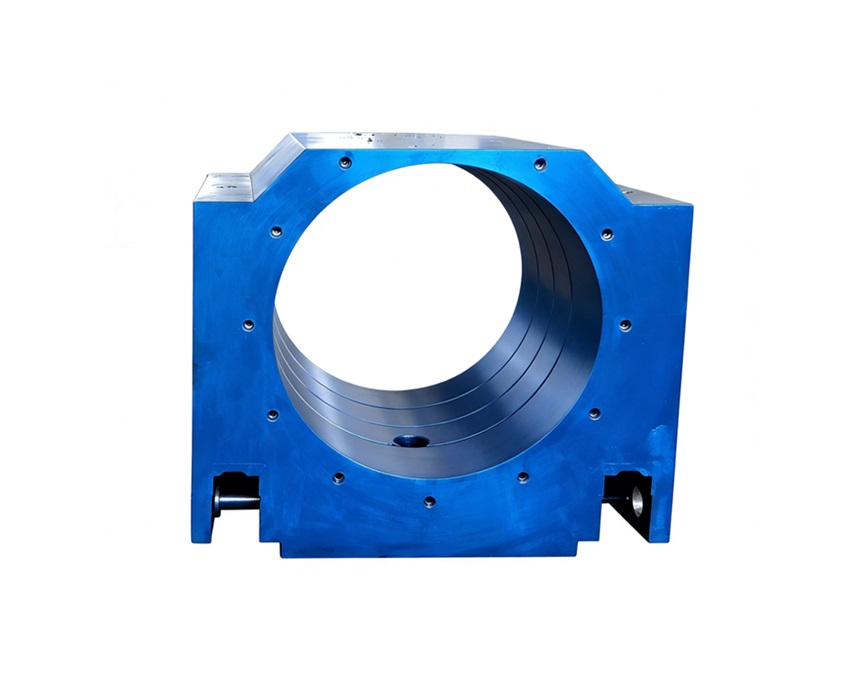
Proper bearing housing maintenance reduces unexpected downtime in hammer crushers by dealing with wear, misalignment and contamination before catastrophic failure occurs. The forged main shaft is supported by a well-maintained bearing housing that absorbs powerful crushing vibrations and keeps rotor assemblies working smoothly, guaranteeing constant throughput and dependable, predictable performance in the most demanding mining and aggregate processing situations across the globe.
Recognizing Early Warning Signs of Bearing Housing Wear
Vibration Patterns That Signal Bearing Housing Trouble
Heavy crushing loads may sometimes lead to deterioration of the bearing housing and this is usually the first indication of abnormal vibration. When the housing bores become oval or the mounting bolts become loose, the rotor assembly moves off-center, causing harmful harmonic vibrations. Check monthly for vibrations and compare with baseline data to detect bearing housing deterioration before it causes damage to the forged main shaft.
Temperature Spikes Around the Bearing Housing Assembly
Increased surface temperatures around the bearing housing are usually caused by poor lubrication or high friction from misaligned parts. Dust infiltration speeds up this heating cycle in mining, when abrasive ore is processed. High manganese steel or high chromium alloy steel dust seal rings fitted around the bearing housing serve to block impurities and maintain stable operating temperatures over lengthy production runs.
Lubricant Contamination and Its Effect on Bearing Housing Life
Contaminated grease or oil in the bearing housing greatly reduces bearing and seal life. Fine rock dust combines with lubricant to generate an abrasive paste which cuts bearing races and erodes housing surfaces. Early detection of contamination levels by regular oil analysis allows operators to clean and replenish the bearing housing before permanent damage necessitates a costly emergency closure on the production floor.
Step-by-Step Bearing Housing Inspection and Maintenance Procedures
Disassembly and Visual Inspection of the Bearing Housing
Lock out the crusher and remove the rotor assembly to have complete access to the bearing housing. employing precise measuring equipment to check the housing bore for scoring, fretting corrosion and dimensional wear. Check also nearby components, such as tramp release springs manufactured from spring steel or high-strength steel wire. Record all findings so your team can follow trends in bearing housing condition across numerous cycles.
Cleaning and Re-Lubrication of the Bearing Housing Unit
Before adding new lubrication, wipe the inside of the bearing housing thoroughly with solvent to remove old grease, metal particles and imbedded dust. Use manufacturer-recommended grease grade and fill amount to prevent overpacking, which creates excessive heat. Proper relubrication of the bearing housing ensures smooth rotation, reduced friction losses and an extended time between major overhauls on your hammer crusher line.
Reassembly and Alignment Checks for the Bearing Housing
When you put everything back together, make sure the bearing housing is sitting square against the crusher frame and that the bolts are all torqued evenly. Misalignment causes bending pressures on the forged main shaft, resulting in premature fatigue failure. Dial indicators are used to verify concentricity between bearing housing and rotor axis, confirming that the optimal structural design provides powerful crushing force and consistent particle size.
Upgrading Your Bearing Housing for Longer Service Life
Material Selection for Heavy-Duty Bearing Housing Applications
In mining conditions, upgrading to a bearing housing cast from high-grade alloy steel or reinforced cast steel might be beneficial, since it greatly enhances the load-bearing capacity and fatigue resistance. The choice of the proper material allows the bearing housing to withstand the shock loads of the customized bimetallic composite hammerhead. The hard and wear-resistant head, robust handle of the hammer answer the issue of easy fracture in the continuous heavy crushing operations.
Sealing Solutions That Protect the Bearing Housing from Dust
In dusty mining circumstances, it is important that the bearing housing be kept free from abrasive impurities by effective sealing. Multi-stage labyrinth seals and dust seal rings of high manganese steel or high chromium alloy steel are sturdy barriers to resist the particles entering. These sealing enhancements significantly increase the time between bearing housing servicing and minimize the number of expensive maintenance shutdowns across your facility.
Custom Bearing Housing Designs for Various Equipment Types
Each hammer crusher model has distinct dimensions and loading requirements, therefore it’s necessary to design tailored solutions to achieve maximum performance. Our bearing housing designs are appropriate for many different kinds of equipment and are made directly from your drawings and model requirements. This fitment provides a tight fit to prevent vibration, adequately supports the forged main shaft and maintains constant crushing output over lengthy campaigns.
Conclusion
Regular maintenance of the bearing housing, including vibration monitoring, cleaning, lubrication and strategic material improvements, will keep hammer crushers chugging along with the hardest crushing loads day in and day out. Well engineered, custom fitted bearing housing solutions are a great investment to avoid unexpected downtime, increase the life of important components and safeguard your entire production investment in the most demanding mining and heavy engineering applications.
FAQ
Q1: How frequently should I check the bearing housing on my hammer crusher?
In mine operations, monthly visual checks and quarterly thorough dimensional measurements assist identify bearing housing wear early, before it might lead to hazardous rotor misalignment or expensive main shaft damage.
Q2: What causes bearing housings to get overheated?
The main sources of bearing housing temperature spikes during continuous hammer crusher operations in challenging mining conditions are associated with insufficient lubrication, heavy dust contamination and rotor misalignment.
Q3: Can you make a special bearing housing for my particular crusher model?
Yes. From your equipment designs and model specifications we build tailor-made bearing housing units, perfectly adapted to your special working circumstances and throughput needs.
Q4: What is the best sealing material to prevent dust infiltration in the bearing housing?
In severely abrasive mining circumstances, the bearing housing is protected against contamination by dust seal rings of high manganese steel or high chromium alloy steel.
Q5: How long does it often take to make a bespoke bearing housing?
Delivery dates depend on the complexity of the design and the drawing approval procedures. However, our skilled engineering team strives to produce within a fair and practical production window.
Protect Your Crusher Investment with Expert Bearing Housing Solutions
Xian Huan-Tai Technologies has 30 years expertise in the hands-on customization of non-standard mechanical parts and makes premium bearing housing assemblies that can endure the harshest mining and heavy engineering environments anywhere in the globe. Our expert production team controls quality at every step of the manufacturing process and our devoted technical engineers guarantee each bespoke component fulfills your specific performance and dimensional criteria. Want to reduce expensive unexpected downtime and increase crushing throughput? Reach out to us now at inquiry@huan-tai.org.
References
- Wills, B. A., & Finch, J. A. (2015). Wills’ Mineral Processing Technology: An Introduction to the Practical Aspects of Ore Treatment and Mineral Recovery. Butterworth-Heinemann.
- Harris, T. A., & Kotzalas, M. N. (2006). Rolling Bearing Analysis: Essential Concepts of Bearing Technology. CRC Press.
- Napier-Munn, T. J., Morrell, S., Morrison, R. D., & Kojovic, T. (1996). Mineral Comminution Circuits: Their Operation and Optimisation. JKMRC Monograph Series.
- Brandlein, J., Eschmann, P., Hasbargen, L., & Weigand, K. (1999). Ball and Roller Bearings: Theory, Design and Application. John Wiley & Sons.
- Lynch, A. J. (1977). Mineral Crushing and Grinding Circuits: Their Simulation, Optimisation, Design and Control. Elsevier Scientific Publishing.
