
The jaw plate is the most important part of a jaw crusher. The type of material used, the shape of the teeth, and the quality of the casting all affect how much rock the machine can break up and how long it can handle rough use. A well-designed jaw plate with improved shape increases the amount of material that can be crushed, and the high manganese steel construction makes it very resistant to wear. This is how it all works in real life.
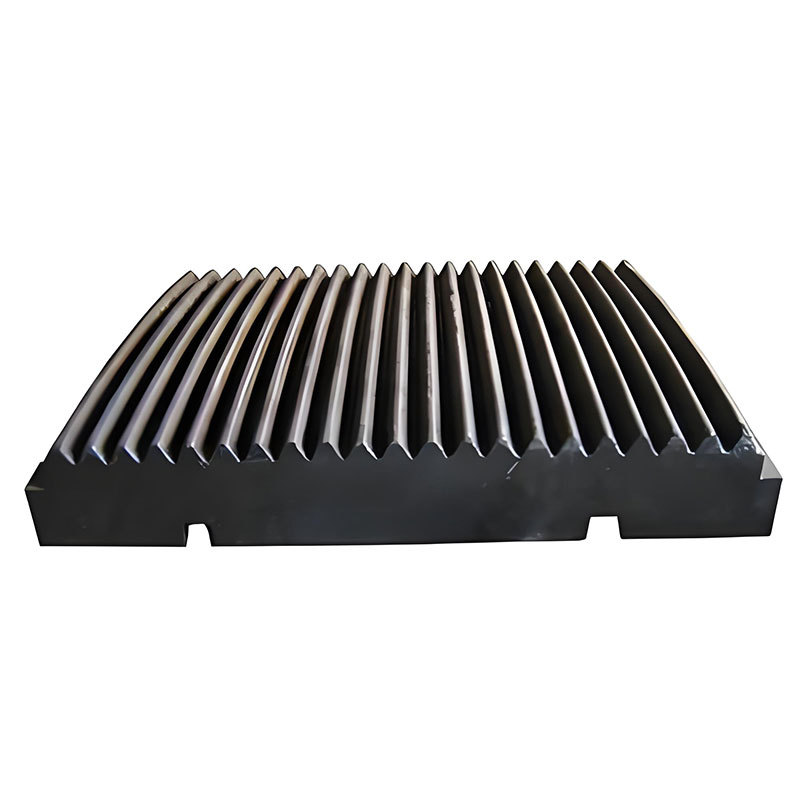
The Role of Jaw Plate Design in Boosting Crushing Capacity
Tooth Profile Shapes Throughput
The capacity gains start when the tooth pattern is changed so that it works better for different operations. A jaw plate with deep, sharp teeth grabs hard rock quickly and keeps it from moving around inside the cylinder, which means that each stroke crushes more material. For softer, stickier feeds, tooth profiles that are flatter or wider work best. If you match the jaw plate profile to the type of ore you’re working with, you can increase hourly output without making any changes to the machine.
Nip Angle and Chamber Geometry
How well the chamber pulls things down has a big effect on how much it can crush. The nip angle—the angle between the fixed and moving surfaces—is affected by how thick and curved the jaw plate is. When a jaw plate is designed to keep the right nip angle, rocks are pulled in and broken up efficiently instead of bouncing at the feed opening. This keeps the crusher running at full capacity.
Rigidity That Resists Deformation
When breaking surfaces bend or distort under force, capacity goes down. It is possible for a good jaw plate to handle the force of splitting stroke after stroke because it is strong and rigid. Because the structure is stable, the closed-side setting stays the same. This keeps the size of the products the same, and the machine doesn’t waste energy. Our jaw plate castings are made to stay in shape even when they’re being used in the harshest mining conditions.
How Material Selection Drives Jaw Plate Wear Resistance
High Manganese Steel: The Industry Standard
The secret behind long-lasting crushing surfaces lies in metallurgy. A jaw plate made of high-quality high manganese steel has an amazing quality: when hit over and over, the surface gets harder while the core stays tough. This work-hardening effect means the jaw plate actually becomes more wear resistant the longer it crushes, making it ideal for granite, basalt, and other abrasive mining feeds.
High Carbon Steel and Alternative Grades
Different feeds call for different solutions. For certain applications, a jaw plate produced from high carbon steel offers an excellent balance of hardness and cost efficiency, particularly where impact loads are moderate. Before suggesting a grade, an experienced foundry checks the hardness, abrasiveness, and feed size of your rock. Picking the right steel for your jaw plate will keep it from wearing out too quickly and costing too much in materials.
Performance on Hard Rock and Harsh Environments
It is rarely easy to work in mines and quarries. If you cast the jaw plate correctly, it can be used on harder rocks and still resist corrosion well. This is important in humid pits, along the coast, or at sites with water that is high in minerals. The impact-absorbing manganese steel and corrosion-resistant properties of the jaw plate make it last a lot longer, so you won’t have to replace it as often and won’t have to plan for downtime for maintenance.
Practical Ways to Maximize Jaw Plate Service Life and Output
Correct Installation and Regular Rotation
If it’s not made right, even the best casting won’t work as well. If there is any gap between the jaw plate and the crusher frame, cracks will start to form at the flex points. Make sure the backing material is the right thickness and the bolts are torqued evenly. Many designs are symmetrical because wear is most common near the discharge zone. Flipping the jaw plate at the right time intervals spreads wear out evenly and can almost double its useful life.
Smart Feeding Practices Protect the Surface
What you put into the breaker changes how fast the surfaces wear. Choke feeding spreads the material across the whole width of the jaw plate, which leads to more even wear and better inter-particle crushing, which increases capacity. Localized gouging can be avoided by not using oversized lumps and separate feed. People who control the size and distribution of the feed consistently say that the jaw plates last longer and the output is more stable than people whose feeds aren’t controlled well.
Partnering With a Capable Custom Manufacturer
A lot of the crushers that are used today are older or were only made in certain areas, making it hard to find their original parts. A company that makes custom, non-standard castings can make a jaw plate from your drawing, a sample, or even a worn-out piece, and they can change the alloy to fit the conditions of your ore. Remember that making a custom jaw plate requires making a pattern, casting it, and then heating it. This means that the lead time is longer than for stock parts, especially if the drawings need to be confirmed back and forth. This is why you should order replacements before they wear out too much.
Conclusion
Smart tooth shapes, ideal nip angles, and stiff construction in a jaw plate make it better at breaking. High manganese steel and high carbon steel give hard rock the wear strength it needs. If you place, rotate, and feed your crusher correctly and use good parts, it will create more tons at a lower cost per ton.
FAQs
Q1: Why do people like jaw plates made of high manganese steel?
When it hits something hard, the surface gets harder while the core stays tough. This makes it last longer on rough rock.
Q2: How do I know when to flip my jaw plate over or get a new one?
Check the tooth profile often; rotate or replace the teeth when wear near the discharge zone makes them flatter and changes the size of the product.
Q3: Can older crusher types have their jaw plates changed to fit them better?
Yes. Foundries with a lot of experience can make them from plans, samples, or worn-out originals by changing the metal grades.
Q4: Does the jaw plate really change how much something can be crushed?
Of course. Tooth profile, nip angle, and rigidity directly influence how efficiently material is gripped and crushed.
Q5: Are these jaw plates suitable for hard, abrasive rock?
Yes. They handle harder rocks well and offer good corrosion resistance in harsh site conditions.
Ready to Upgrade Your Crusher’s Performance?
Xian Huan-Tai Technology and Development Co., Ltd. has been customizing non-standard mechanical parts for 30 years, so they know exactly what mining and engineering equipment needs. Our professional production team makes sure that quality is maintained at all times during casting and inspection, and our technical team makes sure that each jaw plate meets your specific performance needs. We give you great service and reliable parts whether you run a repair shop or a big equipment plant. Send your pictures or questions to inquiry@huan-tai.org to get a quick, personalized quote.
References
- Wills, B. A., & Finch, J. A. – Wills’ Mineral Processing Technology: An Introduction to the Practical Aspects of Ore Treatment and Mineral Recovery
- Gupta, A., & Yan, D. S. – Mineral Processing Design and Operations: An Introduction
- Olubambi, P. A., & Potgieter, J. H. – “Effectiveness of Work Hardening in Austenitic Manganese Steel for Crusher Applications,” Materials Characterization
- Terva, J., Kuokkala, V-T., & Valtonen, K. – “Effects of Compression and Sliding on the Wear and Energy Consumption in Mineral Crushing,” Wear
- Mosher, J. – “Crushing, Milling, and Grinding,” in SME Mining Engineering Handbook, edited by Darling, P.
