
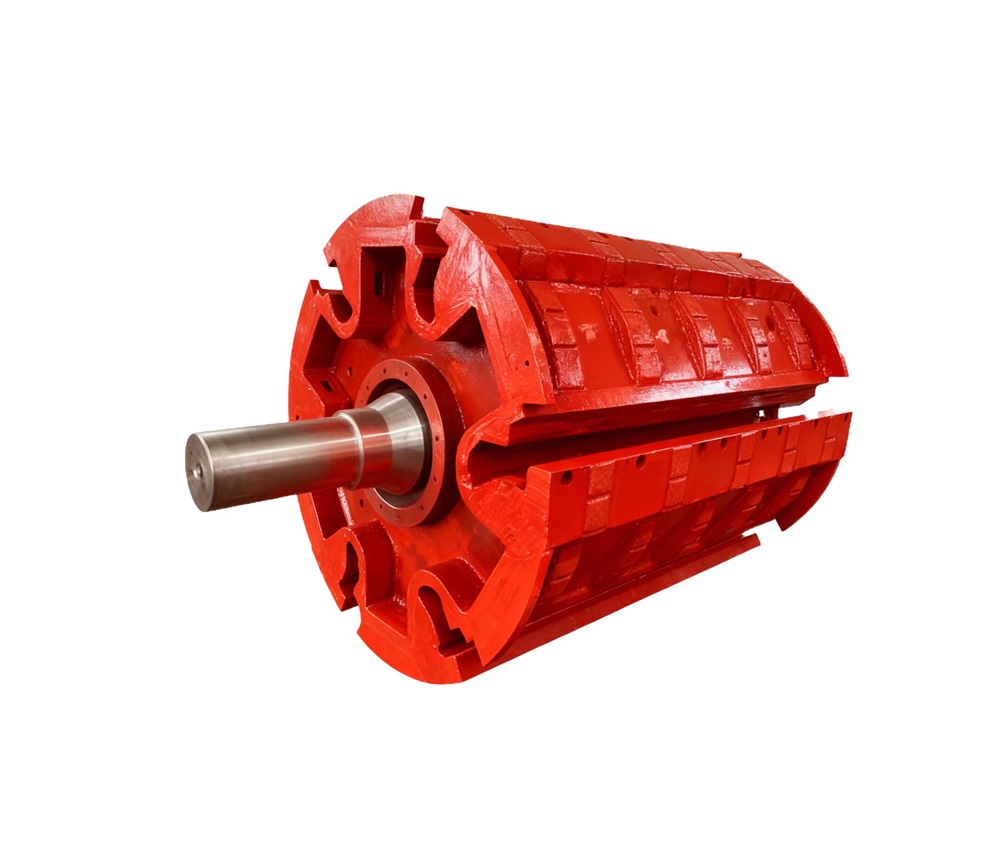
The rotor is the heart of every impact crusher, so it’s important that it’s well made. It holds the blow bars, saves the kinetic energy that breaks rocks, and spins so fast that any flaw is dangerous. When you cast the right metal into the right size rotors, you get steady flow, uniform product shape, and safe operation even when big loads are on them. Vibration, slowdown, and real danger are all caused by defective rotors.
How Rotors Shape Impact Crusher Performance
Stored Energy Determines Crushing Power
A breaker that has an effect does not squeeze rocks. It hits it. That power comes from the rotor’s weight and speed. Each blow bar hits the feed with the same amount of force even when big lumps enter the cylinder thanks to heavier, better-proportioned rotors that have more energy. It’s not good for output or quality if the rotor is too small or badly made. It loses speed when it’s loaded.
Accurate Dimensions Keep Blow Bars Working Correctly
The rotor body has slots machined into it that hold the blow bars. The blow bars are usually made of high-manganese steel, alloy steel, or high-chromium cast iron. The bars will rock, wear unevenly, or meet the impact aprons at the wrong angle if those seats aren’t tight enough. The crushing gap is maintained and the final product is more cubical thanks to rotors that are accurate in terms of dimensions.
Balance Protects Bearings and Throughput
At working speed, even small changes in mass across the rotor shaft cause it to shake. The vibrations get into the bearings, the main shaft that was forged, and the frame of the crusher. Over time, it shortens the life of the bearings and makes the machine move more slowly. The crusher can work at its original speed for longer periods of time without having to stop for repair if the rotors are made correctly and are adjusted.
The Safety Risks Behind Low-Quality Rotors
Hidden Casting Defects Under High-Speed Load
From the outside, you can’t see shrinkage holes, gas pores, or slag spots, but they are where stress cracks begin. Every time the rotors inside an impact crusher turn, they take multiple shocks. A flaw that doesn’t seem dangerous when the part is first put together can get worse over time until it breaks. When the motor is turning quickly, that failure can send out big pieces that can do a lot of damage to the crusher body.
Uncrushable Material and Sudden Shock
Large rocks, tramp steel, and bucket teeth are often used as feed in mine and recycling. When they hit, rotors take on a sudden load spike that is much higher than normal working stress. Rotors that aren’t very strong against breaking may crack where the blow bars sit or at the hub. Strong rotors that can withstand impacts can handle these events, giving operators time to stop the machine and safely clear the chamber.
Worn Seats That Loosen Blow Bars
The surfaces that hold the blow bars in place wear down over time on the rotor body. While the machine is running, a loose bar could move and damage the aprons, or in the worst cases, it could break free inside the chamber. The seat geometry of rotors that don’t wear out lasts much longer, so blow bars stay locked in place. This cuts down on unplanned stops and makes crews safer during routine maintenance.
What Goes Into a Reliable Impact Crusher Rotor
Material Selection Matched to the Job
Depending on your feed and workload, Huan-Tai can cast rotors from alloy steel, high-manganese steel, high-chromium cast iron, or a mix of these. High-manganese steel gets stronger when it is hit, which makes it a good choice for working with tough rock. High-chromium cast iron is very good at resisting wear. Alloy steel is strong and tough at the same time, and composite forms have a hard surface and a soft body.
Casting Methods That Hold Tight Tolerances
The number and size of the rotors help us decide which casting method to use. Lost-wax casting makes small, complicated parts with fine features. Medium and large parts made with resin sand moulding have smooth surfaces and stable sizes. The V-method (vacuum-sealed moulding) makes the accuracy better and cuts down on flaws caused by sand. Each way gives rotors the exact measurements they need for a good fit with the blow bar and a stable balance.
Inspection, Support, and Honest Lead Times
Before rotors leave the plant, our production team checks the chemistry, heat treatment, hardness, dimensions, and looks for flaws inside the rotors. We can use your plans, samples, or worn-out parts to do the work. The production of standard rotors goes quickly. It could take longer to make new designs if the plans need to be approved more than once or if special steps need to be taken. We agree on a reasonable schedule right away, no matter what.
Conclusion
How hard an impact crusher hits, how smoothly it goes, and how safely it works are all controlled by the rotor. Rotors made of the right material, the right size, and with a high resistance to breaking protect blow bars, bearings, and staff all at the same time. Buying good rotors will lead to more work being done, fewer breakdowns, and a safer plant after years of heavy-duty crushing.
FAQ
Q: What materials do you use for impact crusher rotors?
A: We use alloy steel, high-manganese steel, high-chromium cast iron, or composite materials. We select the material based on your feed hardness, abrasiveness, and working load.
Q: Why does dimensional accuracy matter so much?
A: Accurate rotors hold blow bars securely, keep the crushing gap stable, and run with less vibration. This protects the bearings and the forged main shaft.
Q: Which casting methods do you offer?
A: We offer lost-wax casting, resin sand molding, and the V-method. We choose the method according to the part’s size, shape, and tolerance requirements.
Q: Can you produce a rotor based on my old part?
A: Yes. We work from drawings, samples, or worn rotors, and our engineers can strengthen areas that failed early.
Q: How long does a rotor order take?
A: Standard rotors are produced efficiently. Custom designs may need extra time for drawing confirmation and process setup.
Is Your Rotor Ready for the Next Shift?
Noticing new vibration or worn blow bar seats? Don’t wait for a failure to force the decision. Send us your drawing, a photo of your current rotor, or details about your crusher and feed. Huan-Tai’s technical team will recommend the right material and casting method, and our production team will control quality from the first melt to final inspection. Thirty years of experience and responsive service stand behind every part. Email inquiry@huan-tai.org today for a free quote.
References
- Fuerstenau, M. C., & Han, K. N. (Eds.). (2003). Principles of Mineral Processing. Society for Mining, Metallurgy, and Exploration (SME).
- Lynch, A. J. (1977). Mineral Crushing and Grinding Circuits: Their Simulation, Optimisation, Design and Control. Elsevier.
- Adams, M. L. (2010). Rotating Machinery Vibration: From Analysis to Troubleshooting (2nd ed.). CRC Press.
- Beeley, P. (2001). Foundry Technology (2nd ed.). Butterworth-Heinemann.
- Subramanyam, D. K., Swansiger, A. E., & Avery, H. S. (1990). Austenitic manganese steels. In ASM Handbook, Volume 1: Properties and Selection: Irons, Steels, and High-Performance Alloys. ASM International.
