
For hard breaking jobs, an alloy steel hammerhead is useful because it can handle strong impacts, effective breakage resistance, and a wide range of materials. But buyers should first make sure they know what kind of crusher it is. Hammer crushers use hammerheads, while impact crushers usually use blow bars. Choosing the right wear part helps keep uptime, output, and maintenance costs low.
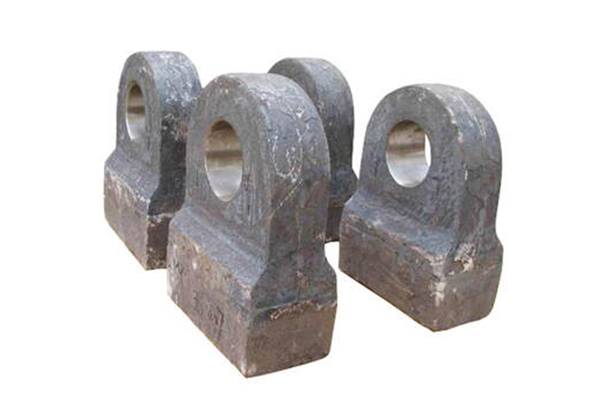
How Does an Alloy Steel Hammerhead Improve Crushing Reliability?
High impact resistance for severe operating conditions
A well-made metal steel hammerhead can handle being hit over and over by stone, rock, recovered gravel, and other rough materials. Alloy steel is a good mix of toughness and hardness, which helps the hammerhead not crack when it’s under a lot of stress. This means it can be used for heavy-duty material-processing lines, industrial tools, mining equipment, and quarrying.
Better fracture resistance than unsuitable materials
There is constant striking force, vibration, and uneven feed on a crusher hammerhead. So, choosing the right materials is very important. Depending on the need of the customer, alloy steel, high-manganese steel, high-chromium cast iron, and composite materials can be chosen. When there is a lot of contact force, a tougher hammerhead material can help keep things from breaking or needing to be replaced without planning to.
Stable performance supports planned maintenance
Wear parts that you can count on make planning upkeep easy. If a hammerhead has consistent material quality, accurate measurements, and controlled heat-treatment processes, it is easier for operators to plan when to inspect and replace it. This is especially important for companies that fix machines and make machines that need to know when they will be able to start and end work. A strong hammerhead might also help cut down on emergency shutdowns caused by broken crushing parts.
Why Does Material and Casting Accuracy Matter for Hammerheads?
Alloy steel provides balanced mechanical properties
When people need something tough, strong, and resistant to contact, they often choose an alloy steel hammerhead. Because the chemicals that make up alloy steel and the way it is heated can be changed to fit different needs, it is more adaptable than carbon steel. It works well for people who work with medium-hard materials and need a durable, low-cost wear part for hammer breakers.
Multiple material options fit different crushing demands
How hard, gritty, wet, fast, and how many hours it has been used determine what kind of hammerhead material to use. For places that get hit a lot, high-manganese steel might work. For places that get worn down a lot, high-chromium cast iron might be best. In composite hammerheads, working layers with different qualities can be put together. Huan-Tai can make specific ideas for materials based on models, samples, and how the materials will be used in real life.
Accurate casting reduces installation uncertainty
If the sizes are off, the hammerhead might not fit right, which can throw off the balance of the rotor, make the fastenings less stable, and make the crusher less effective. In order to make the part, Huan-Tai can choose between lost-wax casting, resin sand casting, and the V-method casting. These steps will help you keep an eye on important data and the quality of the surface. You should do one last check before sending something out, especially if it has any special or non-standard mechanical parts.
What Should Buyers Check Before Ordering a Hammerhead?
Confirm whether the crusher uses hammerheads or blow bars
Buyers should look at how the equipment is put together before they place an order. There is often a hammerhead on a hammer crusher. While it’s crushing the stuff, it hits it over and over. A blow bar, which is also called a plate hammer, is usually part of an impact crusher. Most impact-crusher blow bars are made of high-manganese steel, alloy steel, or high-chromium cast iron, but you need to make sure you order the right part.
Provide drawings, samples, and operating details
You need to start with clear technical details if you want to make the best customised hammerhead. Buyers should send sketches, sample parts, information about the material, measures, weight, mounting hole information, and how the product will be used. For engineers to help you pick the best casting method and material, you should tell them about the broken material, feed size, daily working hours, and projected service life. It takes less time to make changes during technical proof when there is clear communication.
Consider delivery planning and quality control
How long it takes to send a hammerhead relies on how many are bought, how they are cast, how they are machined, how they are inspected, and if the drawing is confirmed. Custom casts may take longer if the plans need to be looked over more than once or if extra steps need to be taken. Standard-style parts may move more quickly. Before production starts, buyers should talk about schedules as soon as possible and make sure they know what needs to be checked, how it will be packed, and how it will be sent.
Conclusion
If you pick an alloy steel hammerhead that fits your hammer crusher, the way you work, and the material you’re crushing, it can work better. Strong resistance to force, accurate casting, and controlled checking all help to make sure that the product will work well for a long time. When buying an impact crusher, buyers should make sure they have the right blow bar specs before they place their order.
FAQ
Q1: Is a hammerhead used in an impact crusher?
A: Usually no. A hammerhead is used in a hammer crusher, while an impact crusher commonly uses blow bars or plate hammers.
Q2: What materials are available for a hammerhead?
A: Common options include alloy steel, high-manganese steel, high-chromium cast iron, and composite materials.
Q3: Which casting processes can be used?
A: Lost-wax casting, resin sand casting, and V-method casting can be selected based on dimensions, quantity, and tolerance requirements.
Q4: What information is needed for a quotation?
A: Drawings, samples, material requirements, dimensions, weight, quantities, and working conditions are highly helpful.
Q5: Can delivery time be confirmed in advance?
A: Yes. The schedule can be estimated after reviewing drawings, production complexity, inspection requirements, and order quantity.
Partner with Huan-Tai for Custom Crusher Wear Parts
For almost 30 years, Xian Huan-Tai Technology and Development Co., Ltd. has helped customers from other countries by making custom, non-standard mechanical parts. Our professional production team makes sure the quality is high at every step, and our technical team helps you find the right materials and methods for the job. If you need a custom hammerhead, blow bar, high-manganese steel toggle plate, alloy steel rackbar or any other part for mining or engineering equipment, email us at inquiry@huan-tai.org right away for helpful technical advice and a quick quote.
References
- Wills, B. A., and J. Finch. Wills’ Mineral Processing Technology: An Introduction to the Practical Aspects of Ore Treatment and Mineral Recovery. Butterworth-Heinemann, 2016.
- Hutchings, Ian M., and Philip Shipway. Tribology: Friction and Wear of Engineering Materials. Butterworth-Heinemann, 2017.
- Zum Gahr, Karl-Heinz. Microstructure and Wear of Materials. Elsevier, 1987.
- Lampman, Susan R., editor. ASM Handbook, Volume 15: Casting. ASM International, 2008.
- ASTM International. ASTM E23: Standard Test Methods for Notched Bar Impact Testing of Metallic Materials. ASTM International, 2023.
