
OEM hammer head solutions for hammer crusher manufacturers combine bimetallic casting, application-matched design, and controlled production, so every Hammer Head arrives hard where it wears and tough where it holds. For OEMs, that means fewer breakage claims, steadier output for end users, and a supply partner who scales with your build schedule. Here is how we deliver it.
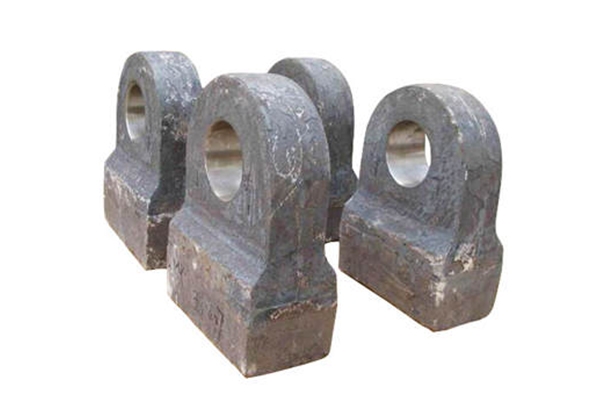
OEM Hammer Head Solutions Built Around Your Crusher, Not Our Catalog
Catalog parts force your machine to compromise. OEM supply flips the equation: the part is engineered around your rotor, your feed, and your warranty targets.
A Hard Head and a Tough Handle in One Casting
Our customizable bimetallic composite Hammer Head bonds a hard, wear-resistant working head to a strong, tough handle, directly solving the easy-breakage problem of single-material castings. The head fights abrasion while the handle absorbs impact shock, so your crushers stay in service longer and your warranty claims stay quiet.
Structure Tuned for Crushing Force and Even Gradation
Geometry is where a Hammer Head earns its keep. Our optimized structural design delivers strong crushing force and a more uniform particle size, so downstream screens run steadier and recirculating loads drop. We adjust weight distribution, striking face angle, and mounting fit to your rotor speed and feed, turning impact energy into product instead of vibration.
One Hammer Head Program, Many Equipment Types
OEM lines rarely run one machine. Our Hammer Head castings suit various types of equipment, from single-stage hammer crushers in cement plants to coal and aggregate duty, with dimensions and hole positions matched to each model. That breadth lets your purchasing team consolidate suppliers, simplify spares stocking, and hold one quality standard across the range.
How a Bimetallic Hammer Head Gets Its Strength
Performance is decided at the melt deck and the heat treatment furnace, long before machining starts.
Alloy Choices That Match the Duty
We pour Hammer Head castings with high manganese steel, alloy steel, and high chrome zones chosen for your feed abrasiveness and impact load. Manganese-rich heads work-harden under heavy blows; chrome-rich zones resist sliding abrasion; cast steel handles carry the shock. Chemistry is checked every heat, so batch two wears like batch one.
Heat Treatment That Locks In Wear Life
Every Hammer Head batch follows a controlled heat treatment route that relieves casting stress, refines the structure, and sets the hardness gradient between head and handle. Quench and temper parameters are recorded per furnace load, giving you traceable data instead of promises. The result is predictable wear your service team can actually plan around.
Machining, Fit Checks, and Balance
A Hammer Head that rocks on its pin wears fast and shakes the rotor. We machine bores and mounting faces to drawing tolerance, verify dimensions with documented inspection, and control weight consistency across sets so rotors stay balanced. Our production team manages quality through the entire process, which is why repeat orders fit like the first.
From First Drawing to Repeat Orders: OEM Hammer Head Supply That Scales
Good castings win the trial. Reliable scheduling and straight communication win the program.
Drawings, Models, and Worn Samples
Send a drawing, a crusher model, or a worn Hammer Head pulled from the field. Our technical team reverse engineers samples, confirms dimensions with you, and flags fit risks before pouring. Custom work can run longer when drawings need repeated confirmation, and we would rather spend that time upfront than burn your production slot later.
Realistic Lead Times, Straight Answers
Standard Hammer Head orders with confirmed drawings typically move through foundry and machining in a matter of weeks; complex bimetallic or new-pattern jobs take longer. We quote honest schedules, update you before you ask, and plan capacity around your build calendar. Predictability is what purchasing managers actually buy, and it is what we sell.
The Rest of the Crusher, Covered
Beyond the Hammer Head itself, we supply matching wear and drive parts: forged main shafts, high manganese steel toggle plates, dust seal rings in high manganese steel or high chrome alloy steel, alloy steel rack bars, and springs in spring steel, high-strength steel wire, or carbon steel. For impact crusher lines, blow bars are produced separately in high manganese steel, alloy steel, or high chrome cast iron.
Conclusion
OEM Hammer Head supply works when design, alloy, and process control line up behind your crusher: a bimetallic build that stops breakage, structure that crushes harder and sizes evenly, and a partner who ships on schedule. Get those right and your machines sell themselves. Send the drawing; we will handle the rest.
FAQ
Can you customize a bimetallic Hammer Head to our drawing?
Yes, by model, drawing, or reverse-engineered worn sample, with fit confirmed before pouring.
What materials do you offer?
High manganese steel, alloy steel, and high chrome wear zones, paired with tough cast steel handles.
What is the typical lead time?
Confirmed standard orders move in weeks; complex custom jobs take longer with drawing confirmation rounds.
Which crushers do your parts fit?
Various hammer crusher types across cement, coal, mining, and aggregate applications.
Do you also make blow bars?
Yes, separately for impact crushers, in high manganese steel, alloy steel, or high chrome cast iron.
Let’s Build Your Next Hammer Head Program
Thirty years customizing non-standard mechanical parts for mining and engineering machinery taught us one thing: OEMs buy certainty. You get excellent service, a production team managing quality through the entire process, and engineers who meet your performance requirements head-on. We focus on cast, forged, and machined crusher parts, not precision electronics. Send your Hammer Head drawing to inquiry@huan-tai.org and tell us your toughest wear complaint — we will answer with a plan, a quote, and an honest lead time.
References
- Dogan, O. N., & Hawk, J. A. (1995). Effect of carbide orientation on abrasion of high Cr white cast iron. Wear, 189.
- Sare, I. R. (1979). Abrasion resistance and fracture toughness of white cast irons. Metals Technology, 6.
- Napier-Munn, T. J., Morrell, S., Morrison, R. D., & Kojovic, T. (1996). Mineral Comminution Circuits: Their Operation and Optimisation. JKMRC.
- Zum Gahr, K.-H. (1987). Microstructure and Wear of Materials. Elsevier.
- Kelly, E. G., & Spottiswood, D. J. (1982). Introduction to Mineral Processing. John Wiley & Sons.
