
Impact crusher wear plates can be made better with composite materials because they combine resistance to wear with the hardness needed for hard crushing work. A good composite wear plate can protect high-contact areas from rough rock, repeated impact, and material flow instead of just relying on one material property. Making the right choice will lead to longer repair times, stable crushing performance, and better planning for extra parts.
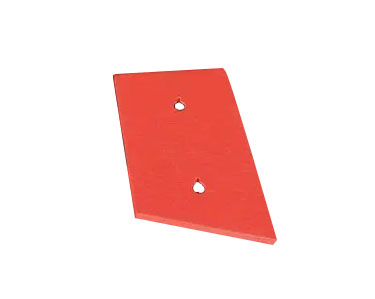
How Do Composite Materials Improve Wear Plate Performance?
Combining Hard Wear Surfaces with Strong Support
Wear plates made of composite materials are intended to offer various performance levels in various parts of the component. Crushed rock can’t damage a hard, wear-resistant working surface, and a stronger supporting piece can help handle contact and rising loads. This scale is useful in impact breakers, where parts are hit by moving objects, hit over and over, and work in tough conditions.
Reducing Wear in High-Contact Areas
Certain zones inside an impact crusher receive more abrasive contact than others. Composite Wear plates can be designed for these high-contact areas, helping protect the crusher chamber from direct wear. In quarrying, mining, and aggregate processing, hard and angular feed material can gradually remove material from ordinary liners. A suitable composite structure can improve wear performance while maintaining a reliable protective barrier for the crusher body.
Supporting Resistance to Fracture and Impact
Wear resistance is important, but impact resistance is equally important for Wear plates used in crushing machinery. A part that is too brittle may not be suitable for heavy feed material or high-impact operation. Composite material designs can help achieve a practical balance between surface hardness and structural toughness. This is especially useful in applications processing hard rock, ore, recycled concrete, and other demanding materials.
Which Materials Can Be Used for Impact Crusher Wear Plates?
High Manganese Steel for Impact-Demanding Conditions
High manganese steel is commonly used for Wear plates where strong impact resistance and toughness are required. It is suitable for many mining and engineering applications because it can withstand repeated loading and abrasive material flow. High manganese steel may be selected for certain liners, side protection parts, and crusher components. Material selection should always consider feed size, rock hardness, crusher type, and expected production conditions.
High Chromium Cast Iron for Abrasive Applications
High chromium cast iron may be used for Wear plates in applications where abrasion is the primary concern. Its hard structure can help resist surface wear when processing highly abrasive rock or mineral materials. However, the material should be selected with attention to impact levels and component location. A technical review helps determine whether high chromium cast iron, high manganese steel, alloy steel, or a composite solution is most suitable.
Alloy Steel and Customized Composite Designs
Alloy steel can provide useful strength and toughness for selected crusher components, while composite Wear plates may offer added flexibility for specific wear zones. Huan-Tai evaluates the part design, mounting method, feed characteristics, and operating conditions before recommending a manufacturing approach. Our products focus on mining, engineering, and heavy mechanical equipment, not precision electronic equipment or electronic-device components.
How Are Composite Wear Plates Manufactured for Accurate Fitment?
Casting Methods Match Part Geometry
Different casting processes can be selected according to the design and size of Wear plates. Lost-wax casting is useful for detailed shapes and complex features, while resin sand casting and V-process casting can support suitable production for other liner designs. The selected process depends on material grade, casting weight, required dimensional accuracy, and order quantity. Proper process selection supports stable quality and reliable installation.
Accurate Dimensions Help Protect the Crusher Chamber
A correctly fitted set of Wear plates helps protect impact crusher walls, mounting areas, and internal structural surfaces. Critical dimensions may include bolt holes, locking positions, backing surfaces, thickness, edge profiles, and contact areas. Huan-Tai reviews drawings, samples, part numbers, photographs, or confirmed measurements before production. This reduces fitting uncertainty and helps maintenance teams install replacement parts with less on-site adjustment.
Inspection Confirms Custom Requirements
Quality control for custom Wear plates includes material preparation, casting inspection, machining checks where required, dimensional verification, and final packing. Our production and inspection teams manage each stage according to confirmed technical requirements. For larger equipment manufacturers, repeatability across batches is important. For repair companies, dependable inspection helps ensure that a replacement plate is suitable for restoring equipment during planned or urgent maintenance work.
When Should Buyers Choose Composite Wear Plates?
When Abrasion and Impact Occur Together
Composite Wear plates are worth considering when an impact crusher handles both abrasive material and repeated impact. This can occur in hard-rock quarries, mineral processing plants, recycling operations, and engineering-material production. The decision should be based on the actual wear pattern rather than assumptions. Reviewing the used part, feed material, throughput, and crusher settings can help identify whether a composite structure offers practical value.
When Standard Liners Wear Unevenly
Uneven wear can indicate that certain areas of the crusher chamber receive more material contact or impact than others. In these cases, customized Wear plates may be designed around the actual working zone. Maintenance teams should inspect deep grooves, thinning areas, damaged edges, and mounting surfaces. Early identification of wear patterns supports more effective material selection and can improve replacement planning for high-use crushers.
When Custom Drawings Need Technical Review
Custom Wear plates are often required for older equipment, modified crusher chambers, or replacement projects without complete original documentation. Buyers can provide a drawing, sample, part number, or worn component for review. Lead times depend on material selection, casting method, machining needs, drawing confirmation, and inspection standards. Repeat items may progress more smoothly, while complex custom designs can require additional time for technical approval and production planning.
Conclusion
Composite Wear plates can offer valuable protection for impact crushers by combining abrasion resistance, impact strength, and tailored performance in high-contact areas. The best solution depends on feed material, crusher design, wear pattern, and installation requirements. With accurate casting, inspection, and technical review, customized wear plates can support more stable maintenance and longer equipment service.
FAQ
Q1: What are composite Wear plates?
Composite Wear plates combine materials or material properties to improve wear resistance and impact performance.
Q2: Are composite plates suitable for impact crushers?
Yes, when the crusher faces both high abrasion and repeated impact from hard feed material.
Q3: What materials can be used for wear plates?
Options include alloy steel, high manganese steel, high chromium cast iron, and composite materials.
Q4: Can Huan-Tai manufacture wear plates from samples?
Yes. We can review drawings, samples, photographs, part numbers, and confirmed dimensions.
Q5: What affects custom order lead time?
Drawing approval, material availability, casting process, machining, order quantity, and inspection requirements all affect timing.
Improve Crusher Protection with Custom Composite Wear Plates
Xian Huan-Tai Technology and Development Co., Ltd. helps mining equipment manufacturers, repair companies, and industrial buyers source reliable custom Wear plates for demanding crusher applications. With 30 years of experience, we provide responsive service, professional technical evaluation, controlled production, and inspection throughout every stage. Send us your drawing, worn sample, crusher model, or material requirements, and our team will recommend a practical solution. Contact inquiry@huan-tai.org to request a customized quotation.
References
- Wills, Barry A., and James Finch. Wills’ Mineral Processing Technology: An Introduction to the Practical Aspects of Ore Treatment and Mineral Recovery. Butterworth-Heinemann, 2016.
- Gupta, Ashok, and Denis S. Yan. Mineral Processing Design and Operation: An Introduction. Elsevier, 2016.
- Davis, Joseph R., editor. ASM Specialty Handbook: Cast Irons. ASM International, 1996.
- Campbell, John. Complete Casting Handbook: Metal Casting Processes, Metallurgy, Techniques and Design. Butterworth-Heinemann, 2015.
- Totten, George E. Steel Heat Treatment: Metallurgy and Technologies. CRC Press, 2006.
