
To make jaw crusher wear parts last longer, workers should choose the right material, keep the crusher settings correct, monitor feed conditions, and check parts often. A good jaw plate and other jaw parts can handle breaking forces better if they are set up properly and are the right size, hardness, and abrasiveness for the rock being handled.
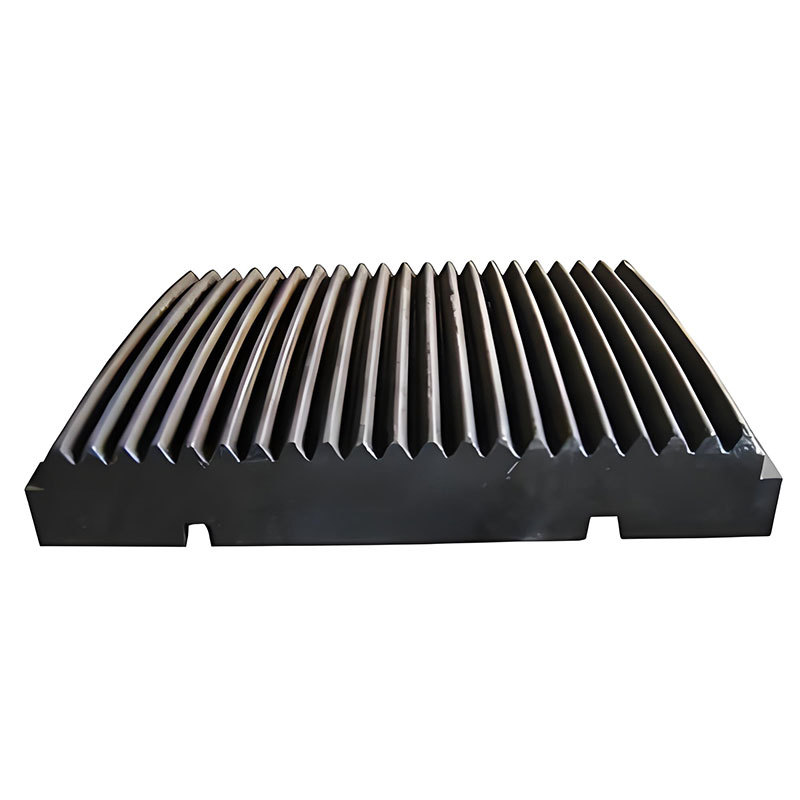
How Can Material Selection Extend Jaw Plate Service Life?
Choose High Manganese Steel for High-Impact Rock
A Jaw Plate is often made of high manganese steel because it is very tough and can handle being hit over and over again. This material can stand up to the reactive force that is made when rock is broken up and is used in heavy-duty jaw parts for mining, quarrying, and making aggregate. It works especially well in hard rock situations where resistance to impact and long-term wear are important factors in the purchase decision.
Match Material Grade to Feed Abrasiveness
Not every crushing application needs the same material solution. A Jaw Plate processing highly abrasive granite or basalt may need a different material approach from jaw parts used for limestone or recycled aggregate. High carbon steel can be considered for suitable applications, while high manganese steel is commonly selected for demanding impact conditions. Reviewing material hardness, moisture, feed size, and production targets helps reduce premature wear.
Confirm Casting Quality Before Installation
Material quality alone cannot guarantee long service life. A jaw plate should also have reliable casting quality, adequate strength, and accurate dimensions. Poorly controlled jaw parts may create installation difficulties, uneven contact, or unstable wear patterns. Huan-Tai uses suitable casting and machining processes for customized mechanical components, helping customers obtain parts that fit correctly and perform more consistently in demanding engineering and mining machinery.
Which Operating Practices Protect Jaw Parts from Early Wear?
Maintain Correct Feed Size and Distribution
A jaw plate and other jaw parts can wear out faster if the feed is too big or spread out unevenly. Controlled amounts of material should be fed into the crushing box so that the working area is loaded evenly. If a big rock keeps going into one side of the shaft, the plate may wear down unevenly. Setting the feeder correctly and making sure the material flows smoothly can help it work better and predict wear better.
Avoid Running the Crusher with an Empty Chamber
Running a jaw crusher without enough material can make the moving and fixed jaw plate surfaces touch and load more than they need to. This can make the jaw parts wear out faster and shorten the tooth profile’s useful life. Keeping the feeding conditions fixed helps make sure that the energy is used to crush the material instead of making too much metal-to-metal contact inside the cylinder.
Monitor Crusher Settings and Discharge Opening
If you don’t set the breaker correctly, the Jaw Plate and other parts of the jaw can be put under extra stress. If the output hole is too small, the breaking load may go up, and if the settings are off, the product size and material flow may change. Regularly, operators should check the closed-side setting, feed arrangement, and production needs. Keeping the settings in the right place helps keep the crushing conditions fixed and keeps new parts from wearing out too quickly.
How Does Maintenance Help Extend the Lifespan of Jaw Crusher Wear Parts?
Inspect Tooth Profiles and Wear Areas Regularly
One of the easiest ways to keep a Jaw Plate from hitting a critical wear state is to check it regularly. It is important for operators to look for worn-out teeth, deep grooves, cracks, weak mounting areas, and uneven wear between the upper and lower parts. By keeping an eye on jaw parts early on, maintenance teams can plan to order replacements before the crusher stops working properly or an unplanned shutdown delays work.
Check Fasteners, Backing Surfaces, and Fitment
The Jaw Plate must be mounted, fastened, and supported on the back in the right way for it to be safe. Jaw parts that are too loose or don’t fit right can move when they’re under a lot of pressure, which can cause uneven wear and put extra stress on the frame of the crusher. Technicians should check the touch areas, closing parts, nuts, and wedges during servicing. Correct placement helps spread the weight of the breaking loads evenly and supports stable operation in high-load mining and tunneling settings.
Coordinate Jaw Plate Replacement with Other Components
The condition of a Jaw Plate should be assessed alongside other crusher components, including cheek plates, toggle plates, springs, and the main shaft. Toggle plates are commonly made from high manganese steel rather than carbon steel. Crusher springs may use spring steel, high-strength steel wire, or carbon steel. Crusher main shafts are manufactured through forging, not casting. Coordinated maintenance helps protect all jaw parts and improves equipment reliability.
Conclusion
Extending the lifespan of jaw crusher wear parts requires suitable material selection, balanced feeding, correct crusher settings, accurate installation, and regular inspection. A properly matched Jaw Plate can better resist impact, abrasion, and fragmentation forces. With planned maintenance and quality replacement parts, mining and quarry operators can improve production stability and reduce avoidable replacement costs.
FAQ
Q1: What material is commonly used for a Jaw Plate?
High manganese steel is commonly used because it offers toughness and impact resistance.
Q2: Can oversized feed shorten jaw parts life?
Yes. Oversized or uneven feed can cause localized wear and extra crushing stress.
Q3: How often should a Jaw Plate be inspected?
Inspect it during scheduled maintenance and whenever throughput or product size changes.
Q4: Is a crusher main shaft cast or forged?
A crusher main shaft is produced using a forging process, followed by machining.
Q5: Can Huan-Tai manufacture custom jaw parts?
Yes. We can produce customized jaw parts from drawings, samples, dimensions, or part numbers.
Keep Your Jaw Crusher Productive with Better Replacement Planning
Xian Huan-Tai Technology and Development Co., Ltd. helps mining equipment manufacturers, repair companies, and industrial buyers source dependable customized Jaw Plate and jaw parts solutions. With 30 years of experience, we combine responsive service, technical evaluation, controlled production, and professional inspection throughout each order. Send us your drawings, samples, wear-part details, or maintenance requirements, and our team will provide practical manufacturing guidance. Contact us at inquiry@huan-tai.org to start your project discussion.
References
- Wills, Barry A., and James Finch. Wills’ Mineral Processing Technology: An Introduction to the Practical Aspects of Ore Treatment and Mineral Recovery. Butterworth-Heinemann, 2016.
- Gupta, Ashok, and Denis S. Yan. Mineral Processing Design and Operation: An Introduction. Elsevier, 2016.
- Mular, Andrew L., Doug N. Halbe, and Derek J. Barratt. Mineral Processing Plant Design, Practice, and Control. Society for Mining, Metallurgy, and Exploration, 2002.
- Davis, Joseph R. ASM Specialty Handbook: Manganese Steels. ASM International, 2000.
- Oberg, Erik, Franklin D. Jones, Holbrook L. Horton, and Henry H. Ryffel. Machinery’s Handbook. Industrial Press, 2020.
