
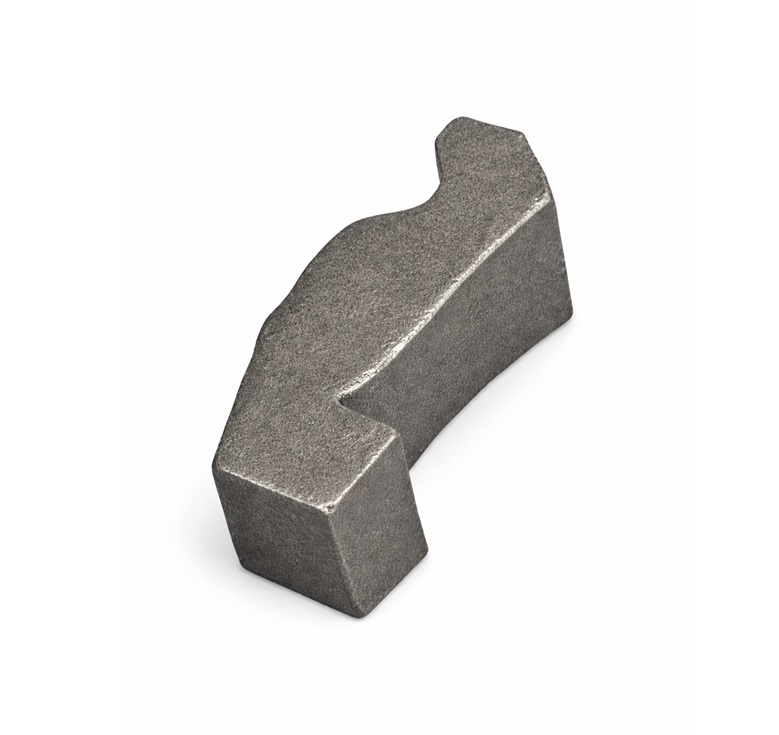
High-chromium cast iron is used in many wear parts of crushers. It is most commonly found in the lock block that holds the mantle to the main shaft in cone crushers, where it is needed to be very resistant to wear under constant pressing load. Because it is hard and lasts a long time, it is often used for liners, plates, and other high-wear castings in mining and aggregate equipment.
Which Crusher Parts Commonly Use High-Chromium Cast Iron?
Lock Block Assemblies in Cone Crushers
High-chromium cast iron works well in liners and plates that are constantly sliding against crushed rock, not just the Lock block. The hardness of these parts determines how long they last because they don’t have to deal with quick shock loads very often. When working with quartz, basalt, or other very rough rock, operators often choose high-chromium casts for this reason in a number of wear places. This is not the same as the material factors that go into making a Crusher Hammer Head.
Hammer-Type Crusher Components
Some hammer crusher forms are also made of high-chromium cast iron. For example, the Crusher Hammer Head is made for low-impact, high-abrasion feed. A lock block in a cone crusher and a hammer head in a hammer crusher do very different mechanical jobs. However, they both show how material chemistry is tailored to the wear pattern of each machine instead of being used the same way for all types of crushers.
Hammer-Type Crusher Components
High-chromium cast iron also appears in select hammer crusher castings, including a properly specified Crusher Hammer Head designed for lower-impact, high-abrasion feed. While a Lock block in a cone crusher and a hammer head in a hammer crusher serve entirely different mechanical roles, both illustrate how material chemistry gets matched to the specific wear pattern of each machine rather than applied uniformly across every crusher type.
Why Is High-Chromium Cast Iron Suited for High-Abrasion Applications?
Superior Hardness and Abrasion Resistance
The chromium carbides distributed through the microstructure give this material exceptional surface hardness, which directly translates into longer service life for a lock block or any other continuously abraded casting. Compared with plain carbon iron, high-chromium formulations resist scratching and material loss far more effectively, particularly in dry, high-silica crushing environments common in quarrying and mineral processing operations, whether the application is a lock block or a separately engineered Crusher Hammer Head.
Fracture and Impact Resistance
Excellent resistance to fracture and impact force makes high-chromium cast iron suitable for high-load, high-strength working environments, provided impact levels stay within the material’s toughness limits. A Lock block benefits from this balance since it must withstand clamping stress without cracking, while a Crusher Hammer Head made from a similar formulation handles lighter, repeated impact without chipping prematurely.
Cost-Effectiveness Over Service Life
Although high-chromium castings often cost more upfront than plain steel alternatives, their extended wear life reduces total replacement frequency and labor cost over time. For a lock block operating continuously under abrasive load, fewer replacement cycles translate directly into lower maintenance spending, the same economic logic that applies when specifying a durable Crusher Hammer Head for high-throughput operations.
How Are High-Chromium Cast Iron Crusher Parts Manufactured and Customized?
Precision Casting Methods
Casting by lost-wax method, resin sand, or V-method ensures the dimensional accuracy needed for a Lock block to seat correctly against the mantle and main shaft. Tight tolerances matter just as much for a Crusher Hammer Head, since any misalignment during casting can cause uneven wear once the part enters continuous production service.
Material Composition and Heat Treatment
Controlling chromium content and applying targeted heat treatment allows manufacturers to fine-tune hardness and toughness for each application. A Lock block destined for heavy clamping duty may receive a different treatment profile than a Crusher Hammer Head built for lighter, higher-frequency impact, even though both start from a similar high-chromium base composition.
Custom Fit for Non-Standard Equipment
Many crushers in the field use modified or older designs that no longer match standard catalog parts. Huan-Tai produces Lock block components, Crusher Hammer Head castings, and related parts according to model number or technical drawing, ensuring an exact fit. Because custom orders may involve repeated drawing confirmation and specialized processing, production timelines vary by project and are confirmed individually with each customer.
Conclusion
High-chromium cast iron delivers exceptional abrasion and fracture resistance across crusher components, from the lock block securing a cone crusher mantle to select hammer-type castings. Choosing the right formulation, casting method, and custom fit helps operators extend service life and reduce long-term maintenance costs.
FAQs
Q1: What makes high-chromium cast iron suitable for a Lock block?
A1: Its exceptional hardness resists abrasive wear while withstanding the clamping stress a lock block experiences continuously.
Q2: Can high-chromium cast iron handle heavy impact loads?
A2: It offers good fracture resistance but performs best when impact levels stay within moderate, consistent ranges.
Q3: How is dimensional accuracy achieved in these castings?
A3: Lost-wax, resin sand, and V-method casting all help maintain tight tolerances for a precise fit.
Q4: Are Lock block components available for non-standard crushers?
A4: Yes, they can be customized according to model number or technical drawing for exact compatibility.
Q5: Is high-chromium cast iron cost-effective long term?
A5: Yes, its extended wear life reduces replacement frequency, lowering total maintenance costs over time.
Request a Custom Lock Block Quote
Every crushing operation deserves wear parts built for its exact conditions. With 30 years of industry experience customizing non-standard mechanical parts, Huan-Tai’s engineering and quality teams manage every stage from drawing confirmation to final inspection, ensuring each Lock block and related casting meets your performance requirements. Ready to discuss your specifications? Contact our professional technical team at inquiry@huan-tai.org and let’s find the right material solution together.
References
- Gupta, A., & Yan, D. S. (2016). Mineral Processing Design and Operations. Elsevier.
- Wills, B. A., & Finch, J. A. (2015). Wills’ Mineral Processing Technology. Butterworth-Heinemann.
- Tabrett, C. P., Sare, I. R., & Ghomashchi, M. R. (1996). Microstructure-property relationships in high chromium white iron alloys. International Materials Reviews.
- Coetzee, M. L. (1998). Abrasive wear of high-chromium white cast irons. Journal of the South African Institute of Mining and Metallurgy.
- Napier-Munn, T. J., Morrell, S., Morrison, R. D., & Kojovic, T. (1996). Mineral Comminution Circuits: Their Operation and Optimisation. JKMRC.
