
Blow bars, which are placed on the rotor and strike the feed material quickly to break it down, are the main impact components of an impact crusher. High chrome blow bars regularly beat other materials in terms of wear resistance, physical stability, and service life. This makes them the best choice for challenging uses in mining, quarrying, and building rock production.
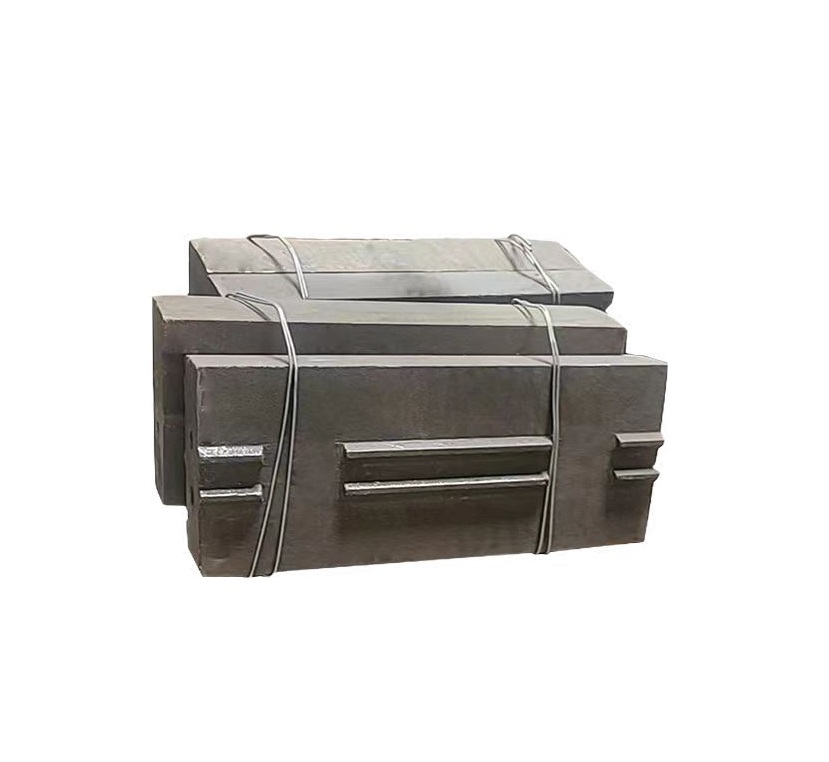
What Makes High Chrome the Superior Material for Blow Bars?
Exceptional Hardness and Abrasion Resistance
High chromium cast iron achieves a surface hardness that standard manganese steel and alloy steel simply cannot match in abrasive conditions. When blow bars are processing hard, abrasive rock types — silica-rich aggregate, granite, recycled concrete — the harder the surface, the slower the wear rate. High chrome impact crusher parts hold their profile longer between rotations, which means more consistent product size and fewer mid-cycle inspections.
Resistance to Fracture Under High-Load Conditions
A common concern with hard materials is brittleness, but quality high chrome blow bars are engineered to balance hardness with enough toughness to resist fracture under the sudden impact loads typical of an impact crusher rotor. Produced through precision casting — using methods such as lost-wax, resin sand, or V-process casting — the dimensional accuracy of the finished part ensures even load distribution across the rotor, reducing the risk of stress concentration that leads to cracking.
Longer Service Life Compared to Softer Alternatives
The practical advantage of high chrome impact crusher parts comes down to replacement frequency. Operations running high chrome blow bars typically see significantly extended wear life compared to manganese steel options in highly abrasive feed conditions. Fewer change-outs mean less downtime, lower labor cost, and more predictable maintenance scheduling — all of which matter to purchasing managers and production teams trying to control operating costs without compromising output.
How Are High Chrome Blow Bars Manufactured to Meet Performance Demands?
Casting Process and Dimensional Accuracy
Blow bars are produced through casting, with high chromium cast iron as the base material. Precision casting methods — including lost-wax casting and resin sand casting — are used to achieve tight dimensional tolerances on a component that must seat correctly on the rotor and maintain balance at high rotational speeds. Dimensional inaccuracy in impact crusher parts leads to rotor imbalance, vibration, and accelerated bearing wear, so casting quality is not a secondary concern.
Material Selection Across the Product Range
While high chrome cast iron is the standout choice for abrasive applications, blow bars are also available in high manganese steel and alloy steel for different operating conditions. High manganese steel offers excellent toughness and impact resistance and work-hardens under repeated loading, making it well suited to feed materials that involve significant impact without extreme abrasion. Alloy steel provides a middle-ground option. Each material has its application window, and selecting the right one requires an honest assessment of the feed material characteristics.
Rotor Compatibility and Custom Production
Not all impact crushers use the same rotor geometry or blow bar profile. For non-standard machines or older models still in service, custom blow bar production from drawings or samples is often the only viable path. Lead times for custom impact crusher parts vary — drawing confirmation, material procurement, and casting process steps all add time, particularly when specifications need multiple rounds of review. Engaging a supplier early in the planning cycle avoids procurement delays becoming operational problems.
Why Do Mining and Engineering Operations Choose High Chrome Blow Bars?
Lower Total Cost of Ownership
For larger mining operations where production volumes are high and feed material is consistently abrasive, the cost per tonne of output is a more useful metric than unit price per blow bar. High chrome impact crusher parts deliver a lower cost per tonne in abrasive applications because they process more material before requiring replacement. This is the calculation that drives adoption in serious production environments, even when the upfront price is higher than softer alternatives.
Performance in Hard Rock and High-Throughput Applications
Hard rock quarrying, primary crushing of granite or basalt, and high-throughput aggregate production are exactly the conditions where high chrome blow bars demonstrate their advantage most clearly. The combination of surface hardness, dimensional stability, and fracture resistance means the rotor stays in balance and product gradation stays consistent over a longer operating window. For production managers, that consistency translates directly into fewer interruptions and more reliable shift output.
Supplier Capability and Quality Assurance
The performance of high chrome impact crusher parts is only as good as the manufacturing process behind them. Material composition, casting method, heat treatment, and dimensional inspection all influence how the finished blow bar performs in service. Suppliers with established quality control processes — covering incoming material verification through to final inspection — give customers confidence that the part they receive matches the specification they ordered, batch after batch.
Conclusion
High chrome blow bars outperform alternatives in abrasive, high-load crushing applications because of their hardness, dimensional accuracy, and extended wear life. For operations where uptime and output consistency matter, choosing quality impact crusher parts — and a supplier who manufactures them with genuine process control — is the most direct path to lower operating costs.
FAQ
Q1: What are blow bars used for?
Blow bars are impact elements fitted to the rotor of an impact crusher. They strike incoming feed material at high speed, breaking it through impact force rather than compression.
Q2: Why choose high chrome blow bars over manganese steel?
In highly abrasive feed conditions, high chrome cast iron offers superior wear resistance and longer service life. High manganese steel is better suited to high-impact, lower-abrasion applications where toughness is the priority.
Q3: How are blow bars manufactured?
They are produced through casting processes — including lost-wax, resin sand, and V-method casting — using high chromium cast iron, high manganese steel, or alloy steel, depending on the application requirement.
Q4: Can blow bars be customized for non-standard impact crushers?
Yes. Custom blow bars can be produced from drawings or samples. Lead times depend on specification complexity, drawing confirmation, and production scheduling.
Q5: How do I know when blow bars need replacing?
Visible wear on the striking face, changes in product gradation, or increased rotor vibration are the main indicators. Scheduled inspection intervals based on operating hours help prevent unexpected failures.
Ready to Upgrade Your Impact Crusher Parts?
At Xi’an Huan-Tai Technology and Development Co., Ltd., we have over 30 years of experience manufacturing high-performance crusher wear parts — including high chrome blow bars — for mining and engineering customers worldwide. Our technical team helps you select the right material for your application, and our production process is quality-controlled from raw material to final inspection. Tell us your crusher model and feed conditions at inquiry@huan-tai.org, and we’ll take it from there.
References
- Wills, B. A., & Finch, J. A. (2015). Wills’ Mineral Processing Technology: An Introduction to the Practical Aspects of Ore Treatment and Mineral Recovery (8th ed.). Butterworth-Heinemann.
- Gupta, A., & Yan, D. S. (2006). Mineral Processing Design and Operations: An Introduction. Elsevier.
- Metso Corporation (2015). Crushing and Screening Handbook (5th ed.). Metso Minerals Industries, Inc.
- Lindqvist, M., & Evertsson, C. M. (2003). Wear in Rock Crushing Equipment: Prediction and Influence on Product Quality. Minerals Engineering, 16(12), 1347–1354.
- Albertsson, G., Jonsson, S., & Haraldsson, J. (2015). Influence of Microstructure on Abrasive Wear of High Chromium White Cast Iron. Wear, 332–333, 717–724.
