
A liner plate is a replaceable wear component installed inside crushers, mills, chutes, and other processing equipment to protect the structural body from abrasion, impact, and material erosion. In crushing applications specifically, the liner plate forms the working surface that contacts rock and ore directly — absorbing wear so the machine frame does not. Selecting the right liner plate material and profile is one of the most practical decisions affecting equipment uptime and operating cost in mining and engineering operations.
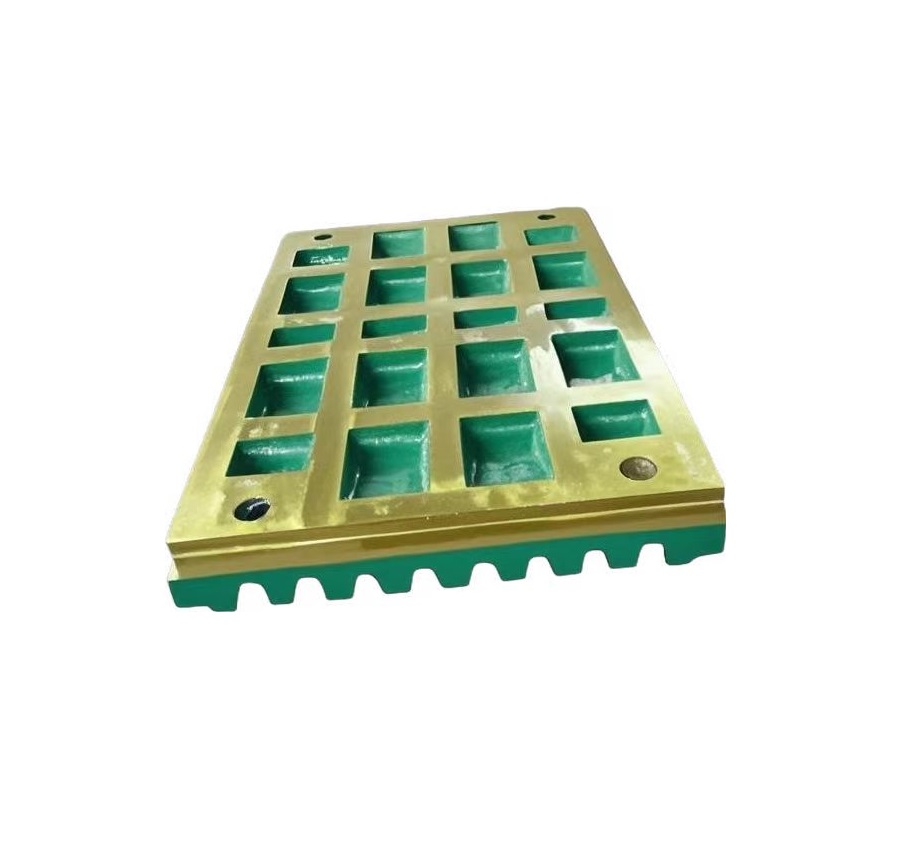
Protecting Equipment Structures From Wear and Impact
Acting as a Sacrificial Wear Surface
A liner plate’s main job in crusher parts and material handling equipment is to give up its own structure in favor of the machine’s fixed one. Rock, metal, and gravel are very rough, and if a crusher or chute didn’t have a worn covering that could be replaced, the walls would wear down very quickly. By making the liner plate a bolt-in or weld-in part, maintenance teams can get the machine back to working order by just changing the liner, instead of fixing or redoing the base structure.
Absorbing Impact Force in Crushing Applications
In jaw, impact, and cone crushers, the parts that line the breaking area have to be able to handle being hit by rocks with a lot of force over and over again. The high manganese steel or high carbon steel used to make the liner plate is strong and tough enough to handle these forces without breaking too soon. High manganese steel, in particular, hardens when it is hit, making the surface harder over time. This trait directly extends the life of liner plates in uses that use a lot of impact.
Resisting Abrasion on Harder Rock Types
Harder rocks like granite, basalt, and quartzite put the most stress on the parts of the breaker that come into touch with the material stream. For these situations, a liner plate needs to have a high surface hardness and enough stiffness so that it doesn’t chip or crack when it’s loaded. Good cast liner plates made of high manganese steel or high carbon steel provide the rust protection and wear performance needed to keep the chamber shape constant throughout the entire service interval, even in process conditions that are harsh on chemicals.
Material Selection: Matching the Liner Plate to the Application
High Manganese Steel for Impact-Dominated Conditions
High manganese steel is the most widely used material for crusher components operating under heavy impact loading. Its work-hardening behavior means the surface becomes progressively harder as it absorbs impacts during service, while the core retains the toughness needed to resist fracture. A liner plate made from high manganese steel is well suited to jaw crusher fixed and movable jaws, cone crusher mantles, and other crusher components where impact energy is the dominant wear mechanism.
High Carbon Steel for Combined Wear Environments
Where the wear environment involves both abrasion and moderate impact — such as chute liners, feed hoppers, and secondary crusher components — high carbon steel liner plates offer a practical balance of hardness and toughness. This material can be cast to complex profiles, allowing the liner plate geometry to be optimized for the specific flow pattern or crushing action of the application. High carbon steel also maintains good dimensional stability under thermal cycling, an advantage in processes where material temperatures fluctuate.
Selecting Based on Rock Hardness and Operating Conditions
No single liner plate material is optimal for every application. The Mohs hardness of the rock being processed, the feed size, the crusher throughput rate, and the moisture and chemical content of the material all influence which material specification will deliver the best service life. Experienced suppliers with knowledge of crusher components across multiple industries can help match the liner plate specification to the actual operating conditions — a step that meaningfully reduces replacement frequency and total cost of ownership.
Sourcing and Replacing Liner Plates: Practical Considerations
Getting the Geometry Right
A replacement liner plate must match the original profile geometry as well as the material specification. Profile deviations — even modest ones — change the effective crushing chamber shape, alter the nip angle, and affect how material moves through the crusher components. Working from the original drawing or from a confirmed measurement of the worn liner is the safest approach, particularly for non-standard crushers where no catalogue replacement exists.
Lead Times for Custom Liner Plates
Standard liner plate profiles for common crusher models are typically available with shorter lead times. Custom or non-standard profiles require additional time for drawing confirmation, pattern preparation, casting, and heat treatment. The process can take longer than expected when repeated drawing reviews or material specification changes are needed, so raising custom requirements early in the maintenance planning cycle avoids schedule pressure that can compromise quality.
Pre-Delivery Inspection and Dimensional Verification
Before a liner plate enters service among the other crusher components, dimensional verification against the agreed drawing confirms profile accuracy, thickness, and mounting hole geometry. Hardness testing at defined locations checks that the heat treatment has achieved the target material properties. Suppliers who provide documentation with each delivery give maintenance teams a reliable record for tracking liner performance across multiple replacement cycles.
Conclusion
A liner plate is the front line of wear protection for crusher components and material handling equipment, extending structural service life by absorbing abrasion and impact in place of the machine frame. Selecting the right material — high manganese steel, high carbon steel, or other wear-resistant grades — matched to the specific rock type and operating conditions is what determines whether a liner plate delivers acceptable service life.
FAQ
Q1: How often does a liner plate need to be replaced?
Replacement intervals depend on the rock type, feed size, and throughput rate. Tracking liner thickness at scheduled inspections and replacing before the wear limit is reached protects the underlying crusher components.
Q2: What is the most common material for a crusher liner plate?
High manganese steel is the most widely used, valued for its work-hardening behavior and toughness under impact. High carbon steel is a common alternative where abrasion dominates over impact.
Q3: Can a custom liner plate be manufactured for a non-standard crusher?
Yes. Manufacturers with casting and machining capability can produce liner plates to drawing or from dimensional measurement of the worn original, matched to the required material specification.
Q4: Does liner plate profile affect crusher performance?
Significantly. Profile geometry defines the crushing chamber shape, which influences nip angle, reduction ratio, and throughput. An incorrectly profiled liner plate degrades performance even if the material specification is correct.
Q5: How do I specify the right liner plate for harder rock types?
Share the rock type, feed size, and operating conditions with your supplier. For harder, more abrasive rock, high manganese steel or high carbon steel grades are typically recommended.
Source Your Liner Plates From a Manufacturer You Can Trust
At Xian Huan-Tai Technology and Development Co., Ltd., we have over 30 years of experience manufacturing customized non-standard mechanical parts — including liner plates and other critical crusher components — for mining and engineering operations worldwide. Our technical team works from your drawings or worn samples to specify and produce liner plates that perform. Our production team manages quality at every stage, from casting to final inspection. Send your requirements to inquiry@huan-tai.org — we’re ready to help.
References
- Wills, B. A., & Finch, J. A. (2016). Wills’ Mineral Processing Technology (8th ed.). Butterworth-Heinemann.
- Metso Corporation. (2005). Crushing and Screening Handbook (4th ed.). Metso Minerals.
- Zum Gahr, K. H. (1987). Microstructure and Wear of Materials. Elsevier Science Publishers.
- Ashby, M. F. (2011). Materials Selection in Mechanical Design (4th ed.). Butterworth-Heinemann.
- Bloch, H. P., & Geitner, F. K. (1999). Machinery Failure Analysis and Troubleshooting (3rd ed.). Gulf Professional Publishing.
