
In any impact crusher system, wear plates are the sacrificial layer that stands between the crusher’s structural frame and the constant abrasive punishment of feed material. Choosing OEM-grade wear plates — manufactured to correct material specifications and dimensional tolerances — directly affects how long the machine runs productively between shutdowns. For mining and engineering operations where uptime is revenue, this is not a component category where cutting corners pays off.
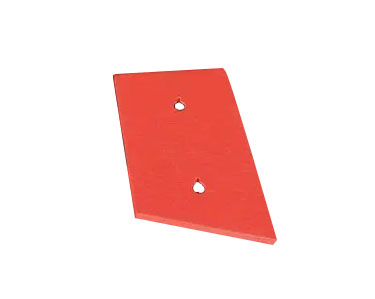
Longer Equipment Life Through Correct Material Selection
High-Manganese Steel for Impact-Heavy Applications
OEM wear plates for impact crusher systems are commonly manufactured from high-manganese steel, which work-hardens under repeated impact loading. As the surface hardens in service, resistance to abrasive wear increases progressively. Wear plates made from this material protect the crusher’s structural surfaces effectively in high-load conditions typical of hard-rock mining. Using correctly specified impact crusher parts from the outset avoids the accelerated frame damage that follows when a wear plate fails prematurely or fits poorly.
Alloy Steel for Balanced Wear Resistance
For applications where abrasion and moderate impact are both present, alloy steel wear plates offer a practical performance profile. Produced through precision casting methods — lost-wax, resin sand, or V-method — alloy steel wear plates achieve accurate dimensional tolerances that ensure proper seating and even load distribution across the protected surface. Properly fitted impact crusher parts reduce vibration, minimize stress concentration on mounting points, and contribute meaningfully to the machine’s overall service life.
High-Chromium Cast Iron for Highly Abrasive Feed
High-chromium cast iron wear plates have a harder surface and last longer between repairs when the feed material is very rough, like silica-rich rock or hard mineral metal. The carbide-rich microstructure that forms during casting is much better at resisting rough cutting than softer types. Choosing the right wear plate grade for an impact crusher that works with regularly rough material is one of the best choices that a repair or buying team can make.
Dimensional Accuracy and Its Impact on Crusher Performance
Precision Casting Ensures Correct Fit
OEM wear plates are made using controlled casting methods, like lost-wax, resin sand, or V-method casting, that keep the sizes accurate within very small ranges. When the fixing surface of a wear plate fits properly, the load is spread out evenly, the plate sits flush with no gaps, and it stays in place even when the machine is vibrating. If the dimensions of impact crusher parts aren’t right, they can cause uneven load lines, speed up the wear and tear on attaching gear, and cause vibrations that damage the structure of the machine over time.
Consistent Thickness Across the Plate Surface
How evenly the covered surface goes down and how well the replacement time can be forecast are both directly related to how regular the thickness is across a wear plate. OEM-quality production methods make sure that the thickness stays the same during the casting and finishing steps. This makes wear plates that will behave in a predictable way over their service life. This stability makes planning upkeep easy; when measurements of wear follow a predictable pattern, replacement ordering becomes proactive instead of reactive.
Compatibility with Existing Crusher Components
When wear plates are manufactured to OEM specifications, they are dimensionally compatible with the other impact crusher parts in the same system — liners, rotor components, and frame surfaces — without the need for on-site modification. Field machining or shimming to make a poorly dimensioned plate fit is a time and cost drain that OEM-grade sourcing avoids entirely. It also eliminates the risk of introducing stress concentrations through improvised fitting adjustments.
Sourcing OEM-Quality Wear Plates from a Reliable Manufacturer
Working from Drawings or Sample Parts
For non-standard crusher models or equipment where original OEM supply has been discontinued, wear plates can be custom-fabricated to match the original specifications. The starting point is accurate dimensional data — either from engineering drawings or from careful measurement of a worn sample part. A manufacturer experienced in custom impact crusher parts will review the drawing before committing to production and flag any ambiguities rather than proceeding on assumptions.
Understanding Lead Times for Custom Work
Standard wear plates for common crusher models may be available with relatively short turnaround. Custom profiles, non-standard alloy grades, or complex geometries require more time — drawing confirmation, material procurement, casting, and inspection all add to the timeline. For parts where multiple drawing review rounds are needed, or where unusual process requirements apply, lead times extend accordingly. Planning procurement with realistic timelines, rather than ordering against an emergency, is the more cost-effective approach.
Quality Verification Before Installation
Before installing replacement wear plates, verify key dimensions against the drawing and inspect the contact and mounting surfaces for casting defects. A supplier with documented in-process inspection should be able to provide basic quality records on request. Installing a defective impact crusher part only to remove it at the next maintenance window wastes time and risks damage to the surrounding structure if the plate shifts or cracks in service.
Conclusion
OEM wear plates extend crusher service life, reduce unplanned downtime, and protect the machine’s structural components when they are correctly specified, precisely manufactured, and properly installed. Material grade, dimensional accuracy, and supplier quality control are the three factors that determine whether a wear plate delivers the service life the application demands — and whether maintenance teams can plan around it reliably.
FAQ
Q1: What materials are OEM wear plates typically made from?
High-manganese steel, alloy steel, and high-chromium cast iron are the main options, selected based on the abrasiveness and impact intensity of the feed material.
Q2: How are wear plates manufactured to achieve dimensional accuracy?
Lost-wax casting, resin sand casting, and V-method casting are all used, each offering controlled dimensional tolerances suited to different plate geometries and alloy grades.
Q3: Can wear plates be custom-made for non-standard crusher models?
Yes. Custom fabrication from engineering drawings or sample measurements is a standard option for equipment where OEM supply is no longer available.
Q4: How do I know when wear plates need replacing?
Regular thickness measurements at scheduled maintenance intervals are the most reliable guide. Waiting for visible performance loss typically means the plate — and possibly the surface beneath it — is already significantly damaged.
Q5: Does wear plate material affect crusher vibration?
Yes, indirectly. A correctly fitted, uniformly thick wear plate distributes load evenly and minimizes vibration. Poor fit or inconsistent thickness creates uneven load paths that increase vibration and accelerate wear on surrounding components.
Source Reliable Wear Plates from Huan-Tai
When crusher wear plates matter to your uptime, work with a manufacturer who treats quality as a process, not an afterthought. Xian Huan-Tai Technology and Development Co., Ltd. has over 30 years of experience producing customized non-standard mechanical parts for mining and engineering applications. Our technical team matches material and casting method to your exact application requirements, and our production team inspects quality at every stage. Send your drawings or inquiry to inquiry@huan-tai.org — let’s keep your crusher running.
References
- Wills, B. A., & Finch, J. A. (2015). Wills’ Mineral Processing Technology: An Introduction to the Practical Aspects of Ore Treatment and Mineral Recovery (8th ed.). Butterworth-Heinemann, Oxford.
- Zum Gahr, K. H. (1987). Microstructure and Wear of Materials. Elsevier Science Publishers, Amsterdam.
- Metso Corporation (2011). Crushing and Screening Handbook (5th ed.). Metso Minerals, Helsinki. [Authored by Metso technical staff.]
- Ashby, M. F., & Jones, D. R. H. (2012). Engineering Materials 2: An Introduction to Microstructures and Processing (4th ed.). Butterworth-Heinemann, Oxford.
- Mular, A. L., Halbe, D. N., & Barratt, D. J. (Eds.) (2002). Mineral Processing Plant Design, Practice, and Control (Vol. 1). Society for Mining, Metallurgy and Exploration, Littleton, CO.
