
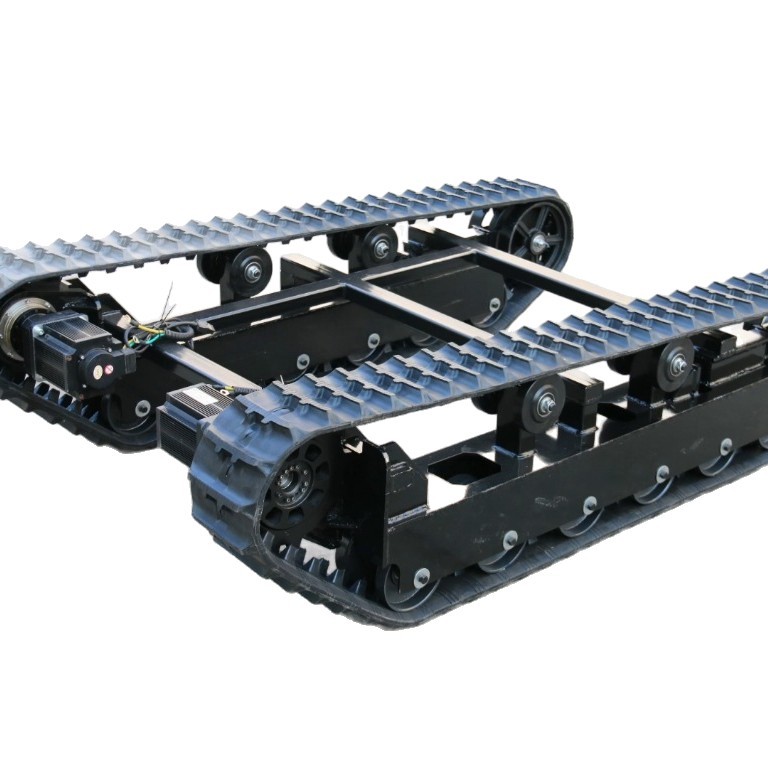
A track plate is the individual steel link that forms the ground-contact surface of a crawler undercarriage, distributing the machine’s full weight across soft, uneven, or broken ground. In underground mining, where floors can shift between compacted rock and waterlogged spoil within a single drive, the Track Plate determines whether a continuous miner, shuttle car, or roof bolter moves efficiently — or gets stuck. Choosing the right Track Plate is therefore a foundational equipment decision, not an afterthought.
Providing Stable Traction and Load Distribution on Difficult Ground
Spreading Machine Weight Across Weak or Wet Mine Floors
Underground headings rarely offer the firm, level surface that surface machines enjoy. A well-designed Track Plate spreads the machine’s weight over a larger footprint, reducing ground pressure to a level the floor can carry without rutting or subsidence. Made from high-quality cast steel with excellent toughness and strength, Huan-Tai’s Track Plate enables equipment to operate stably and continuously even on the soft or fractured floors common in coal and metal mines.
Delivering Reliable Traction When Pulling Against the Coal Face
A continuous miner must push its cutting drum into the face while the tracks grip the floor behind it. If the track plate profile lacks adequate bite, the machine slips rather than advances, wasting drive power and slowing production. The reasonable structural design and precise casting of each Track Plate ensure the ground-engagement geometry remains consistent across the full chain, so traction is predictable rather than variable from one plate to the next.
Maintaining Directional Control in Confined Underground Spaces
Roadways underground are narrow. A machine that wanders off its intended line risks damaging roof support systems or colliding with ventilation infrastructure. Uniform Track Plate dimensions across the chain keep the undercarriage tracking straight, giving the operator reliable steering response. This consistency — only achievable through disciplined quality control during casting and machining — directly reduces the risk of costly navigational incidents in confined drifts.
Absorbing Shock and Protecting the Undercarriage from Structural Damage
Acting as the First Line of Defense Against Ground Irregularities
Rock falls, uneven blasted floors, and embedded roof debris create constant impact events for any crawler machine underground. Each Track Plate takes the first hit, flexing and distributing the shock load before it reaches the drive sprocket, idler, and carrier rollers. The high toughness of cast steel — the primary material Huan-Tai uses — allows the track plate to absorb these repeated impacts without cracking, protecting more expensive undercarriage components from cumulative fatigue damage.
Withstanding High-Load Operation Without Deforming
Heavy mining equipment can weigh tens of tonnes, and that load concentrates on whichever track plates are in contact with the ground at any moment. The Track Plate must resist this load without bending or distorting its pin-bore geometry, since any deformation accelerates chain wear and eventually causes premature undercarriage failure. Huan-Tai’s structural design and casting precision ensure the plate maintains its geometry under high-load operation across extended service cycles in genuine mining conditions.
Supporting Hydraulic System Stability Across the Undercarriage
Some crawler undercarriages integrate hydraulic tensioning or braking circuits that run through or adjacent to the track frame. In these configurations, structural integrity of the surrounding components — including how the Track Plate interfaces with the frame — matters for keeping hydraulic lines protected from impact damage. A Track Plate that remains undamaged under the continuous stress of operation helps ensure the stability of the broader hydraulic system, preventing leaks that would force an unplanned shutdown underground.
Reducing Maintenance Burden and Supporting Longer Equipment Life
Enabling Fast Plate Replacement to Minimize Downtime
Underground maintenance windows are short and access is difficult. A track plate designed for straightforward removal and installation allows a small crew to complete a swap efficiently without specialist tooling. Huan-Tai’s castings are engineered with clean pin-bore tolerances and consistent dimensions so that replacement plates fit without adjustment, getting the machine back in production with minimal delay — an important advantage when every hour of downtime has a measurable cost.
Delivering a Long Service Life Through Material and Process Quality
Frequent replacement of wear components adds up quickly in both parts cost and labor. A track plate manufactured from properly specified cast steel, processed through controlled casting and heat treatment, resists abrasion and impact long enough to meaningfully reduce the replacement cycle. Huan-Tai’s end-to-end quality management — from raw material selection through final inspection — is specifically aimed at maximizing component life so customers spend less time and money on routine wear-part turnover.
Planning Around Lead Times for Custom Specifications
Standard Track Plate profiles suit many machines, but older or non-standard equipment often requires custom dimensions. Customized plates involve drawing confirmation, process planning, and trial casting before production begins, so lead times vary depending on the complexity of the specification. Huan-Tai works closely with customers from the engineering stage to align production schedules with planned maintenance intervals, ensuring replacement stock is available before it becomes urgently needed.
Conclusion
The track plate is a high-wear, high-consequence component whose quality directly affects machine mobility, structural durability, and maintenance cost underground. Selecting plates manufactured from the right material, cast to precise dimensions, and backed by rigorous quality control is the most reliable way to keep crawler equipment productive in the demanding conditions of underground mining operations.
FAQ
Q1: What materials are used to manufacture Track Plates for mining equipment?
High-quality cast steel and alloy steel are the standard choices, selected for their combination of hardness, toughness, and impact resistance needed in underground mining conditions.
Q2: How do I know when a Track Plate needs replacing?
Visible signs include thinning of the plate body, elongated pin bores, cracks at stress points, or noticeable chain slackness that tensioning cannot correct. Regular inspection intervals are recommended.
Q3: Can Track Plates be customized for non-standard undercarriages?
Yes. Huan-Tai specializes in customized non-standard mechanical parts and can manufacture Track Plates to customer drawings for a wide range of mining and engineering equipment.
Q4: Does a poor-quality Track Plate affect the whole undercarriage?
Absolutely. Deformed or undersized plates accelerate sprocket and roller wear, misalign the chain, and can ultimately cause undercarriage failure well ahead of its expected service life.
Q5: How should Track Plates be stored before installation?
Store in a dry, covered area away from direct contact with the ground. Keep pin bores clean and lightly oiled to prevent corrosion that could make installation difficult.
Partner With Huan-Tai for Dependable Mining Components
Xian Huan-Tai Technology and Development Co., Ltd. has delivered customized mechanical parts to mining and engineering customers worldwide for over 30 years. Our professional production and technical teams manage quality from raw material through final inspection, ensuring every Track Plate meets your performance requirements — on time and to specification. Ready to discuss your next order or a custom requirement? Reach out to our team today: inquiry@huan-tai.org.
References
- Shen, B., & Barton, N. (1997). The disturbed zone around tunnels in jointed rock masses and its influence on mine stability. International Journal of Rock Mechanics and Mining Sciences, 34(1), 117–125.
- Peng, S. S. (2006). Longwall Mining (2nd ed.). Department of Mining Engineering, West Virginia University.
- Alspaugh, M. A. (2004). Longwall Mining Equipment and Systems. Society for Mining, Metallurgy and Exploration (SME).
- Doroszuk, B., & Król, R. (2019). Analysis of conveyor belt wear caused by material acceleration in transfer stations. Mining Science, 26, 189–201.
- Czaplicki, J. M. (2010). Mining Equipment and Systems: Theory and Practice of Exploitation and Reliability. CRC Press / Taylor & Francis Group.
