
Which Heavy-Duty Shaft to use relies on the load requirements, the type of equipment, and how closely the part needs to match the original specs. This guide contrasts the two choices in terms of material, accuracy, and fit for the application. It does this to assist buying and production teams in selecting the method that best meets their equipment requirements and long-term maintenance goals.
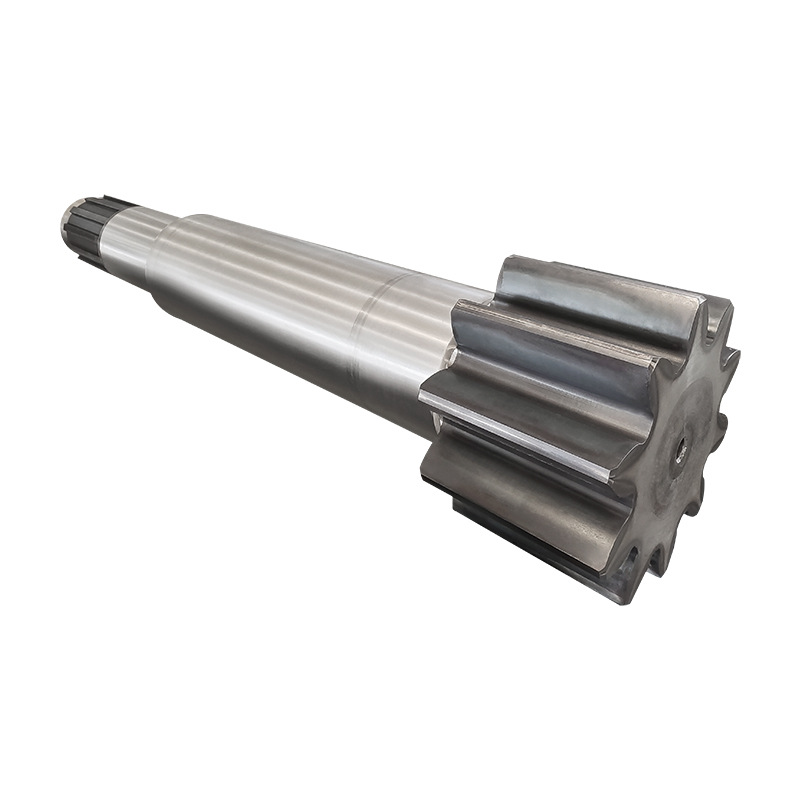
What Are the Key Differences Between Custom and Standard Shafts?
Material and Manufacturing Process Differences
A standard shaft is made from generic stock material that is cut to the right size for common uses. A custom Heavy-Duty Shaft, on the other hand, is forged from high-quality alloy steel that has been chosen specifically for the load and environment it will be in. Forging instead of casting improves the general strength and internal grain structure. This means that a unique Heavy-Duty Shaft will last longer against wear than a mass-produced standard part that wasn’t made with the right material for the job.
Precision and Tolerance Differences
To get more accurate measurements than most standard shafts from a catalog, CNC cutting, heat treatment, and surface treatment are used to make custom shafts. When installed, a Heavy-Duty Shaft that was made with great care will have consistent tolerances along its entire length. This will reduce vibration and uneven wear. A standard Heavy-Duty Shaft, on the other hand, is made with wider specs so it can be used for a variety of tasks instead of just one piece of equipment.
Application Fit and Compatibility Differences
When equipment uses standard sizes, a standard shaft works well. But for many mining, trucking, and farming machines, they need a Heavy-Duty Shaft that is exactly matched to the original equipment drawings. Custom making lets the length, thickness, placement of keyways, and shape of the ends perfectly match existing parts. This means that a normal Heavy-Duty Shaft doesn’t need to be changed before it can fit properly into specialized equipment.
When Does a Custom Heavy-Duty Shaft Make More Sense Than a Standard Shaft?
Mining Machinery and Heavy Equipment Needs
When mining equipment is used in harsh environments and under a lot of load changes, a Heavy-Duty Shaft that was specifically made for the job will last longer and work better than a generic one. When making a Heavy-Duty Shaft for mining equipment, companies usually choose alloy steel grades and forging methods that can handle long periods of high stress. This helps equipment owners keep their machines from breaking down too soon in tough underground or open-pit conditions.
Truck and Agricultural Machinery Applications
Trucks and farm equipment often have non-standard shaft setups that are tied to specific engine or tool designs. When new parts need to match the original specs perfectly, a special Heavy-Duty Shaft is the better option. Custom making is especially helpful for repair shops that work on older or specialized vehicles because they can find an exact-match Heavy-Duty Shaft that keeps equipment going without having to make expensive changes to fit a standard part that doesn’t fit right.
Legacy Equipment and Replacement Scenarios
For older machines that aren’t supported by standard parts catalogs anymore, a Heavy-Duty Shaft that is made to match the discontinued original specifications is often needed. By reverse-engineering a Heavy-Duty Shaft from plans or real samples, equipment owners can keep old machines running long after factory replacement parts become available. This increases the useful life of investments in otherwise reliable equipment.
When Is a Standard Shaft the Better Choice?
Budget and Lead Time Considerations
Standard shafts usually cost less up front and ship faster than custom Heavy-Duty Shafts because they don’t need to be confirmed by drawings or special tools are set up before production starts. A standard Heavy-Duty Shaft can be a good choice for buyers on a tight budget or who need to replace common equipment right away. However, custom timelines are not set in stone and depend on the complexity of the design.
Common Equipment With Standardized Specifications
Standard shafts can often be used in equipment that was built to widely accepted industry dimensions, so custom manufacturing isn’t needed for simple replacement needs. In these situations, a Heavy-Duty Shaft made to standard specifications works well enough because the equipment design doesn’t need the exact measurements or unique shape that would make making a custom Heavy-Duty Shaft worth the extra money.
Low-Complexity, High-Volume Applications
Standard shafts are sometimes better than special Heavy-Duty Shafts when the load requirements are easy and there are a lot of replacements to be made. This is because standard shafts are cheaper across many units and don’t perform as well. For lower-stakes equipment where the tighter tolerance and material choice built into a premium Heavy-Duty Shaft don’t matter as much as they do in mining or heavy machinery applications, this trade-off may make sense for smaller repair shops that have to watch their margins.
Conclusion
Picking between a unique and a normal Heavy-Duty Shaft relies on the type of load, the tools being used, and the budget. Custom making is best for demanding mining, truck, and farming uses. Standard shafts are still useful for easier, widely standard equipment needs where tight specs and application-specific fit are less important.
FAQ
Q1: Is a custom Heavy-Duty Shaft always stronger than a standard shaft?
A: Not always, but custom shafts forged from selected alloy steel typically offer better fatigue resistance for demanding applications.
Q2: How long does custom shaft production take?
A: Timelines vary with design complexity; straightforward specifications generally move faster than heavily customized designs.
Q3: Can a Heavy-Duty Shaft be manufactured from drawings?
A: Yes, Huan-Tai produces custom shafts from client drawings or samples to match exact equipment specifications.
Q4: What industries commonly need custom shafts?
A: Mining machinery, trucks, and agricultural equipment frequently require custom shafts for reliable, application-specific performance.
Q5: Is a standard shaft ever the better choice?
A: Yes, for common equipment with standardized dimensions and lower load demands, a standard shaft can be practical.
Partner with Huan-Tai for Reliable Heavy-Duty Shafts
Since the mid-1990s, Xian Huan-Tai Technology and Development Co., Ltd. has supplied customized non-standard mechanical parts to mining, trucking, and agricultural machinery customers worldwide. Backed by 30 years of experience, a dedicated production and inspection team, and technical engineers ready to match your exact drawings, we make sourcing a dependable Heavy-Duty Shaft straightforward from inquiry through delivery. Have a specification to share? Contact inquiry@huan-tai.org and let’s discuss your project today.
References
Groover, Mikell P. Fundamentals of Modern Manufacturing.
Shigley, Joseph E., and Charles R. Mischke. Mechanical Engineering Design.
Juvinall, Robert C., and Kurt M. Marshek. Fundamentals of Machine Component Design.
Oberg, Erik, et al. Machinery’s Handbook.
Boyer, Howard E., editor. Metals Handbook. ASM International.
