
You don’t have to settle for a front bumper that bends at the first hit just because it’s cheap. The real problem for fleet owners, equipment makers, and repair shops is finding a front bumper that works well in real-world situations and doesn’t break the bank. Cost and quality don’t have to be at odds with each other if you have the right producing partner and clear terms.
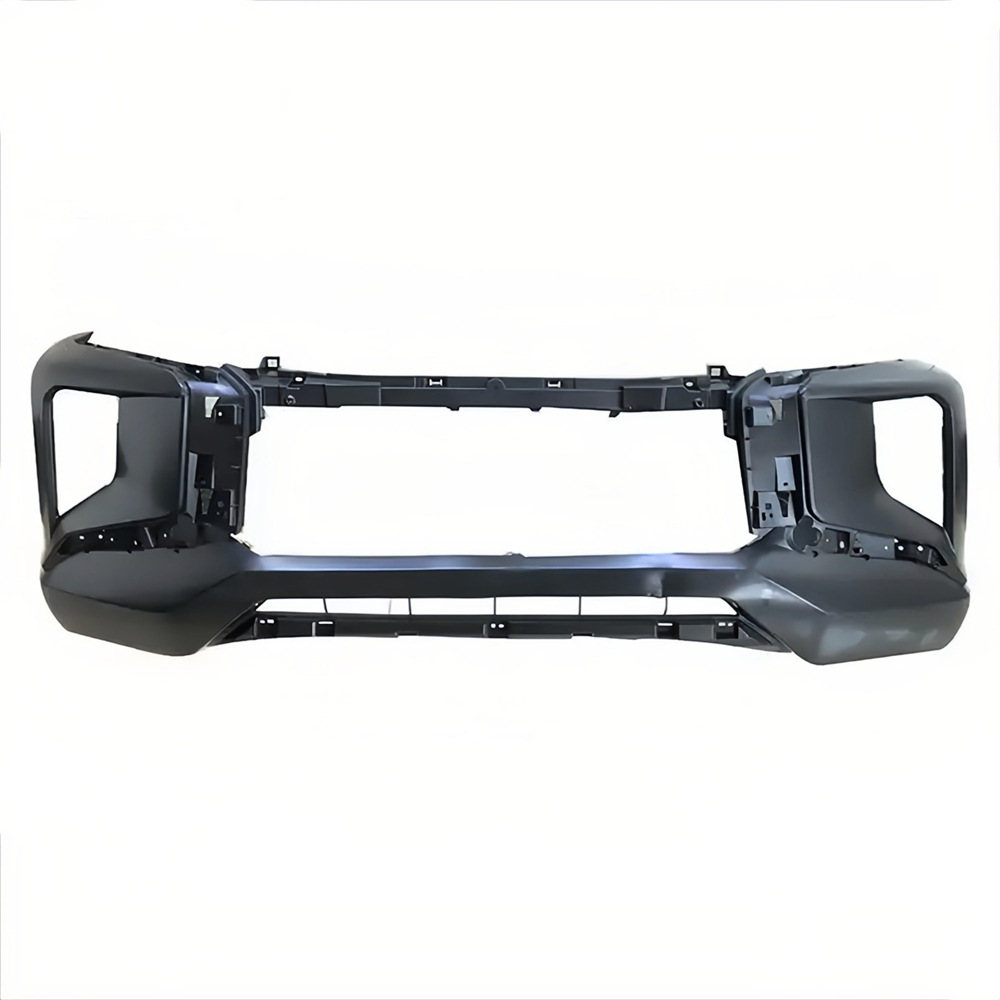
What Makes a Front Bumper Both Affordable and Durable
Material Choice Is Where the Value Is Built
Material choice has the most direct effect on both cost and function. Most of the time, low-alloy high-strength steel is used for heavy-duty front bumpers on trucks, tractors, and off-highway vehicles. It is easy to make and doesn’t cost as much as stainless steel or specialty alloys. Depending on the shape and load needs of the application, both casting and forging can be used to make the part.
Design Simplicity Reduces Manufacturing Cost
A front bumper with a simple, easy-to-make design costs less to make than one with lots of bends, deep undercuts, or tight standards where they aren’t needed. If you work with a source who checks your drawing to make sure it can be made before production starts, you can find places where the shape can be made simpler without changing how it works. This kind of technical help is something that experienced custom makers always do.
Batch Size and Its Effect on Unit Price
Unit price for a front bumper drops significantly as order volume increases, because setup, tooling amortization, and material procurement all become more efficient at scale. For repair companies or smaller equipment suppliers placing smaller orders, it’s worth discussing whether a slightly larger batch run makes financial sense — in many cases the per-unit savings more than offset the additional inventory cost.
How to Evaluate Front Bumper Quality Before You Commit
Weld Quality and Structural Integrity
On any fabricated front bumper, welds are the first place to inspect. Full-penetration welds at high-stress joints — particularly where the bumper mounts to the frame rails — are non-negotiable for equipment operating in mining, construction, or heavy-load environments. Surface welds or partial-penetration joints at these locations are a sign of cost-cutting that will show up as cracks under repeated impact cycles.
Dimensional Accuracy and Fit
A front bumper that doesn’t fit the first time costs everyone time and money. Dimensional accuracy against the drawing — especially mounting hole positions and overall width — should be verified with documented inspection records, not just a visual check. Suppliers with proper CMM or fixture-based inspection processes can provide this data on request, which is a reasonable ask for custom or high-volume orders.
Surface Treatment and Corrosion Protection
For equipment operating outdoors or in aggressive environments, surface treatment matters. Shot blasting followed by epoxy primer and topcoat is a solid baseline for a steel front bumper. Hot-dip galvanizing is an option for parts with simpler geometry where long-term corrosion resistance justifies the additional process step. Either way, the treatment should be specified in the order, not left to the supplier’s default.
Finding the Right Supplier for a Custom Front Bumper
Experience with Non-Standard and Custom Parts
Not every manufacturer is set up to handle non-standard work well. A front bumper for legacy equipment or specialty vehicles often lacks a standard drawing, which means the supplier needs to work from a sample part, a sketch, or a reverse-engineered measurement. Suppliers with long experience in custom mechanical parts are much better positioned to handle this kind of ambiguous starting point without repeated errors.
Communication and Drawing Confirmation
Clear communication at the start of a project saves significant time later. For custom front bumper orders, confirming the drawing — including material grade, tolerances, surface finish, and any critical dimensions — before production begins is essential. Lead times for custom work vary; straightforward parts move faster, while complex assemblies requiring multiple rounds of drawing confirmation naturally take longer. Getting alignment on the drawing upfront is the single best way to avoid delays.
Quality Control Throughout Production, Not Just at the End
A supplier who only inspects the final part is catching problems too late. In-process quality checks — at raw material receipt, after forming or casting, after welding, and before surface treatment — give much earlier warning of any deviation. For a front bumper intended for demanding field use, this kind of process discipline is what separates a reliable supplier from one that ships and hopes for the best.
Conclusion
Affordable front bumpers and reliable quality are achievable together when material selection, design, and supplier capabilities are all aligned. The key is working with a manufacturer who brings engineering input, in-process quality control, and honest communication to every order — not just competitive pricing on paper.
FAQ
Q1: What material is typically used for a heavy-duty front bumper?
Low-alloy high-strength steel is the most common choice, offering a practical balance of impact resistance, weldability, and cost. For specific applications, material grade should be confirmed against the load and environmental requirements.
Q2: Can a front bumper be custom-fabricated for non-standard equipment?
Yes. Custom fabrication from drawings, samples, or measurements is standard practice for legacy or specialty equipment where OEM parts are unavailable.
Q3: How does order volume affect front bumper pricing?
Larger batch sizes reduce unit cost through better tooling and material efficiency. Even modest volume increases can meaningfully lower per-unit price.
Q4: What surface treatment should a front bumper have for outdoor use?
Shot blast plus epoxy primer and topcoat is a reliable baseline. Hot-dip galvanizing suits simpler geometries where long-term corrosion resistance is the priority.
Q5: How long does a custom front bumper order take?
Lead time depends on complexity and how quickly drawing confirmation is completed. Simple parts move faster; assemblies requiring multiple drawing reviews take longer.
Work with Huan-Tai on Your Next Front Bumper Project
With over 30 years of experience in customized non-standard mechanical parts, Xian Huan-Tai Technology and Development Co., Ltd. brings real engineering depth to every order. Our production and technical teams manage quality from raw material through final inspection, ensuring your front bumper meets exact performance and dimensional requirements. If you’re sourcing custom parts and need a supplier you can count on for consistency and reliability, reach out at inquiry@huan-tai.org — we’re ready to get started.
References
- Wierzbicki, T., & Abramowicz, W. (1983). “On the Crushing Mechanics of Thin-Walled Structures.” Journal of Applied Mechanics, 50(4), 727–734.
- Meguid, S. A. (1989). Engineering Fracture Mechanics. Elsevier Applied Science, London.
- Ashby, M. F., & Jones, D. R. H. (2012). Engineering Materials 2: An Introduction to Microstructures and Processing (4th ed.). Butterworth-Heinemann, Oxford.
- Smith, W. F., & Hashemi, J. (2010). Foundations of Materials Science and Engineering (5th ed.). McGraw-Hill, New York.
- Kalpakjian, S., & Schmid, S. R. (2014). Manufacturing Engineering and Technology (7th ed.). Pearson Education, Upper Saddle River, NJ.
