
For heavy-duty breaking, the best hammerhead design has a tough base material, accurate casting methods, and a shape that fits the feed material. In mining and aggregate operations that are hard on equipment, a well-designed hammerhead made of high manganese steel, alloy steel, high-chromium cast iron, or a combination of these materials will last longer and not break as easily. Here’s how to look at your hammerhead choices before you buy.
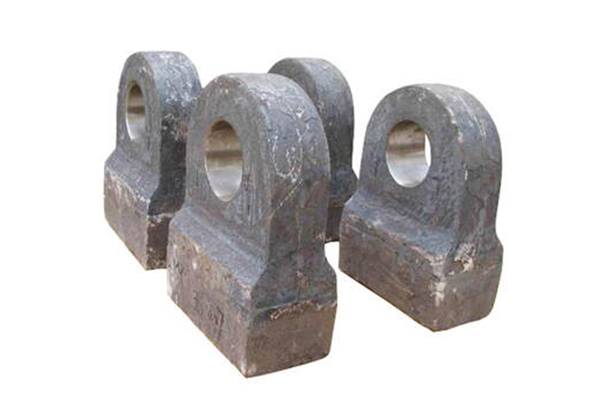
Which Materials Make the Strongest Hammerhead?
High Manganese Steel for Shock-Heavy Duty
For hammerheads that work in conditions with a lot of shock, high manganese steel is still the best choice. Work-hardening is what makes it special: every hit makes the surface harder, but the core stays tough and won’t crack. For repeatedly hitting medium-hard rock hard with a hammer, a high manganese steel hammerhead is the best choice because it lasts a long time, doesn’t break easily, and doesn’t cost too much per tonne of material it breaks.
High-Chromium Cast Iron for Abrasive Feed
A high-chromium cast iron hammerhead often lasts longer than other options when the feed material is very rough, like quartz-rich rock or hard aggregates. Its hard carbide structure is much better at resisting grinding wear than other kinds. Many operations use this material with careful feed control because the hammerhead lasts longer and needs less maintenance, so it needs fewer replacements and less downtime.
Alloy Steel and Composite Designs
Alloy steel hammerheads work well in all situations where both impact hardness and wear resistance are important. Composite hammerhead designs go even further by combining a strong alloy body with a harder working area. This puts the right strength right where it’s needed. This two-metal method is becoming more popular in heavy-duty crushing because it makes hammerheads last longer without lowering the shank’s need for fracture resistance.
How Does Casting Quality Shape Hammerhead Performance?
Casting Methods That Guarantee Dimensional Accuracy
Bad acting can ruin a great subject. The hammerhead is made by reputable foundries using either lost-wax casting, resin sand casting, or the V-method, and all of these methods can keep the dimensions very accurate. The exact measurements are important because the hammerhead needs to balance correctly on the rotor. Even small differences in weight between hammers can cause the whole crusher to vibrate, put stress on the bearings, and wear unevenly.
Heat Treatment and Internal Soundness
Once the hammerhead is cast, it goes through a controlled heat treatment that creates the final microstructure that makes it tough and hard. Internal soundness is just as important. Before machining, a good foundry checks castings for shrinkage, porosity, and inclusions. If a hammerhead has secret casting flaws, it could break under heavy loads very quickly. Make sure that the companies you work with keep records of the whole inspection process, from the chemistry of the melt to the final hardness test.
Built for High-Load, High-Strength Environments
Careful choice of materials and casting control are all done to make things that will work even when they’re being abused. If you make a good hammerhead, it won’t break easily when hit or broken. This means it can be used in high-load, high-strength jobs like mining, quarrying, and making aggregate. For buying managers, this means that repair plans can be planned ahead of time and there are fewer emergency shutdowns. These are benefits that quickly outweigh small differences in unit price.
What Should Buyers Check Before Ordering Hammerheads?
Matching the Hammerhead to Your Crusher and Feed
Every site has a different “best” style. There is only one that fits each site the best. Tell your provider what kind of crusher you have, how big the rotor is, how hard the feed material is, and how much output you want. This way, the hammerhead shape and metal grade can be perfectly matched. A team of skilled technicians will be able to tell you whether high manganese steel, alloy steel, or high-chromium cast iron is best for your hammerhead application.
Verifying Supplier Quality Control
Before you place an order, find out how the supplier checks the quality at every step. Some things to look for are certification of the raw materials, records of the casting process, heat treatment charts, hardness tests, and dimensional inspections. A reliable maker will be happy to answer these queries. Full traceability keeps your operation safe because the hammerhead is a safety-critical rotating part. Suppliers who have worked with foundries for decades usually keep these systems in good shape as normal, not as an extra service.
Planning Lead Times for Custom Castings
To make a custom hammerhead, you have to confirm the drawing, make a pattern or mould, cast the metal, heat treat it, and machine it. When plans need to be looked over more than once or when special metals are needed, the production cycle can take longer than planned for designs that aren’t standard. Smart buyers plan ahead for replacement hammerhead stock instead of ordering when they’re under a lot of pressure. They keep an extra set on hand to avoid production gaps.
Conclusion
To make the best hammerhead design, you need to choose three things: the right material for your feed, a casting method that promises accuracy and soundness, and a seller with a track record of quality control. If you do these things right, your hammerhead will work reliably, last longer, and cost less to run, even in the toughest crushing environments.
FAQs
Q1: What materials are hammerheads made of?
Common options include high manganese steel, alloy steel, high-chromium cast iron, and composite (bimetal) materials, each suited to different feed conditions.
Q2: Which casting methods are used for hammerheads?
Lost-wax casting, resin sand casting, and the V-method are widely used, all capable of ensuring accurate dimensions and balanced weight.
Q3: Why does hammerhead weight balance matter?
Uneven hammer weights cause rotor vibration, bearing damage, and accelerated wear, so matched sets are essential.
Q4: How long does a custom hammerhead order take?
Lead times vary with design complexity; drawing confirmation and special processes can extend the cycle, so order spares early.
Q5: Can hammerheads be customized to my crusher model?
Yes. Provide drawings or samples plus feed details, and the material and geometry can be tailored to your machine.
Let’s Build Your Next Set of Hammerheads
Since the mid-90s, Xian Huan-Tai Technology and Development Co., Ltd. has been a trusted manufacturer of customized non-standard mechanical parts for mining and engineering machinery. With 30 years of industry experience, a professional production team managing quality through every stage, and a technical team ready to meet your exact performance requirements, we deliver the stability and predictability overseas buyers expect. Send your drawings or inquiry today to inquiry@huan-tai.org and receive a detailed, competitive quotation.
References
- Wills, B. A., & Finch, J. A. – Wills’ Mineral Processing Technology: An Introduction to the Practical Aspects of Ore Treatment and Mineral Recovery
- Gupta, A., & Yan, D. S. – Mineral Processing Design and Operations: An Introduction
- Beeley, P. – Foundry Technology
- Bhero, S., Nyembe, B., & Lentsoana, K. – “Common Failures of Hammer Mill Hammers in Crushing Applications,” International Conference on Mining, Mineral Processing and Metallurgical Engineering
- Davis, J. R. (ed.) – ASM Specialty Handbook: Cast Irons
